<?xml version="1.0" encoding="UTF-8"?>
<feed xmlns="http://www.w3.org/2005/Atom">
  <title type="text">Story of Butte</title>
  <updated>2026-04-17T19:58:10+00:00</updated>
  <generator uri="http://framework.zend.com" version="1.12.20">Zend_Feed_Writer</generator>
  <link rel="alternate" type="text/html" href="https://storyofbutte.org/"/>
  <link rel="self" type="application/atom+xml" href="https://storyofbutte.org/items/browse?output=rss2"/>
  <id>https://storyofbutte.org/</id>
  <author>
    <name>Story of Butte</name>
    <uri>https://storyofbutte.org</uri>
  </author>
  <link rel="hub" href="https://pubsubhubbub.appspot.com/"/>
  <entry>
    <title type="html"><![CDATA[Hoisting Engines and Hoist Houses]]></title>
    <summary type="html"><![CDATA[<p><strong><em>Mines in Butte employed a wide variety of hoisting mechanisms over the decades. By the 1930s, the most common hoisting engine was powered by an electric motor. The electric hoist at the Orphan Girl mine, World Museum of Mining, is the most easily accessible hoisting engine on the Butte Hill. </em></strong></p><img src="https://storyofbutte.org/files/fullsize/cf9f969826e8f4db4b514d2c0a568396.jpg" alt="Electric hoist at the Orphan Girl mine, " /><br/><p>Tours of the interiors of other hoist houses may occasionally be arranged, including the compressed air hoists (formerly steam) at the Original and the Steward, and the electric hoists at the Anselmo and Mountain Consolidated.</p><p>The simplest form of mining is the excavation of mineral on the Earth’s surface, but sometimes the mineral being sought is deep enough that it is not practical to get to it by digging a large hole in the ground all the way down to the ore body. An alternative is to dig a shaft, like a well, that allows miners to descend to the level where the ore or other desired mineral can be broken free and then hoisted to the surface. To hoist buckets of ore from the mine, early shaft mines employed a windlass (hand-cranked winding drum) placed directly over the shaft, similar to that employed to lift a bucket of water from a well. An early improvement was the horse whim, a drum for winding the rope that was powered by one or more horses walking in a circle around the drum. That contraption was too large to be placed directly over a shaft, so it had to be set on the ground next to the shaft. In order that a rope could be extended down the shaft for hoisting ore, it had to be run over the top of a grooved pulley wheel (called a sheave) and then run to the whim next to the shaft for winding. The simple structure supporting the sheave, A-frame or otherwise, was the beginning of the modern headframe. Such arrangements go back more than 500 years in Europe.</p><p>In the years and centuries before Butte mining, ore was hoisted from shafts in buckets, and miners descended into mines either by ladder or (unsafely) in the buckets. By the time shaft mining began in Butte, a new “vehicle,” called a cage, was standard in the shaft. It was a platform on which miners could stand to ride down or up the shaft and onto which miners could place a small ore car filled with ore to be hoisted. The ore cars were run along tracks underground to haul ore and waste rock from the working face of the mine to the shaft. As the capacity of hoist engines increased, the mining industry developed a container like a giant bucket, called a skip, that could hoist a larger volume of ore than a small ore car could hoist. Cages were still used to lower miners and materials (like tools and mine timbers) into the mine, but early cages had little protection for miners. In 1897, the Montana legislature passed a bill requiring safety bonnets and sides on all cages in shafts deeper than 300 feet, which included most of the big mines in Butte.</p><p>Steam power increased the speed and hoisting capacity of the mine. When steam-powered hoisting began in Butte in the 1870s, the boilers, steam engines, and headframes were small enough that they could all be housed within a single timber-framed building. As mine production increased, however, the size of steam-powered hoisting engines grew, as did the activities that had to be conducted around the collar of the shaft and, in time, a new configuration arose, with the taller, unenclosed headframe standing over the shaft, and the hoisting engine housed in a free-standing industrial building adjacent to the headframe and shaft. The large hoisting engines in Butte grew to have two side-by-side drums, one overshot and one undershot. When the drums operated in tandem, that allowed for the cable on one drum to be let out while the other was wound up. That in turn allowed the weight of the cable and skip of one drum to counterbalance the weight of the cable and skip on the other drum, thereby reducing the load that the engine had to lift. The surviving hoist houses in Butte are all industrial buildings built either of brick or of steel frame with corrugated steel siding. They have windows for daylighting of the interior, but the windows did not give the hoist operator a view of the mineshaft. Miners underground, surface workers, and the hoist operator communicated with each other by a system of bells.</p><p>In the early twentieth century, the Butte mines began to modify their steam hoists to be powered by compressed air, and then they converted to electric hoists. </p><p><em><strong><a href="https://storyofbutte.org/items/show/3500">For more (including 8 images) view the original article</a></strong></em></p>]]></summary>
    <published>2025-01-06T20:37:25+00:00</published>
    <updated>2026-04-17T19:58:10+00:00</updated>
    <link rel="alternate" type="text/html" href="https://storyofbutte.org/items/show/3500"/>
    <id>https://storyofbutte.org/items/show/3500</id>
    <author>
      <name>Fred Quivik</name>
    </author>
  </entry>
  <entry>
    <title type="html"><![CDATA[Anselmo Mine: 1875-1966, 4300 Feet Deep]]></title>
    <summary type="html"><![CDATA[<p><strong><em>Most intact mineyard remaining in Butte</em></strong></p><img src="https://storyofbutte.org/files/fullsize/103e13869f31341ffc335e0186424506.jpg" alt="Anselmo Headframe Lighted for Christmas" /><br/><p>The Anselmo mineyard is the most intact of any in Butte, and includes the main hoist engine room, an auxiliary hoist building (with a lamp room in the lower level), carpenter shop, timekeeper's offices, hose house, the dry (miners’ locker room), and a warehouse, in addition to the headframe with its tipple and two idler towers. The compressed air tank also survives. Inside, tools and other artifacts are found in place, just as they were when the mine was operating.</p><p>The Butte, Anaconda & Pacific Railway train at the Anselmo is the only remaining artifact of the first electrified heavy haul engine that served as the prototype for electrifying rail engines throughout the country. Ore was raised from the mine to the tipple structure on the side of the headframe, from where it was dumped into train cars below. The trains, which once laced together all the mines, transported copper ore to the town of Anaconda, where it was concentrated and smelted at the huge Washoe Smelter. </p><p>The Anselmo also had a yard that treated lumber for underground timbers and supplied them to many mines. The timber was milled west of Butte, at Rocker, and brought to the Anselmo where it was treated with arsenic to prevent rotting.</p><p>The present Anselmo headframe came from the Black Rock Mine, and was moved to the Anselmo in 1936. The Anselmo was an important lead and zinc mine, and also produced silver and copper. A lengthy strike that shut down most of Butte's mines in 1959 spelled the end of the Anselmo, which did not reopen after that strike.</p><p>The BA&P walking trail, built on the former bed of the Butte, Anaconda and Pacific Railway, passes near the Anselmo yard. Not far to the west, the trail passes the Desperation Fan Tower, an octagonal concrete structure where bad air exited from the Anselmo mine.</p><p><em><strong><a href="https://storyofbutte.org/items/show/3398">For more (including 15 images) view the original article</a></strong></em></p>]]></summary>
    <published>2022-06-28T20:09:29+00:00</published>
    <updated>2026-04-17T19:58:08+00:00</updated>
    <link rel="alternate" type="text/html" href="https://storyofbutte.org/items/show/3398"/>
    <id>https://storyofbutte.org/items/show/3398</id>
    <author>
      <name>Story of Butte, Nancy Woodruff, Richard Gibson,&amp;#32;&amp;amp;&amp;#32;Butte Historical Society</name>
    </author>
  </entry>
  <entry>
    <title type="html"><![CDATA[Steward Mine: 1877-1973, 4400 Feet Deep]]></title>
    <summary type="html"><![CDATA[<p><strong><em>Site of underground banquet in 1909</em></strong></p><img src="https://storyofbutte.org/files/fullsize/71791450f60df7bde3f90d53584b9386.jpg" alt="Men Loaded in Cage at Steward Mine" /><br/><p>The Steward mine, named for its discoverer, Missouri native John Marshall Steward, was a prolific producer of both silver and copper, as well as some zinc. At one time Steward also owned the Chief Joseph, Nipper, and Raven mines in Butte.</p><p>By the early 1880s the Steward mine was owned by William Clark. The brick hoist house is typical of a Clark mine, as Clark preferred brick instead of wood in order to protect his expensive machinery. The hoist house, auxiliary hoist house, and headframe are all that remain of the once extensive mine yard structures.</p><p>The headframe was erected in 1902 at a cost of less than $9,000. The cage of the Steward was raised and lowered by a steam-driven engine, which was later converted to compressed air. The engine is still in place in the hoist house.</p><p>The Steward was known as a hot, uncomfortable mine to work in. Its most torrid drift was disparagingly referred to as “the Chinese Laundry.”</p><p>According to a Montana Standard article, fine dining took place underground at the Steward in 1909. Visiting members of the Massachusetts Street Railway Association were treated to a banquet at the 2,100-foot level. The menu included dishes named after other Butte mines, such as Merry Widow drill sauce, sliced Minnie Healy apples, Parrot Lode chicken, Hidden Treasure salads, Never Sweat lobster and Olympia oyster cocktails.</p><p>The Steward was sold to the Anaconda Copper Mining Company in 1910, and was operated until the 1970s. Experimental mining occurred there until around 1981.</p><p><em><strong><a href="https://storyofbutte.org/items/show/3397">For more (including 7 images) view the original article</a></strong></em></p>]]></summary>
    <published>2022-06-27T20:02:35+00:00</published>
    <updated>2026-04-17T19:58:08+00:00</updated>
    <link rel="alternate" type="text/html" href="https://storyofbutte.org/items/show/3397"/>
    <id>https://storyofbutte.org/items/show/3397</id>
    <author>
      <name>Story of Butte, Butte Historical Society,&amp;#32;&amp;amp;&amp;#32;Nancy Woodruff</name>
    </author>
  </entry>
  <entry>
    <title type="html"><![CDATA[Kelley Mine: 1949-1980, 4810 Feet Deep]]></title>
    <summary type="html"><![CDATA[<p><strong><em>Youngest, most technologically advanced underground mine in Butte.</em></strong></p><img src="https://storyofbutte.org/files/fullsize/6a0fee47a27165b9e908ce3440d11c13.jpg" alt="Men During Construction of Kelley Headframe" /><br/><p>The Kelley Mine is the youngster on the hill. It represents the most technologically advanced workings, with a concrete-lined shaft to reduce the risk of fire. The cage held fifty miners, a giant step from the early days when cages were built to hold six men. The Kelley has three shafts and two headframes, the larger the tallest on the hill. Even the mining process itself took on new proportions with block-caving mining techniques, which increased production to over 15,000 tons a day.</p><p>By the time the Kelley came on line, all of the mines still operating were owned by the Anaconda Company, and their workings were interconnected. The major role of the Kelley was to serve as a hoisting shaft for ore from other works.</p><p>Among the buildings still standing is the central heating plant with its large smokestack. Not only did this coal-fired furnace warm the buildings and mines of the Kelley, but heat was also pumped to several other mine yards and mines and even to some of the larger downtown buildings, including the Thornton Block and the Hennessy Building.</p><p>The complex of structures below the Kelley includes shops and warehouses for the entire Bute hill: a boiler-maker shop, a blacksmith shop, a large machine shop, and a tin shop. The extensive array of mining machines and equipment used on the hill were maintained and repaired in these buildings.</p><p>The Kelley was the last underground mine to close. Today some of its buildings are used as a production facility by the Headframe Spirits distillery.</p><p><em><strong><a href="https://storyofbutte.org/items/show/3396">For more (including 5 images) view the original article</a></strong></em></p>]]></summary>
    <published>2022-06-25T14:35:48+00:00</published>
    <updated>2026-04-17T19:58:08+00:00</updated>
    <link rel="alternate" type="text/html" href="https://storyofbutte.org/items/show/3396"/>
    <id>https://storyofbutte.org/items/show/3396</id>
    <author>
      <name>Story of Butte&amp;#32;&amp;amp;&amp;#32;Butte Historical Society</name>
    </author>
  </entry>
  <entry>
    <title type="html"><![CDATA[Belmont Mine: 1900-1956, 4300 Feet Deep]]></title>
    <summary type="html"><![CDATA[<p><strong><em>The hoist house now serves as a senior center.</em></strong></p><img src="https://storyofbutte.org/files/fullsize/a3172ccb6f72ecb189389f60315f58aa.jpg" alt="Early View of the Belmont Mine" /><br/><p>The Belmont was one of the hotter works, shunned by miners from northern climates but attractive to muckers from Mexico and other warm Latin American countries. They often sought work here, just as the Irish flocked to the Mountain Con.</p><p>The Belmont was a notable F. Augustus Heinze mine. The Anaconda Copper Mining Company acquired the Belmont to settle litigation with Heinze in 1906. The mine had produced little up to this time, and the ACM intended to use it as a hoisting shaft for ore extracted from its other mines, including the Anaconda and the Neversweat. Later nearly 7 million tons of copper ore were hauled up through its headframe, which originally stood at the Cora Mine.</p><p>Mining reclamation has leveled the landscape surrounding the mine yard, as well as most of the mine yard itself. Lime was liberally applied to neutralize the acidic soils. A layer of fill dirt was laid over top and vegetation planted. The hoist house has been rehabilitated, and now serves as the Belmont Senior Center.</p><p><em><strong><a href="https://storyofbutte.org/items/show/3395">For more (including 5 images) view the original article</a></strong></em></p>]]></summary>
    <published>2022-06-24T22:58:31+00:00</published>
    <updated>2026-04-17T19:58:08+00:00</updated>
    <link rel="alternate" type="text/html" href="https://storyofbutte.org/items/show/3395"/>
    <id>https://storyofbutte.org/items/show/3395</id>
    <author>
      <name>Story of Butte, Nancy Woodruff,&amp;#32;&amp;amp;&amp;#32;Butte Historical Society</name>
    </author>
  </entry>
  <entry>
    <title type="html"><![CDATA[Mountain Con Mine: c.1886-1974, 5291 Feet Deep]]></title>
    <summary type="html"><![CDATA[<img src="https://storyofbutte.org/files/fullsize/6dca8e866a618fe062e9bce2589f87ab.jpg" alt="Miners at Work in the Mountain Con Mine" /><br/><p>Standing at an elevation of 6,135 feet, the “Con” is more than a mile high and a mile deep, the deepest on the hill. Originally called the Mountain Consolidated, the name was later shortened by tongue-twisted immigrant miners.</p><p>The Con was a copper mine and one of the biggest producers in the industry. Mammoth ore bins, now gone, housed the copper until it was loaded onto horse-drawn wagons, and in later years into train cars of the Butte, Anaconda and Pacific Railway. Mining waste was also dropped into the bins for shipment to dumping sites.</p><p>The headframe of the Con, the second tallest of those remaining on the hill, was erected in 1928.</p><p>The Con is a consolidation of the Mountain, Burnett, Loweville, and Buffalo Mines. The Mountain Consolidated Mining Company was formed to operate the mine, and by 1887 the mine was owned by the Chambers Syndicate. In 1891 it became the property of the newly incorporated Anaconda Mining Company (to be renamed the Anaconda Copper Mining Company in 1895).</p><p>The foundation for the mine superintendent’s house can still be seen among the evergreens to the east of the headframe. Today the area is a park with spectacular views of the city, and is part of a paved walking trail system.</p><p><em><strong><a href="https://storyofbutte.org/items/show/3394">For more (including 8 images) view the original article</a></strong></em></p>]]></summary>
    <published>2022-06-24T14:40:54+00:00</published>
    <updated>2026-04-17T19:58:08+00:00</updated>
    <link rel="alternate" type="text/html" href="https://storyofbutte.org/items/show/3394"/>
    <id>https://storyofbutte.org/items/show/3394</id>
    <author>
      <name>Story of Butte, Nancy Woodruff,&amp;#32;&amp;amp;&amp;#32;Butte Historical Society</name>
    </author>
  </entry>
  <entry>
    <title type="html"><![CDATA[Lexington Mine: 1876-1947, 3260 Feet Deep]]></title>
    <summary type="html"><![CDATA[<p><strong><em>The Lexington Mine is the site of the only remaining strike fence at Butte mines.</em></strong></p><img src="https://storyofbutte.org/files/fullsize/2355ddedbdb16da41ad8289a7fcee3a3.jpg" alt="Lexington Mine, Looking South" /><br/><p>Typical of many Butte mines, the Lexington experienced several distinct periods of operation accompanied by major changes to its built environment. Butte capitalist Andrew Davis invested in developing the Lexington first. Beginning in the mid1870s, he used a horse-powered whim to raise silver ore and treated his production at the old Hendrie stamp mill nearly a mile downhill (site of today’s Lexington Gardens). After encountering an exceedingly rich vein of silver, in 1881 Davis sold the Lexington to a group of French entrepreneurs for $1 million in cash and $2 million in stock. The French group upgraded the mine’s surface plant significantly, installing a steam- powered hoist at the shaft and constructing a 60-stamp mill with roasters about 600 feet west. An aerial tramway linked the works. By the late 1880s, the Lexington had yielded nearly $8 million in silver and was the deepest mine in Montana at about 1500 feet. Rich ores were all but depleted by then, and operations further suffered when the price of silver plummeted in 1893. The mill closed for good, but small-scale mining continued until a fire destroyed the shaft house in early 1903.</p><p>In late 1904, Copper king F. Augustus Heinze leased the Lexington and ushered in the next major episode of development. Instead of silver, Heinze intended to exploit the mine for zinc, a base metal primarily used in galvanizing iron and steel against corrosion. His crews equipped the shaft with one of the largest wood headframes ever in Butte, erected a wood-framed hoist house north of the shaft, and constructed a new mill east across Main St. The first reduction plant in Butte designed specifically for treating zinc ore, the mill failed to live up to expectations and created so much dust that nearby residents successfully secured a court injunction for its closure. </p><p>The Anaconda Mining Company (ACM) acquired the Lexington around 1916. Although only a minor producer, the Lexington contributed to the supply of Butte copper and zinc that aided the US and its allies in winning World War I. ACM did not operate the Lexington again until 1938, as a second world war loomed on the horizon. Mining continued until 1943 when operations ceased while the company rebuilt the surface plant, replacing the old wooden works with a steel headframe and a steel-frame hoist house and constructing two change houses for a large force of miners. After reopening in 1946, the Lexington became one of the top producers of zinc and copper in Butte. In the early 1950s, the company drilled a nearly mile-long tunnel from a site north of the Anselmo Mine to the Lexington’s 400-foot-level and started using it as a haulage tunnel for production from the Lexington and other Walkerville mines. Mining and production continued strong until 1957 when ACM closed the Lexington for good.</p><p>In recent years, ARCO conducted a cleanup project at the Lexington in anticipation of transferring the property to the local government. In addition to removing ruins and waste, the company refurbished the old 1940s hoist house. This work made the building available for entry and viewing.</p><p><em><strong><a href="https://storyofbutte.org/items/show/3393">For more (including 3 images) view the original article</a></strong></em></p>]]></summary>
    <published>2022-06-24T13:07:53+00:00</published>
    <updated>2026-04-17T19:58:08+00:00</updated>
    <link rel="alternate" type="text/html" href="https://storyofbutte.org/items/show/3393"/>
    <id>https://storyofbutte.org/items/show/3393</id>
    <author>
      <name>Story of Butte, Nancy Woodruff, Butte Historical Society,&amp;#32;&amp;amp;&amp;#32;Richard Gibson</name>
    </author>
  </entry>
  <entry>
    <title type="html"><![CDATA[Original Mine: 1864-1940, 3900 Feet Deep]]></title>
    <summary type="html"><![CDATA[<p><strong><em>The Original Mine was the site of some of the earliest mining in Butte.</em></strong></p><img src="https://storyofbutte.org/files/fullsize/b3fa96f63cba08b68bcb5e1c39f92693.jpg" alt="Original Mine" /><br/><p>The Original Mine, a good producer of copper and silver, was the site of some of the earliest mining in Butte. Early pioneers found small pits dug by early prospectors, possibly native Americans, with elk horn near the site of the Original Mine. William Clark patented Lot #39 in 1878, launching the Original Mine, and two years later, Granville Stuart patented claims for two more lots. The shaft was driven to the 1,000-foot level by 1897 with 20 men working underground, six top men, and three hoist engineers. By 1902, the mine employed 300 men working underground, twenty top men, and three engineers. Clark sold the mine to the Anaconda Company in 1910, and it operated until 1940. The Original was re-opened in the 1950s, when it was mined for zinc and copper.</p><p>The existing structures were built in 1902. They include a brick hoist house, a compressor house, and the headframe. Today the Original headframe serves as the mainstage for the Montana Folk Festival, as well as a venue for weddings and other events.</p><p><em><strong><a href="https://storyofbutte.org/items/show/3392">For more (including 6 images) view the original article</a></strong></em></p>]]></summary>
    <published>2022-06-23T20:36:12+00:00</published>
    <updated>2026-04-17T19:58:08+00:00</updated>
    <link rel="alternate" type="text/html" href="https://storyofbutte.org/items/show/3392"/>
    <id>https://storyofbutte.org/items/show/3392</id>
    <author>
      <name>Story of Butte, Nancy Woodruff,&amp;#32;&amp;amp;&amp;#32;Paddy Dennehy</name>
    </author>
  </entry>
  <entry>
    <title type="html"><![CDATA[Bell-Diamond Mine: 1879-1928, 3500 Feet Deep]]></title>
    <summary type="html"><![CDATA[<img src="https://storyofbutte.org/files/fullsize/0ba81f22f6bf4d8400df749854c178a3.jpg" alt="Diamond Headframe, Looking East" /><br/><p>The Diamond was named by a prospector for the configuration formed by its claim stakes. Originally owned by mining entrepreneur William Clark, this mine figured prominently in his battle with Marcus Daly and Augustus Heinze for control of the Butte copper industry. The mine was ultimately sold to the Anaconda Copper Mining Company in 1895.</p><p>Erected in 1898, the headframe of the Diamond is the oldest left standing on the hill. In the early days, the miners commuted to work on a streetcar which ran to within a few hundred yards of this site. Among the mine yard buildings here that have gone the way of the trolley is the rope house, which fabricated the flat, seven-inch cables used before the advent of round cable to hoist cages and skips. The large wheels scattered around the mine yard are sheave wheels. Originally they sat atop other headframes around the hill and guided the hoist cable in and out of the shaft. </p><p>The Bell mine was located about a tenth of a mile east of the Diamond headframe. Ore from the two mines was hoisted through a common shaft by 1914, leading them to be referred to jointly as the Bell-Diamond.</p><p>The Bell was founded by T.C. Meader of the Montana Mining Company. Meader was innovative and built his smelter down near Bell Creek (more commonly known as Black Tail Creek) in order to reduce smoke in the urban area. The mine was acquired by the Anaconda Copper Mining Company in 1885.</p><p>Meader is most notable for being the founder of Meaderville, an Italian neighborhood of Butte famous for its great restaurants, lively night clubs and gaming.</p><p><em><strong><a href="https://storyofbutte.org/items/show/3391">For more (including 5 images) view the original article</a></strong></em></p>]]></summary>
    <published>2022-06-23T17:38:41+00:00</published>
    <updated>2026-04-17T19:58:08+00:00</updated>
    <link rel="alternate" type="text/html" href="https://storyofbutte.org/items/show/3391"/>
    <id>https://storyofbutte.org/items/show/3391</id>
    <author>
      <name>Story of Butte, Butte Historical Society,&amp;#32;&amp;amp;&amp;#32;Nancy Woodruff</name>
    </author>
  </entry>
  <entry>
    <title type="html"><![CDATA[Badger State Mine: 1880-1966, 4169 Feet Deep]]></title>
    <summary type="html"><![CDATA[<img src="https://storyofbutte.org/files/fullsize/110700557f74bd70ae334ee1e247074e.jpg" alt="Shift Change at the Badger-State Mine, 1951" /><br/><p>The Badger, like most of the works on the eastern end of the hill, was principally a copper-bearing mine. Its large deposits of zinc and lead, however, gave this mine importance during war years. Before the Berkeley Pit was excavated, dozens of other mines pierced the surrounding landscape, all of them extracting copper.</p><p>The two buildings behind the substation to the west housed huge pumps that supplied compressed air to the inner depths of the Badger and many other mines. Still visible at the Badger are the headframe, hoist house, and auxiliary hoist house. The two steel towers are called idler towers. They supported the tremendous weight of the slack hoist cables.</p><p><em><strong><a href="https://storyofbutte.org/items/show/3390">For more (including 5 images) view the original article</a></strong></em></p>]]></summary>
    <published>2022-06-23T02:12:21+00:00</published>
    <updated>2026-04-17T19:58:08+00:00</updated>
    <link rel="alternate" type="text/html" href="https://storyofbutte.org/items/show/3390"/>
    <id>https://storyofbutte.org/items/show/3390</id>
    <author>
      <name>Story of Butte, Nancy Woodruff,&amp;#32;&amp;amp;&amp;#32;Butte Historical Society</name>
    </author>
  </entry>
  <entry>
    <title type="html"><![CDATA[Travona Mine: 1875-1957, 1500 Feet Deep]]></title>
    <summary type="html"><![CDATA[<p><strong><em>The discovery of silver at this mine triggered the major mining boom of Butte.</em></strong></p><img src="https://storyofbutte.org/files/fullsize/3551a7c1eb63536e036e30a7e90e5099.jpg" alt="Miners Emerging from the Travona Mine, 1946" /><br/><p>The oldest mine on the hill, the Travona began in 1864 as a gold mine named the Asteroid. But the Butte area never produced much gold, and mining at the Asteroid, as well as the rest of Butte, had pretty much played out by the time William Farlin came to own the mine.</p><p>Farlin took advantage of a new mining law that required owners to make yearly economic improvements for each claim or forfeit ownership. In 1875 after the owner failed to meet these requirements, Farlin staked his claim to the Asteroid, which he later renamed the Travona. Just as the small settlement of Butte appeared to be headed toward becoming a ghost town, Farlin discovered silver at the Travona, kicking off a new period of mining in Butte.</p><p>Farlin invested heavily in the Travona and added a mill, the Dexter Mill, to reduce the silver ores. Farlin invested too heavily, it appears, as he defaulted on a loan from William A. Clark, the first of Butte’s three Copper Kings, and the mine and mill were foreclosed on in 1877. In 1880 Clark patented the Travona Mine, and he worked it for another 25 years. Eventually owned by the Anaconda Company, it became a highly producing manganese mine from 1942 until closing.</p><p>The steel headframe at the Travona was originally located at the Pennsylvania Mine, located in what is now the Berkeley Pit. The headframe was moved to the Travona in 1940.</p><p>The name of this mine is often mispronounced as "Travonia," as seen in the name of the adjacent street.</p><p><em><strong><a href="https://storyofbutte.org/items/show/3389">For more (including 2 images) view the original article</a></strong></em></p>]]></summary>
    <published>2022-06-22T20:17:02+00:00</published>
    <updated>2026-04-17T19:58:08+00:00</updated>
    <link rel="alternate" type="text/html" href="https://storyofbutte.org/items/show/3389"/>
    <id>https://storyofbutte.org/items/show/3389</id>
    <author>
      <name>Story of Butte, Nancy Woodruff,&amp;#32;&amp;amp;&amp;#32;Paddy Dennehy</name>
    </author>
  </entry>
  <entry>
    <title type="html"><![CDATA[Granite Mountain Mine: 1887-1944, 3700 Feet Deep]]></title>
    <summary type="html"><![CDATA[<p><strong><em>Site of the Country's Worst Hard-Rock Mining Disaster</em></strong></p><img src="https://storyofbutte.org/files/fullsize/548b338b9cc64db615b5ce465b9ce45d.jpg" alt="Post Card of Granite Mountain Mine" /><br/><p>When it was installed in 1915, the electric hoist at the Granite Mountain mine was the largest in the country. Connected to the Speculator mine 200 yards to the south, Granite Mountain was developed to bolster the productive capacity of its parent mine. Instead, it nearly destroyed it.</p><p>The Granite Mountain-Speculator fire of 1917, the worst hard-rock mining accident in the history of the United States, began in the shaft of the Granite Mountain mine. Once ignited, it was only a matter of minutes before the entire lower half of the shaft was engulfed in flames, spreading deadly smoke and gas through miles of underground workings.</p><p>As one miner reported to the Butte Miner newspaper “It was about midnight when I heard someone shouting ‘Fire!’ My partner and I were working a short distance away from the 2600-foot station. We went out to investigate. The shaft was like a roaring furnace.”</p><p>Of the 410 men lowered into the Granite Mountain mine for the nightshift on June 8, 1917, 168 did not return alive. Some miners battered down concrete bulkheads that separated the tunnels from those of adjacent shafts. Many escaped through the Badger and Diamond mines. A few managed to barricade themselves behind bulkheads in the mine and were found alive after as long as 55 hours.</p><p>The disaster touched off a period of labor unrest, as most of Butte’s miners went on strike to protest dangerous working conditions. Federal troops were called in to force the miners back to work, and they occupied the city until 1921.</p><p>Today the open-air plaza of the Granite Mountain Memorial interprets the events, people, and turbulent times that surrounded the catastrophe. The Granite Mountain headframe, now surrounded by waste from open pit mining, can be seen from the memorial, as well as a panoramic view of Butte’s mining landscape.</p><p><em><strong><a href="https://storyofbutte.org/items/show/3388">For more (including 5 images) view the original article</a></strong></em></p>]]></summary>
    <published>2022-06-16T21:24:33+00:00</published>
    <updated>2026-04-17T19:58:08+00:00</updated>
    <link rel="alternate" type="text/html" href="https://storyofbutte.org/items/show/3388"/>
    <id>https://storyofbutte.org/items/show/3388</id>
    <author>
      <name>Story of Butte, Nancy Woodruff,&amp;#32;&amp;amp;&amp;#32;Butte Historical Society</name>
    </author>
  </entry>
  <entry>
    <title type="html"><![CDATA[Orphan Girl Mine: 1875-1956, 2733 Feet Deep]]></title>
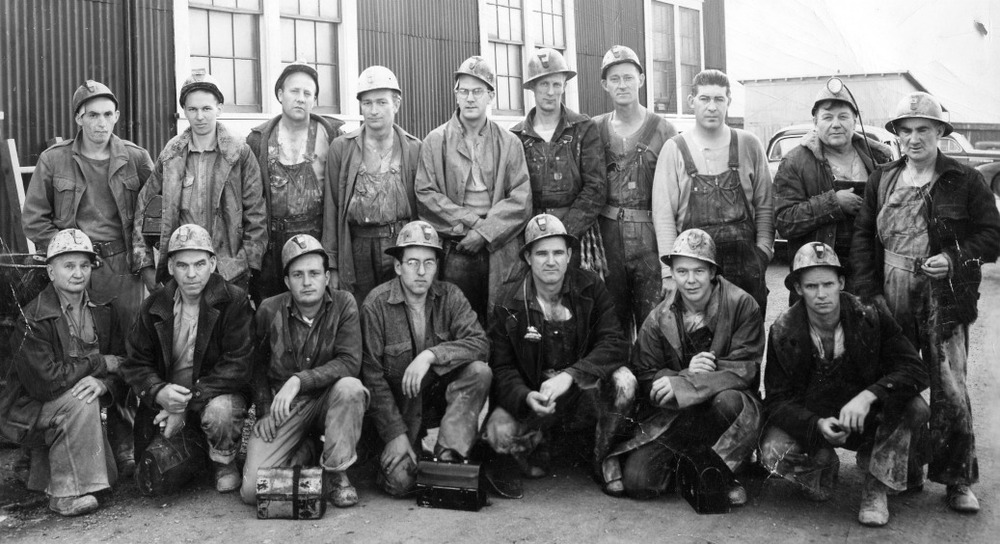
    <summary type="html"><![CDATA[<p><strong><em>Site of the World Museum of Mining</em></strong></p><img src="https://storyofbutte.org/files/fullsize/e247bd385e2de96178482087193cffde.jpg" alt="Orphan Girl Mine Crew, 1948" /><br/><p>From the time it was located in 1875 until it was purchased by Marcus Daly and associates in 1879, ownership of fractional shares in the Orphan Girl Mine changed hands faster than the ante in a poker game. While not a huge producer according to Butte standards, it was productive enough to plunge it into the covetous tug of war for possession that plagued many of the more lucrative works. After years of litigation, the Orphan Girl was purchased by the Anaconda Company by the end of the 1920s, and was operated by the company until the 1950s. By 1944 miners had removed 7.6 million ounces of silver, lead, and zinc from her depths.</p><p>The mine’s isolation from the rest of the hill prompted the name of the Orphan Girl, affectionately nicknamed “Orphan Annie” or “the Girl.” An adjacent shaft was named the Orphan Boy to give her some company.</p><p>Good ventilation kept temperatures between 55 and 65 degrees, making the Orphan Girl a desirable place to work, unlike some “hot boxes” where temperatures could top 100 degrees.</p><p>In 1965, the Girl became the site of the World Museum of Mining. Today museum visitors can tour the underground tunnels of the Orphan Girl, which still hold equipment from the mine’s working days, as well as the hoist house and mine yard. It is the only public access to the 10,000 miles of underground tunnels that honeycomb the Butte hill.</p><p><em><strong><a href="https://storyofbutte.org/items/show/36">For more (including 4 images) view the original article</a></strong></em></p>]]></summary>
    <published>2016-06-06T16:51:06+00:00</published>
    <updated>2026-04-17T19:58:00+00:00</updated>
    <link rel="alternate" type="text/html" href="https://storyofbutte.org/items/show/36"/>
    <id>https://storyofbutte.org/items/show/36</id>
    <author>
      <name>Montana Historical Society, Butte Historical Society,&amp;#32;&amp;amp;&amp;#32;Nancy Woodruff</name>
    </author>
  </entry>
</feed>