<?xml version="1.0" encoding="UTF-8"?>
<feed xmlns="http://www.w3.org/2005/Atom">
  <title type="text">Story of Butte</title>
  <updated>2026-04-17T19:58:10+00:00</updated>
  <generator uri="http://framework.zend.com" version="1.12.20">Zend_Feed_Writer</generator>
  <link rel="alternate" type="text/html" href="https://storyofbutte.org/"/>
  <link rel="self" type="application/atom+xml" href="https://storyofbutte.org/items/browse?output=rss2"/>
  <id>https://storyofbutte.org/</id>
  <author>
    <name>Story of Butte</name>
    <uri>https://storyofbutte.org</uri>
  </author>
  <link rel="hub" href="https://pubsubhubbub.appspot.com/"/>
  <entry>
    <title type="html"><![CDATA[Lynch/Leary House]]></title>
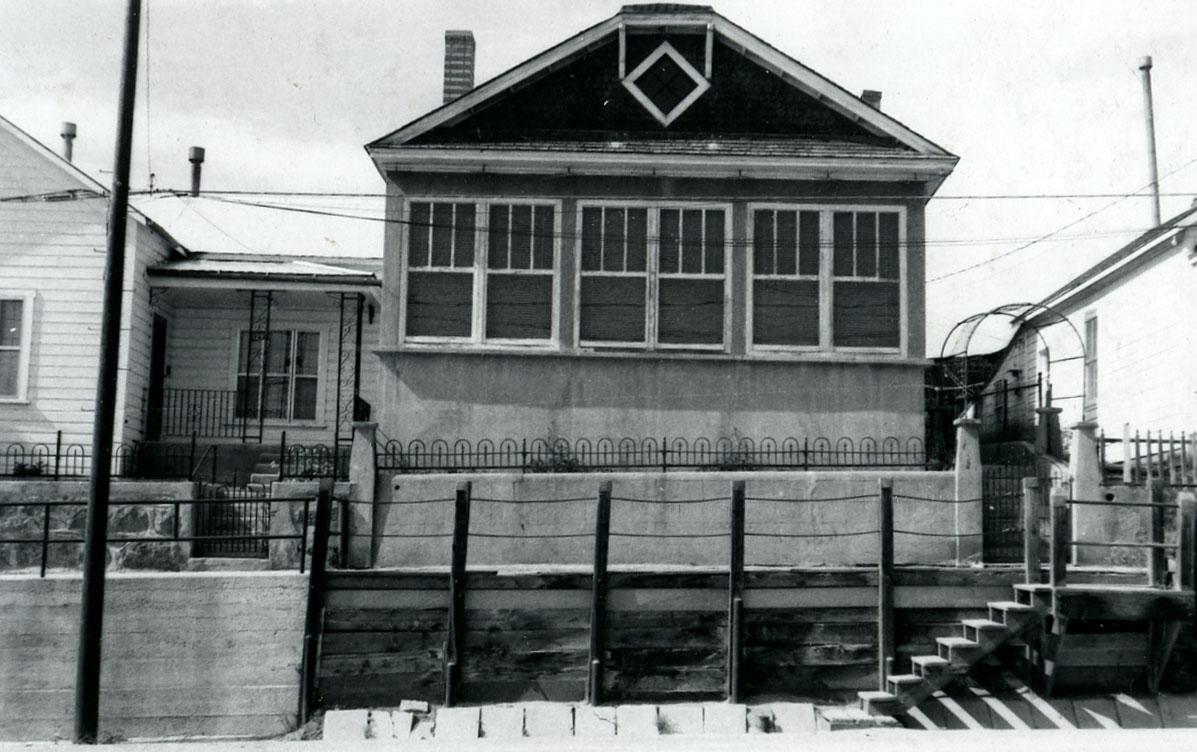
    <summary type="html"><![CDATA[<p><strong><em>Situated between Marcus Daly’s Mountain Consolidated mine and Centerville’s hardscrabble commercial district, the Mullins Street neighborhood evolved from its mining camp roots to working class respectability. </em></strong></p><img src="https://storyofbutte.org/files/fullsize/a0a3cb3af550afe188d9dbc1df85a2c0.jpg" alt="106 Mullin Street" /><br/><p>Irish immigrant Bridget Lynch lived in this front-gabled vernacular (builder-designed) home beginning in 1890 and boarded Centerville miners. In 1892, she married fellow Irish immigrant William Moylan. Moylan supervised mining operations in the Gem, and later, the Minnie Healy. In 1906, Moylan’s brother James, a “quarrelsome” shift boss at the Gem, was found dead. Although the coroner ruled the death an accident, William later alleged foul play and had his brother’s remains exhumed. Two men were charged in James’ death but were acquitted. Bridget died in 1917, and William sold the home to fellow Irish immigrants Patrick and Nora Leary. Patrick worked as a security guard at the Leonard mine. The Learys' three sons, Edward, Joseph, and Patrick Jr., served overseas in World War II. Patrick Sr. died in 1940 from complications related to silicosis, an affliction common to underground miners. Nora died in 1950 and her son Joseph inherited the house.</p><p><em><strong><a href="https://storyofbutte.org/items/show/3485">For more view the original article</a></strong></em></p>]]></summary>
    <published>2024-01-10T02:38:15+00:00</published>
    <updated>2026-04-17T19:58:10+00:00</updated>
    <link rel="alternate" type="text/html" href="https://storyofbutte.org/items/show/3485"/>
    <id>https://storyofbutte.org/items/show/3485</id>
    <author>
      <name>Montana Historical Society</name>
    </author>
  </entry>
  <entry>
    <title type="html"><![CDATA[William &amp; Annie Thompson House]]></title>
    <summary type="html"><![CDATA[<img src="https://storyofbutte.org/files/fullsize/ecc15a1fa6c0ddc08e50b2810440cf9f.jpg" alt="304 West Granite Street" /><br/><p>Carpenter and lumber dealer William Thompson and his wife Annie built this vernacular style home in 1883. The modest residence disguised William’s prominent status in the business community and reflected his frugal ways. In the 1860s and 1870s, William made a small fortune building many of the first residential and commercial buildings in Virginia City and Helena. He also established at least three sawmills in southwest Montana by 1876. In 1880, as Butte’s mines boomed, he opened the Butte Lumber Yard, supplying wood to the mines and building materials to contractors. He served two terms in the territorial legislature, one term in the first state legislature, and became Butte’s twelfth mayor in 1895. Annie died in 1894, and by 1897, William lived with his son James. This residence was a boardinghouse when William died in 1900. All three of William and Annie’s sons made fortunes in building, mining, and real estate. Their oldest son William B. established the Newmont Mining Company in 1916, which became one of the world’s largest mining companies. To honor his father’s legacy, he donated the land for Thompson Park.</p><p><em><strong><a href="https://storyofbutte.org/items/show/3481">For more view the original article</a></strong></em></p>]]></summary>
    <published>2024-01-10T02:21:56+00:00</published>
    <updated>2026-04-17T19:58:10+00:00</updated>
    <link rel="alternate" type="text/html" href="https://storyofbutte.org/items/show/3481"/>
    <id>https://storyofbutte.org/items/show/3481</id>
    <author>
      <name>Montana Historical Society</name>
    </author>
  </entry>
  <entry>
    <title type="html"><![CDATA[Gainor House]]></title>
    <summary type="html"><![CDATA[<p><strong><em>Rows of wood-frame houses lined West Daly Street by 1884 when it was still part of Chickentown, a Walkerville suburb.</em></strong></p><img src="https://storyofbutte.org/files/fullsize/6d651e8136f772e509b73d3bc8dd2802.jpg" alt="127 West Daly Street" /><br/><p> By 1891, Walkerville had absorbed Chickentown, and this house was the only brick-clad home on West Daly. Butcher Louis T. Gainor and wife Julia purchased the home in 1898, later adding a two-story rear addition by 1916 and stucco cladding after 1930. Louis, a successful meat market owner, served one term as Walkerville mayor in 1902-03. He owned one of Butte’s first cars, and his custom-made White Steamer runabout nearly won the Montana State Fair’s first-ever auto race in 1906. He narrowly lost when it burst into flames. In 1914, Julia joined one hundred local women campaigning against women’s suffrage. The group declared that giving women the right to vote was “progressive only in name” because of the “great responsibilities which it would add to the already manifold duties and responsibilities in woman’s life.” Louis and Julia shared the home with their daughter Virginia and son-in-law William Hunter until they died in the 1940s. Virginia and William remained in residence until 1959.</p><p><em><strong><a href="https://storyofbutte.org/items/show/3472">For more view the original article</a></strong></em></p>]]></summary>
    <published>2024-01-05T18:23:20+00:00</published>
    <updated>2026-04-17T19:58:09+00:00</updated>
    <link rel="alternate" type="text/html" href="https://storyofbutte.org/items/show/3472"/>
    <id>https://storyofbutte.org/items/show/3472</id>
    <author>
      <name>Montana Historical Society</name>
    </author>
  </entry>
  <entry>
    <title type="html"><![CDATA[Dreeland House]]></title>
    <summary type="html"><![CDATA[<img src="https://storyofbutte.org/files/fullsize/341ae1da76d0cd1480b058d95c43d2ce.jpg" alt="311 West Daly Street" /><br/><p>The second story of this residence, built circa 1884, dates to Walkerville’s formative days. Irish native John Dreeland may have been the first resident. He immigrated to the U.S. in 1869 to pursue mining. By 1884, he had settled on still-developing West Daly Street and was a partner in Butte’s Montana Union Publishing Co. In 1886, he opened the Butte Brewery Depot saloon. The next year, he and George Pascoe patented the nearby Colonel Sellers vein, a manganese mine. John, wife Bridget, and their three children lived here in 1900 when copper king William A. Clark funded construction of Butte’s streetcar line into Walkerville via West Daly Street. To build the line, contractors had to lower the street level by 2.5 feet. Some homeowners added retaining walls and stairs to their front property line, while others, like Dreeland and Peter Schonsberg next door, jacked up their wood-frame homes and built new stone walls under their existing buildings. After 1907, a succession of Italian families lived here. Timber contractor Maggiorino “Mudge” Tamietti and wife Sadie were long-time residents from 1931 until Sadie’s death in 1965.</p><p><em><strong><a href="https://storyofbutte.org/items/show/3470">For more view the original article</a></strong></em></p>]]></summary>
    <published>2024-01-05T18:15:32+00:00</published>
    <updated>2026-04-17T19:58:09+00:00</updated>
    <link rel="alternate" type="text/html" href="https://storyofbutte.org/items/show/3470"/>
    <id>https://storyofbutte.org/items/show/3470</id>
    <author>
      <name>Montana Historical Society</name>
    </author>
  </entry>
</feed>