<?xml version="1.0" encoding="UTF-8"?>
<feed xmlns="http://www.w3.org/2005/Atom">
  <title type="text">Story of Butte</title>
  <updated>2026-04-17T19:58:10+00:00</updated>
  <generator uri="http://framework.zend.com" version="1.12.20">Zend_Feed_Writer</generator>
  <link rel="alternate" type="text/html" href="https://storyofbutte.org/"/>
  <link rel="self" type="application/atom+xml" href="https://storyofbutte.org/items/browse?output=rss2"/>
  <id>https://storyofbutte.org/</id>
  <author>
    <name>Story of Butte</name>
    <uri>https://storyofbutte.org</uri>
  </author>
  <link rel="hub" href="https://pubsubhubbub.appspot.com/"/>
  <entry>
    <title type="html"><![CDATA[Celebrating Community]]></title>
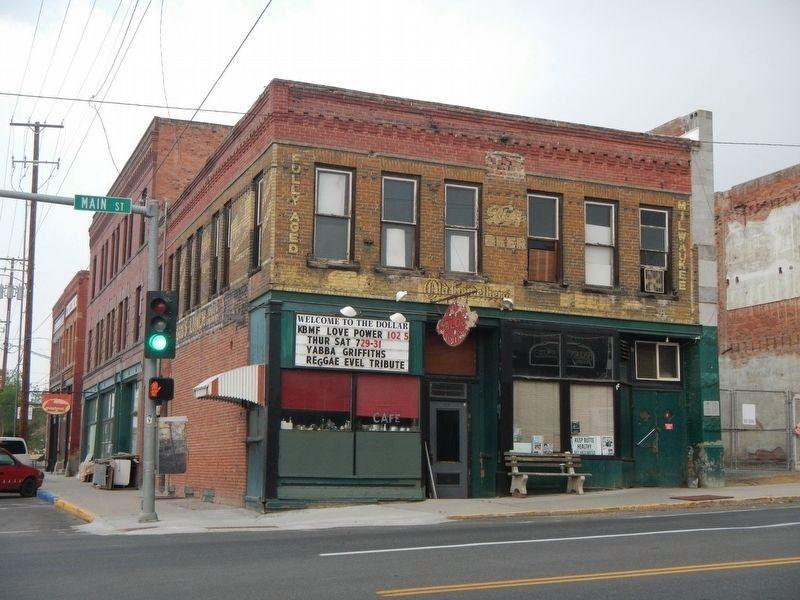
    <summary type="html"><![CDATA[<p><strong><em>Butte featured numerous saloons and night clubs—at its height there were over 206 saloons in the bustling city. These businesses were the pinnacle for social entertainments, but only a select few welcomed African American patrons.</em></strong></p><img src="https://storyofbutte.org/files/fullsize/12c8ed507c897fb5b2152e5be3cad868.jpg" alt="Silver Dollar Saloon" /><br/><p>The Silver Dollar Saloon, located at 133 South Main Street, was one of those places. Built in 1894, the saloon opened its doors at the start of the 20th century as one of Butte’s famous Black bars. Live music and great drinks were the highpoint of the establishment, offering the African American community a comfortable and safe space to socialize. During Prohibition it functioned as a “soft drink and cigar shop” but is believed to also have been a speakeasy.</p><p>Although little is known about the Missouri Club on Mercury Street, residents remember it fondly. Owned by Abe and Ethel Warwick, an African American couple, the club was patronized by members of all races.</p><p>The Silver City Club was built in the 1890s at 235 S. Main as a two-story carriage shop. Frank Yamer converted the property on the northwest corner of Silver and Main Street to a club in 1917. A  prominent African American businessman, Yamer established a venue that was wildly popular and served as a night club, dance hall, saloon, pool hall, and card room. Live music was the highlight of the space, and balls were hosted on special occasions.  </p><p>Isaac “Ike” Hayes was an influential and well-respected businessman who operated a saloon, pool room, and athletic club. He was known for his title as the heavyweight champion of Montana and was referred to as “a magnificent specimen of the modern gladiator.” He fought in nonsegregated matches and often mentored and trained other boxers.</p><p>Robert C. Logan became Butte’s most famous African American singer. He was sold into slavery at the age of one and left his native Kentucky in 1874 to find his fortune in the west. He arrived in Butte in 1890. While working as a porter, Robert took singing lessons and in 1899 he joined a Black minstrel group, the Georgia Minstrels. The group toured 40 states and overseas. Logan returned to Butte in 1905 and worked as a janitor at the Miner’s Saving Bank until retiring in 1935. He also continued to sing in church choirs and at public events.</p><p><em><strong><a href="https://storyofbutte.org/items/show/3515">For more (including 3 images) view the original article</a></strong></em></p>]]></summary>
    <published>2025-02-07T21:49:34+00:00</published>
    <updated>2026-04-17T19:58:10+00:00</updated>
    <link rel="alternate" type="text/html" href="https://storyofbutte.org/items/show/3515"/>
    <id>https://storyofbutte.org/items/show/3515</id>
    <author>
      <name>Story of Butte</name>
    </author>
  </entry>
  <entry>
    <title type="html"><![CDATA[Faith and Community]]></title>
    <summary type="html"><![CDATA[<p><strong><em>Most of the African Americans who moved to Montana were born enslaved, leaving for the west in search of freedom and opportunity. Religion was fundamental to the growth and prosperity of the Black community in Butte. As sacred places of worship, education, and safety, churches became places of unity, identity, and stability.</em></strong></p><img src="https://storyofbutte.org/files/fullsize/01590b84faaa8bf6ab2cd5b31c210676.jpg" alt="Shaffer Chapel" /><br/><p>Although many tried to find a place in the already established churches in Butte, Black citizens were often shunned and told to “worship in their own churches.” As a result, Butte’s first African Methodist Episcopal (AME) church was founded July 10, 1892, at the Butte Silver City Colored Masonic Lodge No. 9.</p><p>Bethel Baptist Church was the first all-Black Baptist church in Butte, founded in 1901. It was located on the northeast corner of Idaho and Mercury. Reverend D. A. Jefferson was the pastor in 1907. The church helped African American residents by hosting literacy and improvement societies which advanced the intellectual environment of the community.</p><p>Shaffer Chapel was founded as the second AME church in Butte, built in 1902 at 602 South Idaho. It is the only remaining church building in Butte that once served an all-Black congregation. The chapel was more than just a place of worship. It also served as a community center and relief agency, and provided opportunities to build skills in self-government, finances, and business management through the operations of the church. The 1902 church building stands today and is listed in the National Register of Historic Places.</p><p><em><strong><a href="https://storyofbutte.org/items/show/3514">For more (including 2 images) view the original article</a></strong></em></p>]]></summary>
    <published>2025-02-07T21:43:24+00:00</published>
    <updated>2026-04-17T19:58:10+00:00</updated>
    <link rel="alternate" type="text/html" href="https://storyofbutte.org/items/show/3514"/>
    <id>https://storyofbutte.org/items/show/3514</id>
    <author>
      <name>Story of Butte</name>
    </author>
  </entry>
  <entry>
    <title type="html"><![CDATA[Using Back and Brawn to Build Community]]></title>
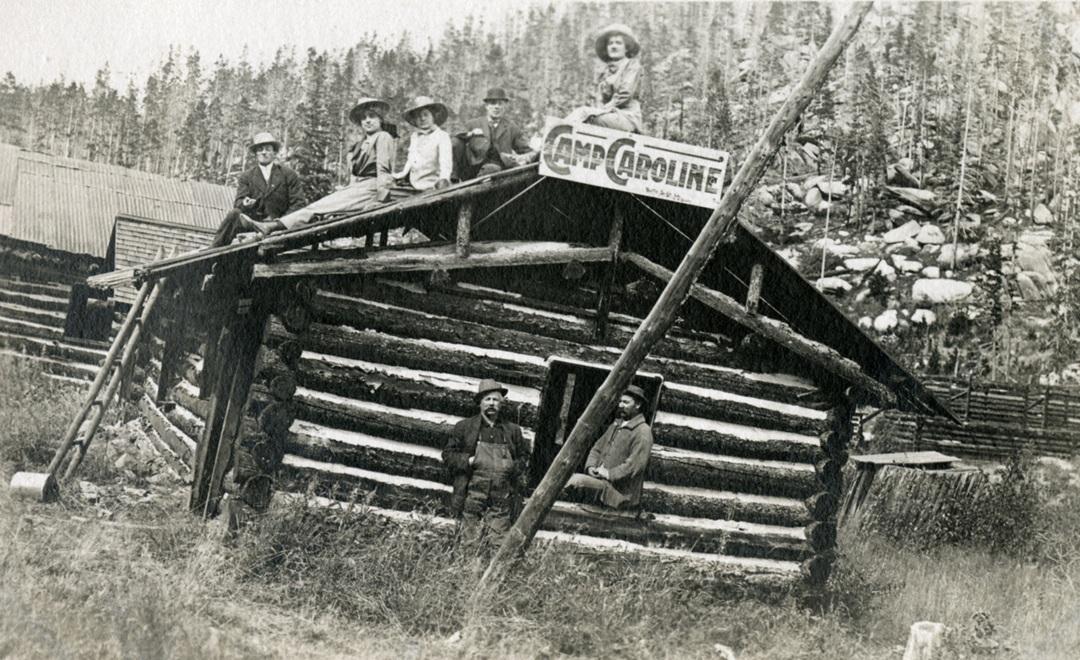
    <summary type="html"><![CDATA[<p><strong><em>While some African Americans in Butte were doctors, lawyers, and business owners, most Black residents worked humble jobs, using their backs and brawn to build homes, neighborhoods, and community. African American miners, waitresses, porters, cooks, maids, and seamstresses worked to keep the city afloat. </em></strong></p><img src="https://storyofbutte.org/files/fullsize/9d45000820428142a4a10a51492bf609.jpg" alt="Camp Caroline" /><br/><p>Prejudice largely accounts for the limited professions offered to minority communities. Black residents in Butte took those limits and patronized where they were accepted and comfortable. Thus, Butte once had three nightclubs, two shoeshine parlors, and two restaurants that served a strictly Black clientele.</p><p>Mining was the most prominent, and arguably important, job in Butte. The city was founded off the capital and success of taking gold, silver, and copper from the ground. The profession was very dangerous; many risked their lives and thousands perished while traveling deep into the mines for work.</p><p>Although mining was not seen as a glamourous job, many mining companies would not hire the Black community solely because of the color of their skin. Marcus Daly, one of the three copper kings in Butte, was notorious for refusing employment to African Americans in his mines.</p><p>Camp Caroline, just west of the Continental Divide off Homestake Pass, was not geographically connected to Butte, but its cultural and business connections to the city and the Black community run deep. Richard Brown worked as a hoisting engineer at the Mountain Chief mine at Camp Caroline, one of the few African Americans to work as a miner in Butte. African American wood cutters produced firewood and timber for Butte’s residents and businesses. The Brown family operated a boarding house at Camp Caroline that served the miners and timber cutters within the Homestake area, and being the only place to eat in a fourteen-mile radius, racial differences were of little issue. The boarding house also served as a recreational center for the Black community. Many descendants of the Brown family still live in Butte and own the mining claims and land near Camp Caroline.</p><p><em><strong><a href="https://storyofbutte.org/items/show/3513">For more (including 3 images) view the original article</a></strong></em></p>]]></summary>
    <published>2025-02-07T21:30:53+00:00</published>
    <updated>2026-04-17T19:58:10+00:00</updated>
    <link rel="alternate" type="text/html" href="https://storyofbutte.org/items/show/3513"/>
    <id>https://storyofbutte.org/items/show/3513</id>
    <author>
      <name>Story of Butte</name>
    </author>
  </entry>
  <entry>
    <title type="html"><![CDATA[Making a Difference]]></title>
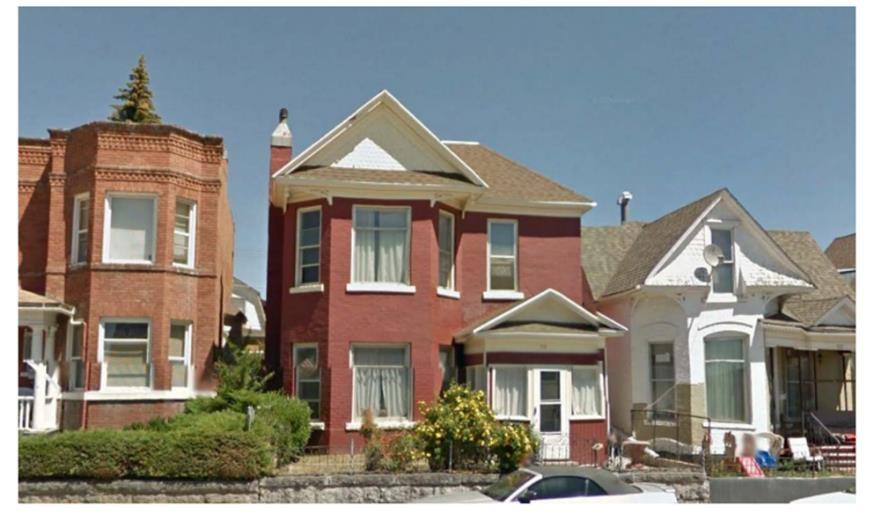
    <summary type="html"><![CDATA[<p><strong><em>In the 1930s and 40s, African Americans in Butte advocated for better education, political presence, and social reform. </em></strong></p><img src="https://storyofbutte.org/files/fullsize/c54f172d744cf5818f744e1c2b23654d.jpg" alt="Duncan Family Home" /><br/><p>Residents established multiple clubs and associations including the Colored Democratic Club, Colored Progressive League, Colored Masons, and Crisenda Club. But the most notable social reforms came from women’s clubs.</p><p>Founded in 1902, the Afro-American Women’s Club is believed to be the first Black women’s club in Montana. This club sought ways to advance culture, music, industry, homelife, and the social level of women. They fought against racial discrimination and initiated the establishment of kindergartens, nurseries, and industrial classes to accommodate the need for childcare and education.</p><p>The Pearl Club (originally the Pearl Unit), founded in 1918, comprised a group of women who raised funds for soldiers during the First World War. The main goal of the club was to push for education and advancement of African Americans living in Montana.</p><p>The Montana Federation of Colored Women was founded in 1921 by Armeta Duncan. The club was created to “encourage and uplift true womanhood and to promote interest in social uplift.” They actively fought prejudice, campaigning for civil rights in Montana laws. The club paid college tuition costs for dozens of African American students.</p><p>Armeta Duncan and her husband, Dr. John W. Duncan, lived in a stylish two-story Victorian house on West Park Street. The Duncan family were one of Butte’s most notable African American families; they were professional and commercial leaders as doctors, teachers, and business owners. Taking positions not often awarded to people of color, they pushed for reform, believing discrimination could be mitigated by education, self-help, and Black pride. John Walter Duncan published The New Age, Butte’s only African American newspaper between May 30, 1902, and February 7, 1903. The paper was the leading race journal of Montana, offering columns on news of the women’s club, social events, national events, and informing the community of political and legislative news.</p><p>Other influential families were the Browns, Fortunes and Fenters. In the 1920s Mary Brown found acclaim and success through her leadership of the African American Mining Company, which supported the city’s Black miners. Joseph Brown was part of an elite group of Black men allowed membership in Butte’s workers unions. His family came to Montana in the 1880s as one of the first African American families to settle in Butte. He was a member of the Machinists Union and employee of the Texaco Corporation for 20 years. Hiawatha and Henry Brown became sports heroes at Butte High School in the early 1930s, excelling in football, basketball and track. Hi later coached and was the recreation leader at Grant Elementary School. In the 1950s, the brothers were among an elite few who were employed as miners by the Anaconda Company. The Brown family most notably fought against racial barriers and advocated for their community, pushing for social acceptance and political rights, joining organizations typically reserved solely for white people and finding success in the mines and in commercial enterprises. </p><p>Charles “Elmo” Fortune was raised in Butte, attended Butte High School, and with the Brown brothers was one of few Black men allowed to work in the Anaconda Company’s Kelley Mine. While working in the mines, Elmo trained other men in the profession while maintaining their safety. He worked for the Anaconda Company most of his life. </p><p>Ophelia Fenter was Butte High School’s first Black home economics teacher, working 14 years for the district. </p><p><em><strong><a href="https://storyofbutte.org/items/show/3512">For more (including 2 images) view the original article</a></strong></em></p>]]></summary>
    <published>2025-02-07T18:12:22+00:00</published>
    <updated>2026-04-17T19:58:10+00:00</updated>
    <link rel="alternate" type="text/html" href="https://storyofbutte.org/items/show/3512"/>
    <id>https://storyofbutte.org/items/show/3512</id>
    <author>
      <name>Story of Butte</name>
    </author>
  </entry>
</feed>