<?xml version="1.0" encoding="UTF-8"?>
<feed xmlns="http://www.w3.org/2005/Atom">
  <title type="text">Story of Butte</title>
  <updated>2026-04-17T19:58:10+00:00</updated>
  <generator uri="http://framework.zend.com" version="1.12.20">Zend_Feed_Writer</generator>
  <link rel="alternate" type="text/html" href="https://storyofbutte.org/"/>
  <link rel="self" type="application/atom+xml" href="https://storyofbutte.org/items/browse?output=rss2"/>
  <id>https://storyofbutte.org/</id>
  <author>
    <name>Story of Butte</name>
    <uri>https://storyofbutte.org</uri>
  </author>
  <link rel="hub" href="https://pubsubhubbub.appspot.com/"/>
  <entry>
    <title type="html"><![CDATA[Using Back and Brawn to Build Community]]></title>
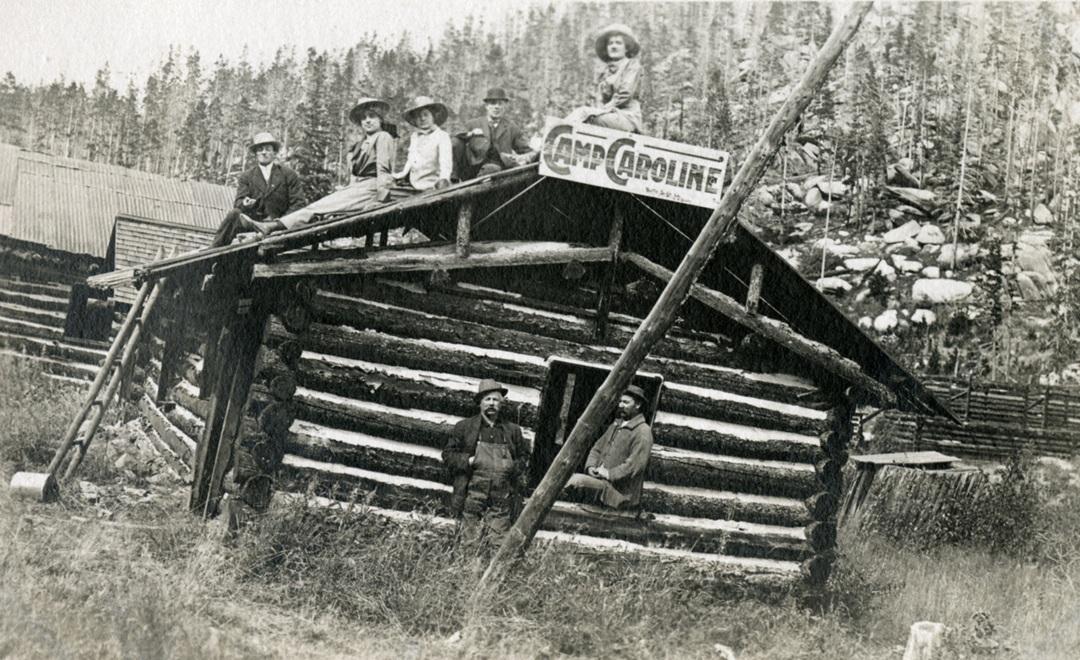
    <summary type="html"><![CDATA[<p><strong><em>While some African Americans in Butte were doctors, lawyers, and business owners, most Black residents worked humble jobs, using their backs and brawn to build homes, neighborhoods, and community. African American miners, waitresses, porters, cooks, maids, and seamstresses worked to keep the city afloat. </em></strong></p><img src="https://storyofbutte.org/files/fullsize/9d45000820428142a4a10a51492bf609.jpg" alt="Camp Caroline" /><br/><p>Prejudice largely accounts for the limited professions offered to minority communities. Black residents in Butte took those limits and patronized where they were accepted and comfortable. Thus, Butte once had three nightclubs, two shoeshine parlors, and two restaurants that served a strictly Black clientele.</p><p>Mining was the most prominent, and arguably important, job in Butte. The city was founded off the capital and success of taking gold, silver, and copper from the ground. The profession was very dangerous; many risked their lives and thousands perished while traveling deep into the mines for work.</p><p>Although mining was not seen as a glamourous job, many mining companies would not hire the Black community solely because of the color of their skin. Marcus Daly, one of the three copper kings in Butte, was notorious for refusing employment to African Americans in his mines.</p><p>Camp Caroline, just west of the Continental Divide off Homestake Pass, was not geographically connected to Butte, but its cultural and business connections to the city and the Black community run deep. Richard Brown worked as a hoisting engineer at the Mountain Chief mine at Camp Caroline, one of the few African Americans to work as a miner in Butte. African American wood cutters produced firewood and timber for Butte’s residents and businesses. The Brown family operated a boarding house at Camp Caroline that served the miners and timber cutters within the Homestake area, and being the only place to eat in a fourteen-mile radius, racial differences were of little issue. The boarding house also served as a recreational center for the Black community. Many descendants of the Brown family still live in Butte and own the mining claims and land near Camp Caroline.</p><p><em><strong><a href="https://storyofbutte.org/items/show/3513">For more (including 3 images) view the original article</a></strong></em></p>]]></summary>
    <published>2025-02-07T21:30:53+00:00</published>
    <updated>2026-04-17T19:58:10+00:00</updated>
    <link rel="alternate" type="text/html" href="https://storyofbutte.org/items/show/3513"/>
    <id>https://storyofbutte.org/items/show/3513</id>
    <author>
      <name>Story of Butte</name>
    </author>
  </entry>
  <entry>
    <title type="html"><![CDATA[Frank Little Tour: Nora Byrne&#039;s Boarding House: Site of Frank Little&#039;s Kidnapping]]></title>
    <summary type="html"><![CDATA[<p><strong><em>Six masked men dragged Frank Little out of this boarding house at 3 a.m. on August 1, 1917, and drove away in a black Cadillac.</em></strong></p><img src="https://storyofbutte.org/files/fullsize/66338ac241fbbf9eb955aa2cc537dc82.jpg" alt="North Wyoming Street" /><br/><p>The large Butte Brewing Company took up much of the 200 block of North Wyoming. Wedged between the Brewing Company and the Finlander Hall was a residential flat and a boarding house. The boarding house was where Frank Little stayed in Butte, and where he spent his last night on earth.</p><p>The boarding house was owned by Nora Byrne, an immigrant from Ireland. She was a widowed mother, and boarding houses were one of the few businesses available at the time to women who needed to support themselves and their families. </p><p>When Little arrived, Byrne set him up in a room near the front entrance due to his broken ankle. Little returned to his room to sleep and write letters throughout his stay in Butte. On his third day in town, he returned to his room to find an envelope waiting for him. Inside was a note reading: “This is the first warning. Beware. 3-7-77.” </p><p>The numbers 3-7-77 were the calling card of the nineteenth-century Montana vigilantes. The specific meaning of the numbers is much debated today, but there is no question that they threatened death. Little showed the note to a fellow union organizer, then shrugged, tore it up, and went on with his business in town for the next ten days.</p><p>On July 31, in broad daylight, some unidentified men visited Nora Byrne’s boarding house. They asked about the new person (Frank Little) staying there. Later that evening, as Frank was returning to the boarding house, a barber stopped him outside the O’Brien Saloon on the corner of Wyoming and Copper Streets. The barber told Little that a lynching party was being formed, and he urged Little to leave town. But Little made no plans to leave. He returned to the boarding house, stripped down to his underwear, put his crutches away, and went to bed.</p><p>At 3 am that night, now August 1, a black Cadillac pulled up in front of the boarding house and six men in masks jumped out. Bearing pistols, they woke up Nora Byrne. They told her they were “officers,” and said they were looking for a man named Frank Little. She directed them to Little’s door, which they smashed open. The men dragged Frank out of bed and out of the boarding house, stuffed him in the car, and sped north on Wyoming Street, into the dark.</p><p>(Just a half block west on Quartz Street there is a memorial to Frank Little’s kidnapping. The kidnapping getaway route, however, does not seem to have been on Quartz Street).</p><p><em><strong><a href="https://storyofbutte.org/items/show/3417">For more (including 3 images) view the original article</a></strong></em></p>]]></summary>
    <published>2022-07-18T22:57:52+00:00</published>
    <updated>2026-04-17T19:58:08+00:00</updated>
    <link rel="alternate" type="text/html" href="https://storyofbutte.org/items/show/3417"/>
    <id>https://storyofbutte.org/items/show/3417</id>
    <author>
      <name>Leif Fredrickson</name>
    </author>
  </entry>
  <entry>
    <title type="html"><![CDATA[127 East Center Street: Butte Historic District]]></title>
    <summary type="html"><![CDATA[<img src="https://storyofbutte.org/files/fullsize/eecf2d3218d47877704a703960cf369c.jpg" alt="127 East Center Street, Butte" /><br/><p>Legend has it that the accidental death of a young boy on a mining claim prompted the construction of this boardinghouse circa 1897. Copper miner Alexander Rowe and his wife, Esther, had purchased the lot from wealthy businessman Patrick Largey. The Rowes operated a neighborhood boardinghouse catering mostly to mine workers. Its size and fashionable design, reminiscent of the Georgian style, make this a Centerville landmark. A square plan and five arched windows across the front reveal the Georgian influence while the front porch, an amenity essential to any boardinghouse, features typical Victorian-era ornamentation including original spindlework, curved balusters, and scroll brackets. The Rowes made their home here along with their daughter and several other family members. In 1910, an engineer, a watchman, and an Episcopal clergyman were among the ten boarders. By the late 1930s, the John Downey family was in residence and the boardinghouse was converted to a single family home.</p><p><em><strong><a href="https://storyofbutte.org/items/show/3347">For more view the original article</a></strong></em></p>]]></summary>
    <published>2021-09-03T15:43:47+00:00</published>
    <updated>2026-04-17T19:58:08+00:00</updated>
    <link rel="alternate" type="text/html" href="https://storyofbutte.org/items/show/3347"/>
    <id>https://storyofbutte.org/items/show/3347</id>
    <author>
      <name>Montana Historical Society</name>
    </author>
  </entry>
  <entry>
    <title type="html"><![CDATA[Kenwood Building: 63 W Broadway]]></title>
    <summary type="html"><![CDATA[<img src="https://storyofbutte.org/files/fullsize/4fc627adedce6914b81457c50703b86b.jpg" alt="The Kenwood building, Butte, MT" /><br/><p>When sisters Marie and Gunelia Brecke opened their first lodging house on North Main Street in 1886, they had to haul water from a nearby well. They soon moved their business to West Broadway and continued to own and manage rooming houses and hotels, even after Marie married—and later divorced—stationary engineer Victor Huffman. To meet the booming city’s demand for commercial and living spaces, the sisters hired Butte architect H. M. Patterson to design this building in 1901. The first floor, which featured floor-to-ceiling show windows, was rented to businesses. The upper floors served as offices and living quarters; tenants included both professionals and miners. Constructed for $40,000 (approximately $1.2 million in 2020 dollars), the “modern building” was “heated with steam and lighted with electricity.” Each room contained its own “ever-necessary wash stand” and clothes closet. To avoid the health problems commonly associated with tenement apartments, Patterson designed the Kenwood so that all rooms received natural light and had good ventilation. By 1909, the basement served as a National Guard armory. Marie lived in the Kenwood until her death in 1937.</p><p><em><strong><a href="https://storyofbutte.org/items/show/3327">For more (including 3 images) view the original article</a></strong></em></p>]]></summary>
    <published>2021-07-20T20:40:13+00:00</published>
    <updated>2026-04-17T19:58:07+00:00</updated>
    <link rel="alternate" type="text/html" href="https://storyofbutte.org/items/show/3327"/>
    <id>https://storyofbutte.org/items/show/3327</id>
    <author>
      <name>Montana Historical Society</name>
    </author>
  </entry>
  <entry>
    <title type="html"><![CDATA[Stephens Block: 140-146 West Park]]></title>
    <summary type="html"><![CDATA[<img src="https://storyofbutte.org/files/fullsize/5e1706c4f7d2e59c8812814cb7cff544.jpg" alt="Stephens Block, Butte" /><br/><p>Successful Irish immigrant Frank Stephens built this prominent, Queen Anne style retail and boardinghouse block in 1891. Stephens chose the Park and Montana location because the basement was already dug. He wrote a check for $499 for the “hole in the ground” on May 4, 1889. The building’s richly ornamented corner turret, decorative cast-iron pilasters (flat columns), and soaring plate-glass windows represented the height of fashion. The thirty-two-room Stephen’s Hotel operated as a boardinghouse and apartments for decades. The upper floors remain in near original condition, with few modern improvements made over the last century. In fact, the upper two floors still have only one bath and one water closet (toilet) per floor. The main floor and basement were home to many successful businesses including Lutey’s Grocers, one of the first self-serve grocery stores in Butte. Below the sidewalks, Joseph Richards, the Butte Undertaker, operated one of Butte’s first undertaking businesses until 1908. When Frank Stephens died in 1898, he was laid in state in the hall at the top of the first flight of stairs.</p><p><em><strong><a href="https://storyofbutte.org/items/show/3028">For more (including 9 images) view the original article</a></strong></em></p>]]></summary>
    <published>2020-05-07T16:05:34+00:00</published>
    <updated>2026-04-17T19:58:07+00:00</updated>
    <link rel="alternate" type="text/html" href="https://storyofbutte.org/items/show/3028"/>
    <id>https://storyofbutte.org/items/show/3028</id>
    <author>
      <name>Montana Historical Society</name>
    </author>
  </entry>
  <entry>
    <title type="html"><![CDATA[Scott Block : Butte National Historic Landmark District]]></title>
    <summary type="html"><![CDATA[<img src="https://storyofbutte.org/files/fullsize/cd2d33947f0d8265889b5595d742e5c7.jpg" alt="Scott Block" /><br/><p>Single copper miners found ample accommodations at this fine boarding house, built in 1897 by the Scott family. The handsome brick building with its full-height opposing bays, transomed windows, bracketed wood cornice, and central name plate illustrates an urban solution to a mining camp problem: adequate and ample housing for single men. In 1910, boardinghouse keeper Mrs. Mary Long had thirteen lodgers, and all but one a postal clerk worked in the copper mining industry. Rented rooms were on the second and third floors. Mrs. Long had her own rooms on the ground floor, where she prepared meals and served her boarders. Extensive rehabilitation between 1991 and 1994 included a new metal roof like the original and restoration of interior transoms and rosette-trimmed woodwork. During these efforts, owners found a Prohibition Era treasure: concealed under the furnace room floor were two intact whiskey barrels.</p><p><em><strong><a href="https://storyofbutte.org/items/show/2092">For more view the original article</a></strong></em></p>]]></summary>
    <published>2016-07-25T16:29:51+00:00</published>
    <updated>2026-04-17T19:58:06+00:00</updated>
    <link rel="alternate" type="text/html" href="https://storyofbutte.org/items/show/2092"/>
    <id>https://storyofbutte.org/items/show/2092</id>
    <author>
      <name>Montana National Register Sign Program</name>
    </author>
  </entry>
  <entry>
    <title type="html"><![CDATA[Montana Leather Company: Butte National Historic Landmark District]]></title>
    <summary type="html"><![CDATA[<img src="https://storyofbutte.org/files/fullsize/8583765a3d151bcb72fdd2dfc516d590.jpg" alt="Montana Leather Company" /><br/><p>A log barbershop did business at this location in 1884. By 1891, a frame carpenter’s shop occupied the premises, and at the back was an iron-clad corral serving the Oregon Livery next door. By 1900, the livery stable had become the Montana Concert Hall, the corral had been remodeled into dressing rooms, and a saloon had replaced the carpenter’s shop. This building was constructed circa 1908, likely incorporating the frame saloon into the new brick building. A wooden porch accessed by a central doorway once spanned the front façade, serving residents of the second-floor rooming house. Although the rooming house backed up to Butte’s most notorious red light alley, it was a respectable business. In 1920, tenant landlady Mary Tallon lived upstairs with her three children and eight lodgers. Downstairs the MacPherson family, owners of this building and the one next door, ran the Montana Leather Company, which specialized in wholesale leather, shoe machinery, shoe findings, and repairs. The MacPhersons operated their business here from 1918 through the 1980s.</p><p><em><strong><a href="https://storyofbutte.org/items/show/2078">For more view the original article</a></strong></em></p>]]></summary>
    <published>2016-07-25T16:29:50+00:00</published>
    <updated>2026-04-17T19:58:06+00:00</updated>
    <link rel="alternate" type="text/html" href="https://storyofbutte.org/items/show/2078"/>
    <id>https://storyofbutte.org/items/show/2078</id>
    <author>
      <name>Montana National Register Sign Program</name>
    </author>
  </entry>
  <entry>
    <title type="html"><![CDATA[Inter Ocean Hotel: Butte National Historic Landmark District]]></title>
    <summary type="html"><![CDATA[<img src="https://storyofbutte.org/files/fullsize/9ab6c4776beecdb0938760eaf292814f.jpg" alt="Inter Ocean Hotel" /><br/><p>Originally built by Ben Johnson in 1881 as a one-story hotel convenient to Montana Union Railway brakemen, firemen, engineers, and conductors, this residence ballooned in stages with the addition of a basement, upper floors, kitchen, and back rooms. Annie Boland was proprietress in 1885. By 1911, Chris Wolffs advertised furnished rooms. Wolffs’s widow, Annie, operated a grocery, confectionery, and rooming house here until her death in 1929. Her daughter Anna Stopher Berkley provided a midwife service—perhaps for unwed mothers—and ran the boarding house. Anna’s son Russell took over the longtime family business in 1952, and with his wife, Alma, offered furnished rooms until the mid-1980s. Recent renovations have produced some surprising hints at a colorful past. New owners discovered women’s Depression-era skull-cap hats stuffed in walls as insulation, 1920s silver coins buried in the basement, hand-painted Hennessy’s streetcar placards used as kitchen walls, candy jars concealed in crawlspaces, and hotel guest registers. Excavation of a rear cesspool yielded a Model A Ford and a turn-of-the-century handgun.</p><p><em><strong><a href="https://storyofbutte.org/items/show/2062">For more view the original article</a></strong></em></p>]]></summary>
    <published>2016-07-25T16:29:50+00:00</published>
    <updated>2026-04-17T19:58:06+00:00</updated>
    <link rel="alternate" type="text/html" href="https://storyofbutte.org/items/show/2062"/>
    <id>https://storyofbutte.org/items/show/2062</id>
    <author>
      <name>Montana National Register Sign Program</name>
    </author>
  </entry>
</feed>
