<?xml version="1.0" encoding="UTF-8"?>
<feed xmlns="http://www.w3.org/2005/Atom">
  <title type="text">Story of Butte</title>
  <updated>2026-04-22T19:38:41+00:00</updated>
  <generator uri="http://framework.zend.com" version="1.12.20">Zend_Feed_Writer</generator>
  <link rel="alternate" type="text/html" href="https://storyofbutte.org/"/>
  <link rel="self" type="application/atom+xml" href="https://storyofbutte.org/items/browse?output=rss2"/>
  <id>https://storyofbutte.org/</id>
  <author>
    <name>Story of Butte</name>
    <uri>https://storyofbutte.org</uri>
  </author>
  <link rel="hub" href="https://pubsubhubbub.appspot.com/"/>
  <entry>
    <title type="html"><![CDATA[Andrew J. Davis Jr. Residence]]></title>
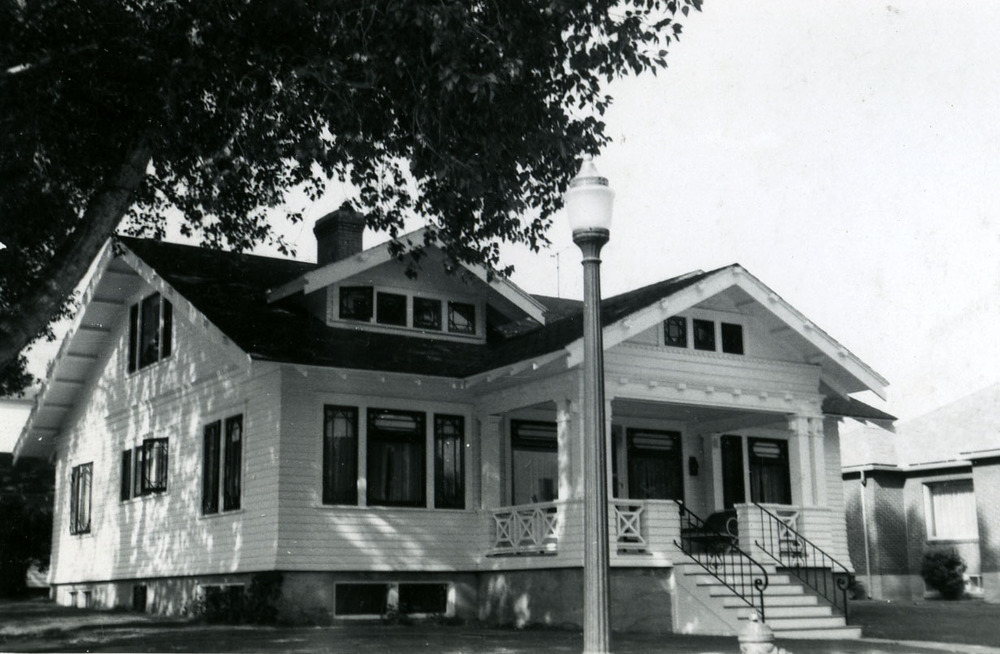
    <summary type="html"><![CDATA[<p><strong><em>An example of Butte’s “bungalow boom,” this Craftsman style home illustrates how the city’s sparsely populated southwestern edges transformed into middle- and upper-class neighborhoods in the 1910s. </em></strong></p><img src="https://storyofbutte.org/files/fullsize/24b3c69b18e74a7c893415771c591bfe.jpg" alt="1062 West Platinum Street" /><br/><p>The bungalow—a popular turn-of-the-twentieth-century choice for single-family homes—reflected middle-class desires for unpretentious design. Butte Commercial Company vice-president Herman Meyer built this investment home in 1913. Despite its humble exterior, the interior includes a brick fireplace, inlaid hardwood floors, and a drive-in basement garage—a novelty for the time. A booming wartime economy and decreasing automobile prices ignited Butte car culture. In 1916, almost half of the block’s houses had garages. By 1917, elite Butte newlyweds Marguerite and Andrew J. Davis Jr. moved in. Andrew, the great-nephew of local banker Andrew J. Davis, clerked at First National Bank. Marguerite volunteered for the Butte Auxiliary for the Rehabilitation of Crippled Children. In 1921, the Davises added a master suite with a walk-in closet and a basement maids’ quarters. They sold the home in 1931, the same year a twenty-two-year-old woman unsuccessfully sued Andrew for $200,000 for allegedly assaulting her on a train. The couple divorced a few years later.</p><p><em><strong><a href="https://storyofbutte.org/items/show/3494">For more view the original article</a></strong></em></p>]]></summary>
    <published>2024-01-10T03:27:53+00:00</published>
    <updated>2026-04-17T19:58:10+00:00</updated>
    <link rel="alternate" type="text/html" href="https://storyofbutte.org/items/show/3494"/>
    <id>https://storyofbutte.org/items/show/3494</id>
    <author>
      <name>Montana Historical Society</name>
    </author>
  </entry>
  <entry>
    <title type="html"><![CDATA[Cocking House]]></title>
    <summary type="html"><![CDATA[<img src="https://storyofbutte.org/files/fullsize/34c620a8f16d42a6312bf6759c05d286.jpg" alt="501 South Colorado" /><br/><p>The Miner’s Lumber Company storage yard occupied this corner of Colorado Street until 1896 when mine carman Fred H. Kohl built this brick-veneered duplex for $1,600. Kohl, who was elected County Clerk and Recorder that year, rented the house to miners. The home—originally designed in the Queen Anne style—featured projecting bay windows, colored glass transoms, and spindlework porch railings. As the Craftsman style gained favor after 1910, new owners, James. G. and May Cocking, updated the interior and exterior. Signature exterior Craftsman style elements include the tapered porch columns, shingled dormer, and exposed brackets in the eaves. The Cockings lived here from 1904 until May’s death in 1966. James ran a coffee and tea business from the house and May was a homemaker and landlady. In 1921, with the mines closed and the city facing bankruptcy, James successfully ran for mayor. His campaign promise, “If elected I will insist that this city lives within its income,” resonated with residents, and he easily defeated incumbent William H. Davies. Although he was not reelected in 1923, James saved Butte taxpayers $500,000 during his term.</p><p><em><strong><a href="https://storyofbutte.org/items/show/3492">For more view the original article</a></strong></em></p>]]></summary>
    <published>2024-01-10T03:17:24+00:00</published>
    <updated>2026-04-17T19:58:10+00:00</updated>
    <link rel="alternate" type="text/html" href="https://storyofbutte.org/items/show/3492"/>
    <id>https://storyofbutte.org/items/show/3492</id>
    <author>
      <name>Montana Historical Society</name>
    </author>
  </entry>
  <entry>
    <title type="html"><![CDATA[Lanphier House]]></title>
    <summary type="html"><![CDATA[<img src="https://storyofbutte.org/files/fullsize/90e5b123aeea750ca30772619b316318.jpg" alt="1016 West Broadway" /><br/><p>Thomas “T. J.” Lanphier immigrated to the United States from Canada, learning the wholesale food business as a grain trader in Chicago. He traveled through Montana while representing the Dakota Millers Association, eventually settling in Butte where he established a food brokerage with partners George Lounsbery and Thomas Casey. In 1906, he married Butte teacher Mary Ellen Feeney. The Lanphiers constructed this Craftsman style bungalow across the street from Thomas Casey in 1911. Exposed rafter tails beneath broad sweeping eaves, a large open porch with tapered columns, and a central dormer dominating the façade exemplify the style. Mary died in 1925, and T. J. married Anna Laughlin in 1928. He traveled often for business and Anna took a central role in raising the family’s five children. She also hosted numerous social events at the Butte Country Club and participated in the Delphian Society, a national organization that promoted the education of women. Three of the children, Father Leo Lanphier, S. J., and Sisters Joseta Mary and Jean (Immaculate Heart) pursued Catholic vocations. T. J. and Anna remained in residence until T. J.’s death in 1957.</p><p><em><strong><a href="https://storyofbutte.org/items/show/3489">For more view the original article</a></strong></em></p>]]></summary>
    <published>2024-01-10T02:55:06+00:00</published>
    <updated>2026-04-17T19:58:10+00:00</updated>
    <link rel="alternate" type="text/html" href="https://storyofbutte.org/items/show/3489"/>
    <id>https://storyofbutte.org/items/show/3489</id>
    <author>
      <name>Montana Historical Society</name>
    </author>
  </entry>
  <entry>
    <title type="html"><![CDATA[Margetts House]]></title>
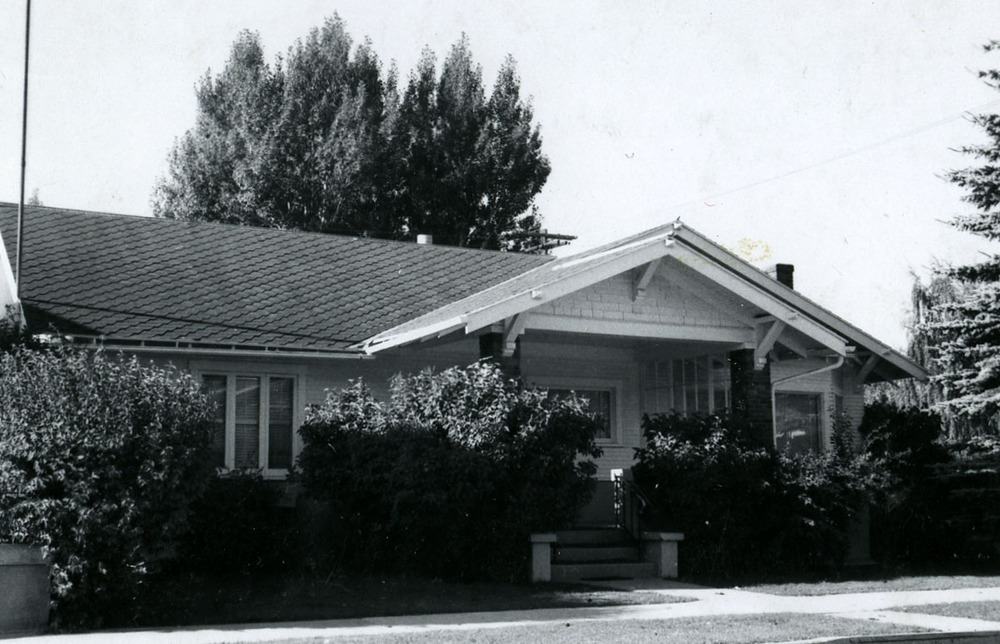
    <summary type="html"><![CDATA[<p><strong><em>Extraordinary demand for copper in the early 1900s brought thousands of workers to Butte and spawned a building boom. Craftsman style bungalows proliferated in Butte’s southwest neighborhood between 1910 and 1918.</em></strong></p><img src="https://storyofbutte.org/files/fullsize/f1aa2be9d3e74ddae904b0b4fa77d816.jpg" alt="1040 West Platinum Street" /><br/><p> The subdivision attracted small business owners, skilled workers, and occasionally, lawyers, doctors, and high-ranking Anaconda Copper Mining Company (ACM) employees like Leslie R. Margetts. Leslie was the superintendent of the Washoe Sampler, ACM’s division in charge of ore sampling and grading. Leslie and his wife Annie purchased this two-bedroom bungalow when it was new in 1916. The hipped roof, overhanging eaves, and shingle siding are hallmarks of the Craftsman style. The Margetts devoted their free time to fraternal organizations and community improvement. Leslie was 1928 master of the Masonic Silver Bow Lodge No. 48, 1929 President of the Butte Kiwanis Club, and 1942 potentate of the Butte Bagdad Temple of the Shrine. Annie was known for her paintings and acting in local plays. She was also a charter member and 1931 queen of the Tirzah Shrine Temple’s Daughters of the Nile. The Margetts remained in residence until Leslie died in 1955.</p><p><em><strong><a href="https://storyofbutte.org/items/show/3482">For more view the original article</a></strong></em></p>]]></summary>
    <published>2024-01-10T02:24:43+00:00</published>
    <updated>2026-04-17T19:58:10+00:00</updated>
    <link rel="alternate" type="text/html" href="https://storyofbutte.org/items/show/3482"/>
    <id>https://storyofbutte.org/items/show/3482</id>
    <author>
      <name>Montana Historical Society</name>
    </author>
  </entry>
  <entry>
    <title type="html"><![CDATA[Odgers House]]></title>
    <summary type="html"><![CDATA[<img src="https://storyofbutte.org/files/fullsize/28b82cf15ccf36f957d7e159a3d7bf34.jpg" alt="1014 West Platinum" /><br/><p>In 1915, Mary C. Odgers, Cornish miner’s widow, purchased this five-bedroom Craftsman style bungalow when it was new. After her husband died of miners’ consumption (lung disease) in 1902, Mary received $5,000 in life insurance. Her sons William and Garfield and daughter Ada attended Butte Business College and secured jobs in accounting and stenography. Their success allowed the family to leave working-class Centerville (their community since the 1880s) and move to Butte’s up-and-coming southwest side. William and Garfield supported their mother and other sister Katie by clerking for the Anaconda Company and Continental Oil. When Mary died in 1924, they sold the home to John and Louise Lousen, Slovenian immigrants with six children. John and his brother Charles operated a men’s clothing store, Lousen Bros., that served miners and businessmen alike. John also participated in the Slavonic Civic and Culture Club and the Slovene National Benefit Society. Four of the five Lousen sons served in World War II. After the war, John and Louise retired to California. Their eldest son Edward and his wife Noel resided in the home until their deaths in the 1990s.</p><p><em><strong><a href="https://storyofbutte.org/items/show/3466">For more view the original article</a></strong></em></p>]]></summary>
    <published>2024-01-05T02:29:02+00:00</published>
    <updated>2026-04-22T19:38:41+00:00</updated>
    <link rel="alternate" type="text/html" href="https://storyofbutte.org/items/show/3466"/>
    <id>https://storyofbutte.org/items/show/3466</id>
    <author>
      <name>Montana Historical Society</name>
    </author>
  </entry>
  <entry>
    <title type="html"><![CDATA[Carman House]]></title>
    <summary type="html"><![CDATA[<p><strong><em>Situated far from the mines, southwest Butte grew rapidly in the 1910s, offering middle-class buyers a family-oriented atmosphere. Developers advertised the neighborhood’s access to city water and sewers, proximity to the Emmet Avenue streetcar, and lack of saloons. </em></strong></p><img src="https://storyofbutte.org/files/fullsize/00d38d55138d73f2868847334acf4120.jpg" alt="1161 West Platinum Street" /><br/><p>In 1914, physician Dr. Henry Carman and wife Ester spent $5,000 on this distinctive eight-room Craftsman style bungalow. Stylistic hallmarks include the projecting gabled porch flanked by matching dormers, decorative casement windows, and exposed rafter tails (in the eaves) and purlins (in the gable ends). Ester presided over Associated Charities of Butte helping the “armies of unemployed” who arrived seeking work during the wartime copper boom. In 1918, Dr. Arthur C. and Lois Jones lived here with three young children, Arthur’s sister, his aunt, and their maid. Arthur—a prominent ear, nose, and throat doctor—advocated for better public health, especially tuberculosis prevention and treatment. Lois hosted a fundraiser here in 1918 for war-torn France, during which costumed ladies in themed rooms told fortunes and sold ice cream, candy, and crafts. In 1923, Joseph Kirkpatrick—a buyer for the Anaconda Company’s purchasing department—resided here. His family remained for several decades.</p><p><em><strong><a href="https://storyofbutte.org/items/show/3462">For more view the original article</a></strong></em></p>]]></summary>
    <published>2024-01-05T02:10:01+00:00</published>
    <updated>2026-04-17T19:58:09+00:00</updated>
    <link rel="alternate" type="text/html" href="https://storyofbutte.org/items/show/3462"/>
    <id>https://storyofbutte.org/items/show/3462</id>
    <author>
      <name>Montana Historical Society</name>
    </author>
  </entry>
</feed>