<?xml version="1.0" encoding="UTF-8"?>
<feed xmlns="http://www.w3.org/2005/Atom">
  <title type="text">Story of Butte</title>
  <updated>2026-04-17T19:58:11+00:00</updated>
  <generator uri="http://framework.zend.com" version="1.12.20">Zend_Feed_Writer</generator>
  <link rel="alternate" type="text/html" href="https://storyofbutte.org/"/>
  <link rel="self" type="application/atom+xml" href="https://storyofbutte.org/items/browse?output=rss2"/>
  <id>https://storyofbutte.org/</id>
  <author>
    <name>Story of Butte</name>
    <uri>https://storyofbutte.org</uri>
  </author>
  <link rel="hub" href="https://pubsubhubbub.appspot.com/"/>
  <entry>
    <title type="html"><![CDATA[Hotel-Apartments Rented by Top ACM Officials]]></title>
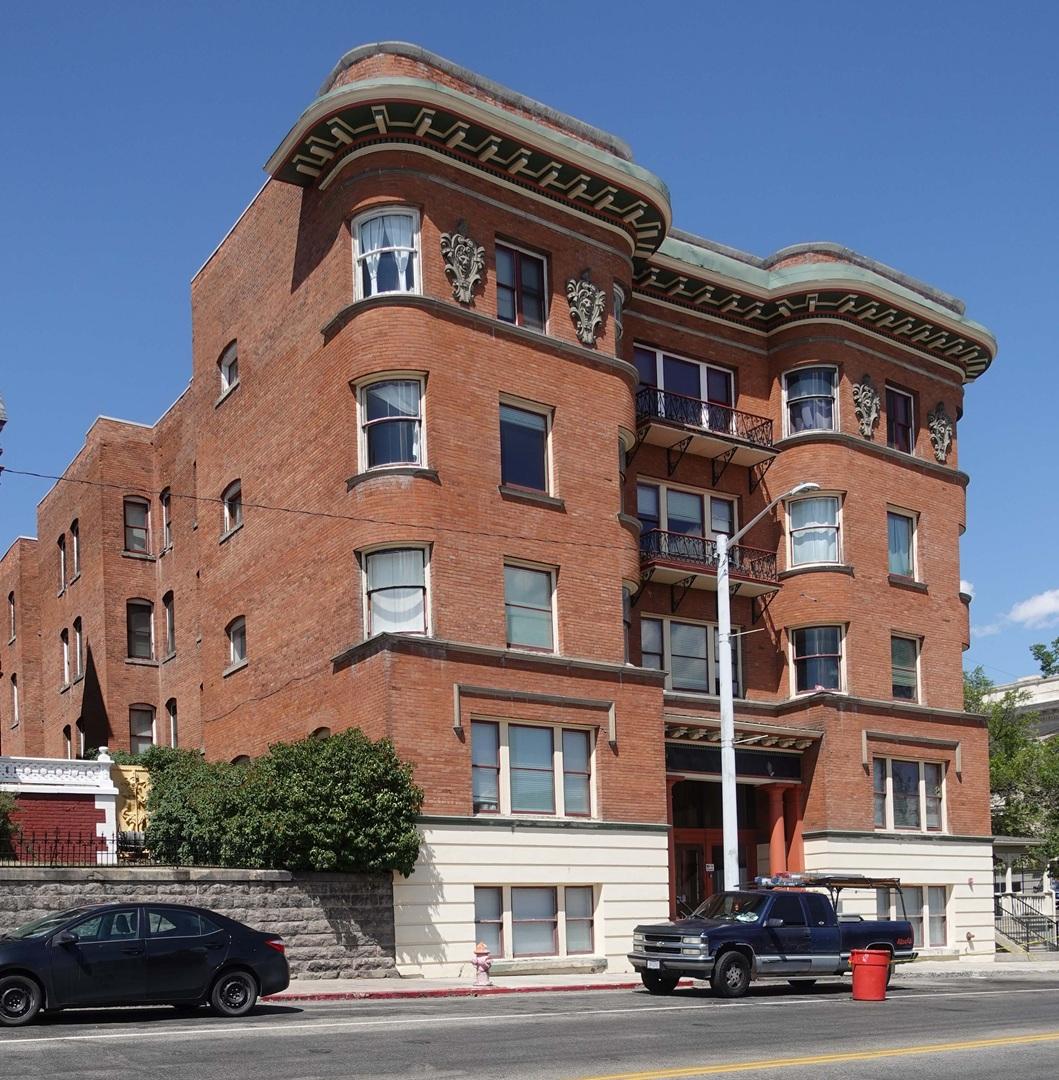
    <summary type="html"><![CDATA[<p><strong><em>Many of the men who worked in high-level positions for ACM lived in hotels, at least for the first few years they were in Butte. Some of those individuals eventually built houses, while others continued to rent rooms during their entire time in Butte. </em></strong></p><img src="https://storyofbutte.org/files/fullsize/ece372146693b9e0ec251a21dce594b5.jpg" alt="Leonard Hotel, 205 W. Granite" /><br/><p>One of the fancy accommodations that housed prominent ACM officials was the Leonard Hotel. Designed by architect W.A. O’Brien, when it opened in 1906, it was touted as one of the most fashionable places to live in Butte. Accommodations ranged from single rooms to suites. There was a spacious lobby, and a café in the basement. Among the prominent ACM officials who lived in the Leonard were geologist Reno Sales, who lived there for three years before building his house at 954 Caledonia, and attorney William Scallon, who served as president of ACM from 1900, when Marcus Daly died, until 1904, when he resigned and returned to being an ACM attorney. He moved into the Leonard when it opened in 1906, and Sales moved to the Leonard a year later. </p><p>The Lenox Hotel and the Beresford Block were both popular abodes for ACM officials. Built in 1897, the Lenox was on the south side of West Granite just west of the Butte Water Company building (formerly the Independent Telephone Company). Con Kelley and L.O. Evans both lived in the Lenox in 1903, and Horace Winchell lived there from 1901 to 1903. The Beresford, once across Quartz Street from the Butte-Silver Bow Public Archives, was built in the early 1890s. William Scallon lived there in 1893.</p><p>Another prominent building for housing ACM officials was the Kingsbury, once located at the site of the Archives parking lot on the northwest corner of Quartz and Main. This made the Kingsbury a convenient place for Anaconda officials to live when offices of the company were located on the upper floors of the Chambers Block and the Tuttle Block. Marcus Daly, engineer Charles Goodale, and attorney D. Gay Stivers all lived in the Kingsbury.  Like the Tuttle Block, the Kingsbury (built in 1882) was originally a two-story building, and a third floor was added in about 1890 or 1891. It had store fronts on the ground floor and offices and sleeping rooms for rent on the upper floors.</p><p>Unlike John D. Ryan and Con Kelley, early ACM presidents who owned mansions on Butte’s West Side, Benjamin B. Thayer, who was ACM president for seven years, never owned his own house in Butte (nor did Marcus Daly). Thayer was born in San Francisco in 1862. He graduated in 1885 from Harvard University, where he was a classmate of William Randolph Hearst, George and Phoebe Hearst’s son. After graduating, he moved to Butte to pursue a career as a mining engineer. His first job in Butte was as a miner in the Anaconda mine. After being promoted to shift boss and then foreman, he moved to Phillipsburg, MT, and the Coeur d’Alene mining district in Idaho for a few years to work in the mining industry. He then began to work for Phoebe Hearst representing the Hearst estate’s mining interest. In the early twentieth century, he worked for Amalgamated as assistant to H.H. Rogers and soon became vice president of ACM. He served as ACM president from 1908 to 1915 and again as vice president until his death in 1933. During his long service with ACM, he also served as an officer of numerous ACM subsidiaries.  He lived on the top floor of the Silver Bow Club until he moved to New York in 1916.</p><p>Foremost among the ACM attorneys who never owned a dwelling in Butte was W.W. Dixon. William Wirt Dixon was born in Brooklyn, NY, in 1838 and gradually moved westward, studying law in Keokuk, Iowa, and arriving in California in 1862. He then moved to Nevada, Helena, Deer Lodge, and the Black Hills before arriving in Butte in 1881. He established a law practice and began to provide legal counsel to Marcus Daly and J.B. Haggin as they launched their Anaconda enterprise. With his law offices first in the Chambers Block and then the Tuttle Block, he was instrumental in helping to incorporate the 1891 Anaconda Mining Company and the 1895 Anaconda Copper Mining Company. When the Hennessy Building was completed in 1899, he moved his office to the sixth floor and took the title of ACM attorney. He died in 1910 in Los Angeles, where he had been living for two years. While living and working in Butte, he moved from one rental abode to another, ending his time in Butte at the Dorothy Block at the northeast corner of Granite and Wyoming.</p><p><em><strong><a href="https://storyofbutte.org/items/show/3570">For more (including 6 images) view the original article</a></strong></em></p>]]></summary>
    <published>2025-11-18T17:07:29+00:00</published>
    <updated>2026-04-17T19:58:11+00:00</updated>
    <link rel="alternate" type="text/html" href="https://storyofbutte.org/items/show/3570"/>
    <id>https://storyofbutte.org/items/show/3570</id>
    <author>
      <name>Fred Quivik</name>
    </author>
  </entry>
  <entry>
    <title type="html"><![CDATA[Thornton Building]]></title>
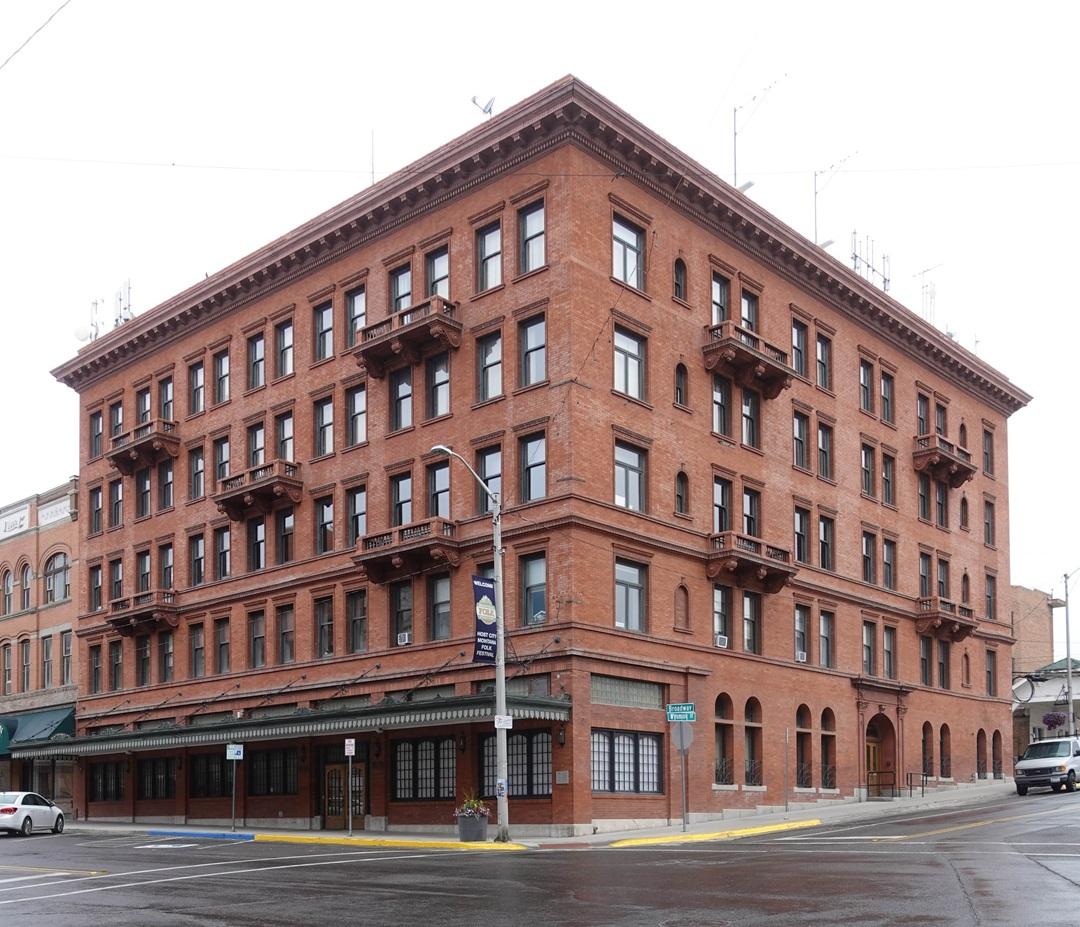
    <summary type="html"><![CDATA[<p><strong><em>William D. Thornton, a graduate of the Columbia University School of Mines in New York City, was a close associate of John D. Ryan. Thornton served as an officer of several of ACM’s subsidiaries, helped Amalgamated take control of F. Augustus Heinze’s copper properties in Butte, and helped Ryan form the Montana Power company. </em></strong></p><img src="https://storyofbutte.org/files/fullsize/81dfad020299b4a97d93ce0ffc3539e4.jpg" alt="Thornton Building" /><br/><p>Born in Deer Lodge in 1870, W.D. Thornton was the son of John C.C. Thornton, who had been a lawyer in Virginia before joining the Confederate Army when the Civil War began. After the war, Col. Thornton, as he was widely known, moved to Deer Lodge and practiced law. He moved to Butte in 1875 and began to invest in mines. He developed the Gagnon mine, just north of the Silver Bow County Courthouse, and it became one of the important early copper mines in Butte. When he sold the Gagnon to the Colorado Smelting & Mining Company, he became one of the company’s major stockholders. John Thornton died in 1887. In about 1890, his estate built a hotel on East Broadway. That building and other properties of the Thornton estate were managed by his widow and his son, William. In the late 1890s, the estate decided to build a much larger and grander building immediately to the east, at the northwest corner of Broadway and Wyoming. W.D. Thornton managed the development.</p><p>W.D. Thornton first entered ACM circles in 1906 when he helped Ryan and Ryan’s close associate, Thomas F. Cole, establish two new companies to acquire Heinze’s copper properties and operations in Butte: the Butte Coalition Mining Company, which would own Heinze’s companies; and the Red Metal Mining Company, which would be the new operating company owned by Butte Coalition. Thornton was vice president of Red Metal. Thornton next helped Amalgamated acquire the Greene Cananea Mining Company in Mexico. In 1908, Thornton, working on behalf of Amalgamated interests, signed a contract to build a new smelter at Tooele, Utah, to smelt ore for the Utah Consolidate Mining Company. This became the Utah smelter of the International Smelting & Refining Company. Ryan, on behalf of Amalgamated, acquired controlling interest in the Alice Gold & Silver Mining Company in 1910 and named Thornton to the board of directors. Ryan combined two copper-mining companies in Arizona in 1911 to form the Inspiration Consolidated Copper Company, and Thornton was made vice president. When Ryan incorporated the new Montana Power Company in 1912, Thornton was on the original board of directors. Later in the 1910s, Thornton moved New York City to work in ACM headquarters as a member of the board of directors. He died in 1953.</p><p>The Thornton Hotel was designed by architects White and Lignell of Butte and was intended to be one of the finest hotels in Butte. (Architect Anton Lignell, a Finnish immigrant, designed several other large Butte buildings, including the Hirbour Block at Broadway and Main, before he moved to Duluth, MN, and continued his architectural practice there.) In August 1899, shortly after excavation for the Thornton Hotel began, workers struck a rich vein of copper ore, briefly delaying construction. When the hotel opened for business in May 1901, one of its features was a bowling alley in the basement operated by I.A. Heilbronner. The Thornton closed as a hotel in 1932 and sat vacant for a few years. The State Liquor Control Board moved its East Broadway store across the street and into the Thornton Hotel in December 1936. ACM bought the Thornton Hotel in late 1945 and announced plans to remodel the building to serve as an employees club. The new club, featuring a refurbished bowling alley, game rooms, snack bar, ladies lounge, and a theater-ballroom suitable for large dinners, opened in March 1947. The building is currently owned by an individual who rents out office spaces.</p><p><em><strong><a href="https://storyofbutte.org/items/show/3562">For more (including 7 images) view the original article</a></strong></em></p>]]></summary>
    <published>2025-11-14T22:54:45+00:00</published>
    <updated>2026-04-17T19:58:11+00:00</updated>
    <link rel="alternate" type="text/html" href="https://storyofbutte.org/items/show/3562"/>
    <id>https://storyofbutte.org/items/show/3562</id>
    <author>
      <name>Fred Quivik</name>
    </author>
  </entry>
  <entry>
    <title type="html"><![CDATA[Inter Ocean Hotel: Butte National Historic Landmark District]]></title>
    <summary type="html"><![CDATA[<img src="https://storyofbutte.org/files/fullsize/9ab6c4776beecdb0938760eaf292814f.jpg" alt="Inter Ocean Hotel" /><br/><p>Originally built by Ben Johnson in 1881 as a one-story hotel convenient to Montana Union Railway brakemen, firemen, engineers, and conductors, this residence ballooned in stages with the addition of a basement, upper floors, kitchen, and back rooms. Annie Boland was proprietress in 1885. By 1911, Chris Wolffs advertised furnished rooms. Wolffs’s widow, Annie, operated a grocery, confectionery, and rooming house here until her death in 1929. Her daughter Anna Stopher Berkley provided a midwife service—perhaps for unwed mothers—and ran the boarding house. Anna’s son Russell took over the longtime family business in 1952, and with his wife, Alma, offered furnished rooms until the mid-1980s. Recent renovations have produced some surprising hints at a colorful past. New owners discovered women’s Depression-era skull-cap hats stuffed in walls as insulation, 1920s silver coins buried in the basement, hand-painted Hennessy’s streetcar placards used as kitchen walls, candy jars concealed in crawlspaces, and hotel guest registers. Excavation of a rear cesspool yielded a Model A Ford and a turn-of-the-century handgun.</p><p><em><strong><a href="https://storyofbutte.org/items/show/2062">For more view the original article</a></strong></em></p>]]></summary>
    <published>2016-07-25T16:29:50+00:00</published>
    <updated>2026-04-17T19:58:06+00:00</updated>
    <link rel="alternate" type="text/html" href="https://storyofbutte.org/items/show/2062"/>
    <id>https://storyofbutte.org/items/show/2062</id>
    <author>
      <name>Montana National Register Sign Program</name>
    </author>
  </entry>
</feed>