Oxidized ore veins
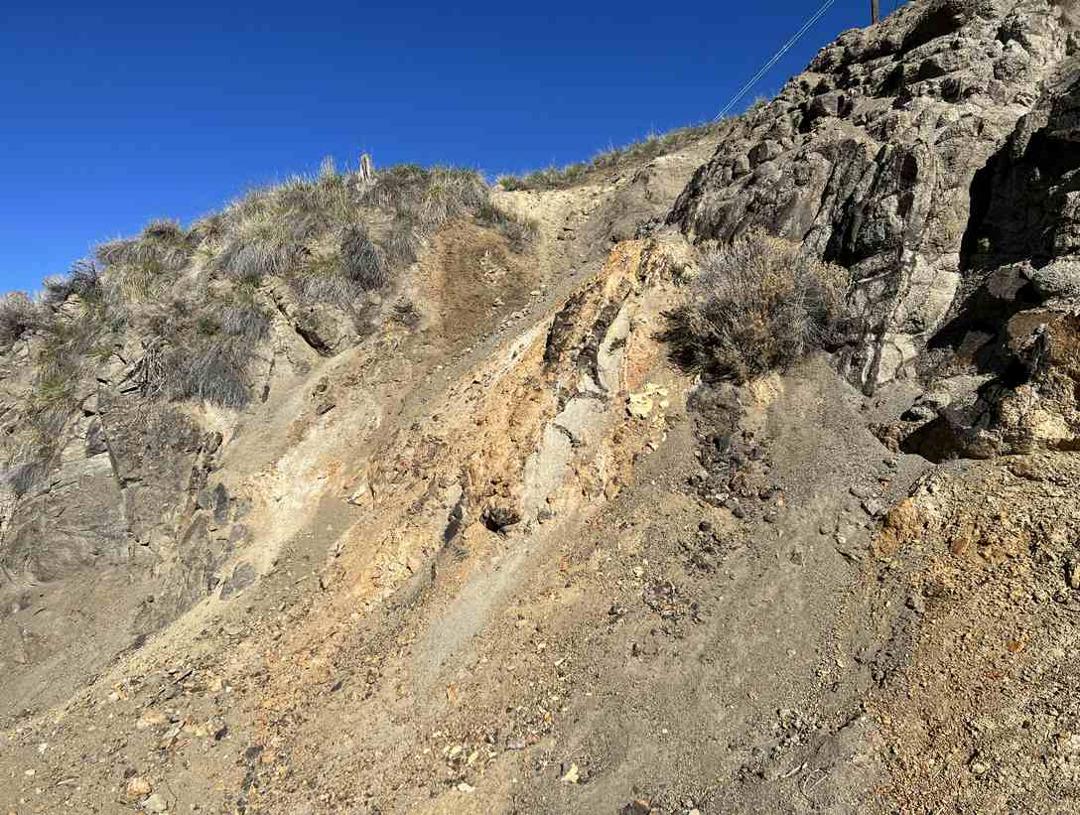
Most ore-bearing veins in Butte had sulfur-bearing minerals, such as pyrite (iron-rich) and other minerals. manganese-bearing rhodochrosite mineral. As the iron and sulfur in these minerals are altered near the land surface (were weathered by oxidation), they produce sulfuric acid which promoted further weathering which resulted in cementation of the veins by iron and manganese. That weathering cementation by oxides of iron and manganese, producing red-brown iron oxides colors and black manganese oxides.
The characteristic red-brown to black coloration indicates they once contained ore minerals, but are now oxidized due to near-ground surface weathering (typically within ~200 ft of the land surface). The cementation of these rocks by the oxides produced hard rocks that were used in building foundations and rock walls around Butte, but especially near the Travona mine.
Ore veins
Veins that contain naturally occurring valuable minerals or elements such as gold, copper, manganese, or others. The veins also have minerals that contain sulfur, such as pyrite (“fools gold”) or other minerals.
Ore veins in Butte were mainstays of underground mining. The major veins have distinct northwest to northeast trends that can be seen in the good exposures along the BA&P walking trail. The characteristic red-brown to black coloration indicates they once contained ore minerals, but are now oxidized due to near-ground surface weathering (typically within ~200 ft of the land surface).
Dike
A tabular igneous rock (formed from melted rock, or magma) that is sheet-like in dimension that intruded along a pre-existing fracture in older rock. Dikes are commonly an inch to many feet in width. Where the contain minerals sought after for mining, they are called “veins” or “ore veins”.
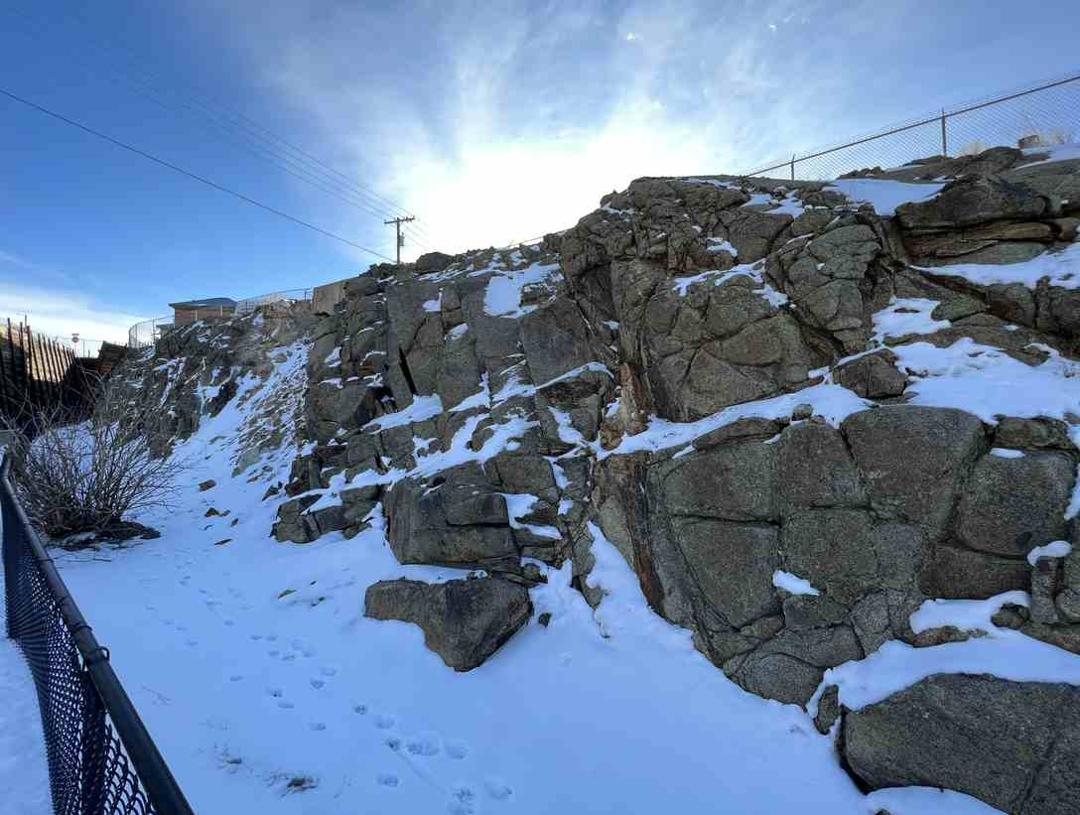
Granite
An igneous rock (formed from melted rock, or magma) that formed deep below land surface. It cooled slowly, so the crystals had time to grow large enough to see with the naked eye, typically from 1/16” to 1” long. Interlocking light-colored minerals (quartz and feldspars) and dark-colored minerals (biotite mica and amphibole) make up the Butte Granite. The crystals can be distinguished by the naked eye as the range from 1/16” to sometimes 1” in dimension. The Butte Granite is exposed in the city of Butte and along the East Ridge, Timber Hill, and elsewhere in the area. The granite forms distinctive boulders, common on the surface from Boulder, Montana to and on both sides of I-90 from Butte to Pipestone, across Homestake Pass on I-90.