Protecting the Alluvial Aquifer
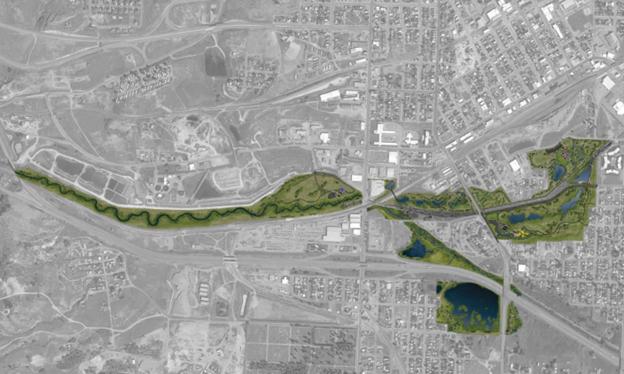
Groundwater pollution impacted the alluvial aquifer along the Silver Bow Creek corridor and floodplain in the central part of Butte. The cleanup decisions and strategy have been multi-faceted.
Starting in 1996 and ongoing today, the alluvial groundwater is collected through a system of French drains and wells, and the contaminated water is then routed to the Butte Treatment Lagoons (west of Montana Street). After treatment there, the clean water is discharged to Silver Bow Creek.
The Parrot Tailings Project was completed in 2022 and removed about 700,000 cubic yards of highly contaminated materials from the Silver Bow Creek floodplain, most of which were more than 40 feet below the surface and in contact with alluvial groundwater. The Project also collected nearly 30 million gallons of contaminated water from the aquifer and pumped it to the Montana Resources mine area, to produce a marked improvement in groundwater quality in the Silver Bow Creek corridor.
The Silver Bow Creek Conservation Area Project is in design now and expected to be implemented starting in 2025. It involves the removal of another one million cubic yards of contaminated materials in proximity to alluvial groundwater. The project also includes a series of sediment basins to collect stormwater coming down off the Butte Hill, where during large storm events heavy metals can drop out before the water is allowed to enter Silver Bow Creek. After these remedial actions are complete, a 120-acre park with recreational facilities will be built in the area as the end land use.
The Montana Pole and Treating Plant Project is unique in the Butte Superfund story – instead of a heavy metals problem, the chief contaminant at this site is pentachlorophenol (PCP) which was mixed with oil to preserve poles, posts and bridge timbers. The hazardous substances were discharged to a ditch which eventually flowed to Silver Bow Creek, contaminating the soil, sediment, surface water and groundwater throughout the 80-acre site. By 2022, most of the surface contamination was remediated, but the remnants of PCP/oil mixture will have to be pumped up with the groundwater and processed through an onsite, specialized water treatment facility for the next 20 years.
Images