Northern Pacific Freight House
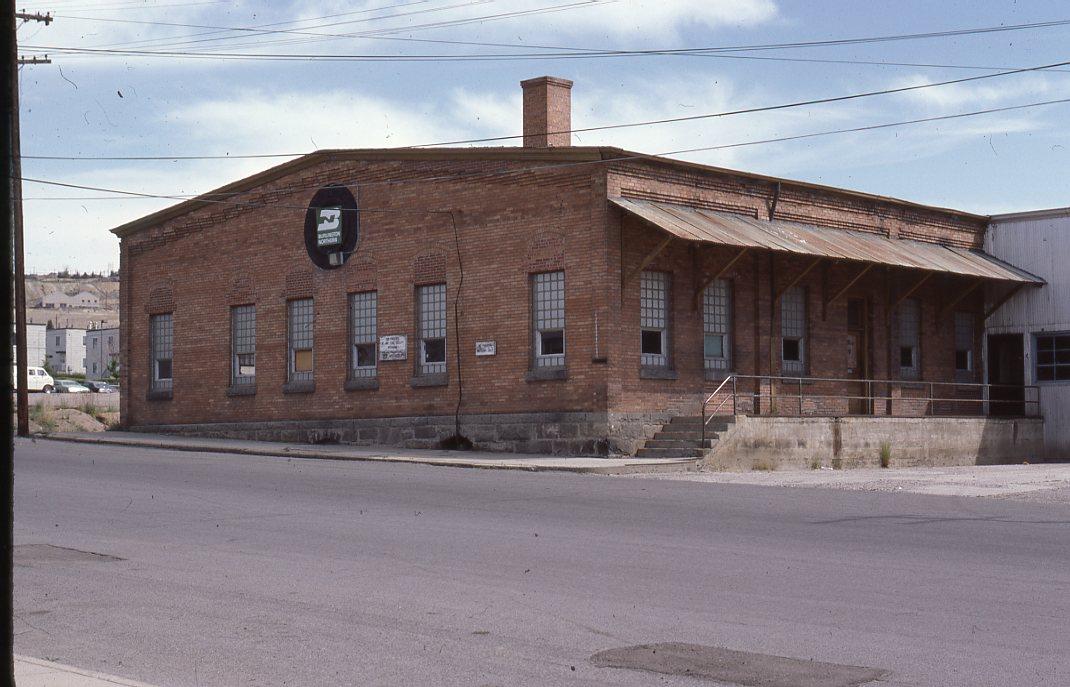
In cities like Butte, most railroads had separate buildings for passengers and freight. This Northern Pacific freight house had two tracks on the south side and wagon/motor truck loading on the north side.
Since the beginning of railways, most freight moved in carload lots. This included metallic ores, coal, lumber, wheat, flour, fresh produce, livestock, wool, manufactured goods, and other commodities destined for processing plants, wholesale warehouses, or retail businesses. The cars were loaded and unloaded on spur tracks at each end of the cars’ journeys. However, some freight did not completely fill carload space, and thus a single boxcar could hold many separate freight shipments. This was called “less-than-carload" freight, abbreviated “L.C.L.” In large cities L.C.L. was handled in railroad “freight houses” with large warehouse space and an office at one end. Inside, workers with carts and hand trucks moved freight in both directions between wagons or motor trucks on one side of the building and rail boxcars on the other side.
Images