<?xml version="1.0" encoding="UTF-8"?>
<feed xmlns="http://www.w3.org/2005/Atom">
  <title type="text">Story of Butte</title>
  <updated>2026-04-17T19:58:11+00:00</updated>
  <generator uri="http://framework.zend.com" version="1.12.20">Zend_Feed_Writer</generator>
  <link rel="alternate" type="text/html" href="https://storyofbutte.org/"/>
  <link rel="self" type="application/atom+xml" href="https://storyofbutte.org/items/browse?output=rss2"/>
  <id>https://storyofbutte.org/</id>
  <author>
    <name>Story of Butte</name>
    <uri>https://storyofbutte.org</uri>
  </author>
  <link rel="hub" href="https://pubsubhubbub.appspot.com/"/>
  <entry>
    <title type="html"><![CDATA[Miners&#039; Cottages]]></title>
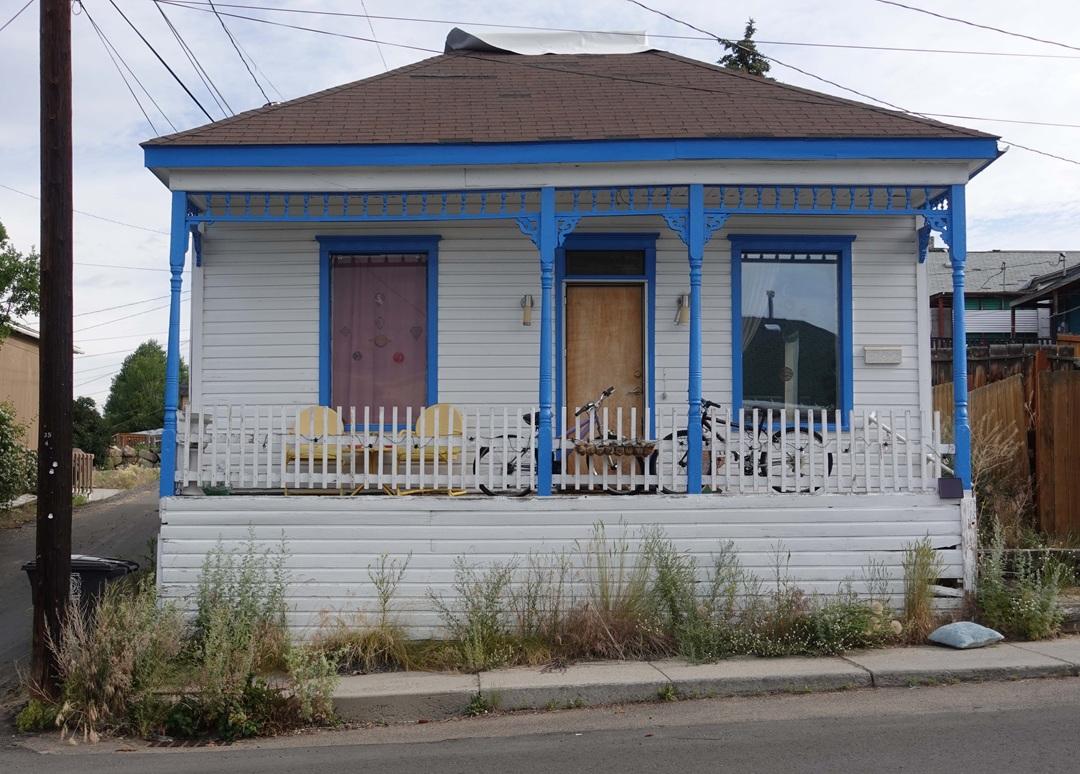
    <summary type="html"><![CDATA[<p><strong><em>The Anaconda Company was by far the largest employer in Butte, especially after the consolidation of the Amalgamated companies into ACM in 1910.</em></strong></p><img src="https://storyofbutte.org/files/fullsize/d24d4e34fb72a0d23957b7c05e1eaa8c.jpg" alt="Miner’s Cottage at 605 W. Caledonia" /><br/><p>Most of those ACM employees in Butte worked in the mines. There are several miners’ neighborhoods in Butte that are largely extant. Excellent examples are the houses on the 500 block of Franklin, the 600 block of Caledonia, and the 400 block of Virginia. Most of these houses were built before 1900, and the rest were built shortly thereafter. The predominant housing type is the hipped-roof miner’s cottage, a simple four-square, wood-frame structure with a front porch.</p><p>According to the U.S. Census of Butte for 1920, heads of households on the 500 block of Franklin included eleven miners, a few hoisting engineers, a pumpman, a boiler maker, a diamond drill setter, a steam fitter, a laborer, and a mine boss. These individuals worked at such mines as the Nettie, High Ore, Elm Orlu, Original, Badger State, Bell, and Leonard. Jobs of other heads of households included a bookkeeper, a housekeeper, a yard master for a railroad, a seamstress, a carpet layer, a cigar store salesman, and a commercial traveler. Many of the families were Irish. Scotland, England, Germany, Austria, and Canada were also represented, as well as families from Ohio, Iowa, and Pennsylvania. The families at 520, 522, and 530 Franklin were from Finland. Occupations of families living along Caledonia were similar. One household headed by Margaret Buchanan, a Canadian, included her three adult sons, all of whom were miners, with one working at the Colusa and one at the Never Sweat.</p><p>Residents living along the 300 and 400 blocks of Virginia were much more likely to be miners. Of thirty-five households along those two blocks, twenty-one included miners. Some were heads of households, and some were living with their mothers who were the head-of-household. Men living in these two blocks of Virginia worked at mines like the Black Rock, Original, Anaconda, Mountain View, Speculator, High Ore, and Steward. Thirteen heads of households were women, including some widows. Some of the women worked outside the home at jobs like nurse, housekeeper, dressmaker, washer woman, and milliner. In addition to being miners, these children had jobs such as a wrapper in a laundry, teamster, clerk, and timekeeper. Other men who were heads of households worked as janitor, bartender, carpenter in the mines, and blacksmith. At least nineteen of the households were Irish, six were English, and two Austrian.</p><p><em><strong><a href="https://storyofbutte.org/items/show/3571">For more (including 4 images) view the original article</a></strong></em></p>]]></summary>
    <published>2025-11-18T17:25:05+00:00</published>
    <updated>2026-04-17T19:58:11+00:00</updated>
    <link rel="alternate" type="text/html" href="https://storyofbutte.org/items/show/3571"/>
    <id>https://storyofbutte.org/items/show/3571</id>
    <author>
      <name>Fred Quivik</name>
    </author>
  </entry>
  <entry>
    <title type="html"><![CDATA[1031 Antimony]]></title>
    <summary type="html"><![CDATA[<img src="https://storyofbutte.org/files/fullsize/947676942b5238f7be7c0b212622a179.jpg" alt="1031 Antimony" /><br/><p>Realtor and home builder Charles Passmore, who sold houses on “easy installments,” built this Queen Anne style cottage at the turn of the twentieth century. Brick veneer, fish-scale shingles, and turned porch supports ornament the four-room house, advertised as “warm and light,” “modern” (meaning it had indoor plumbing), and with a “fine lawn and garden.” Early owner James Tretheway, who worked for the Anaconda Company as a miner, and later as a surface boss, sued the city twice for damages relating to flooding. The second time, in 1909, he claimed that his lot became a reservoir in rainy weather because of the way the street department had filled in and regraded Antimony. In 1910, he rented the house to Albert Stephens, a blacksmith at the mines, who lived here with his wife Annie and their six living children, ages seven to nineteen. Clerk at the Montana Hardware Company William Wragg and his wife Elizabeth purchased the home by 1914. Elizabeth was an active Daughters of the American Revolution member and regularly hosted cottage prayer meetings here for the First Presbyterian Church.</p><p><em><strong><a href="https://storyofbutte.org/items/show/3493">For more view the original article</a></strong></em></p>]]></summary>
    <published>2024-01-10T03:20:23+00:00</published>
    <updated>2026-04-17T19:58:10+00:00</updated>
    <link rel="alternate" type="text/html" href="https://storyofbutte.org/items/show/3493"/>
    <id>https://storyofbutte.org/items/show/3493</id>
    <author>
      <name>Montana Historical Society</name>
    </author>
  </entry>
  <entry>
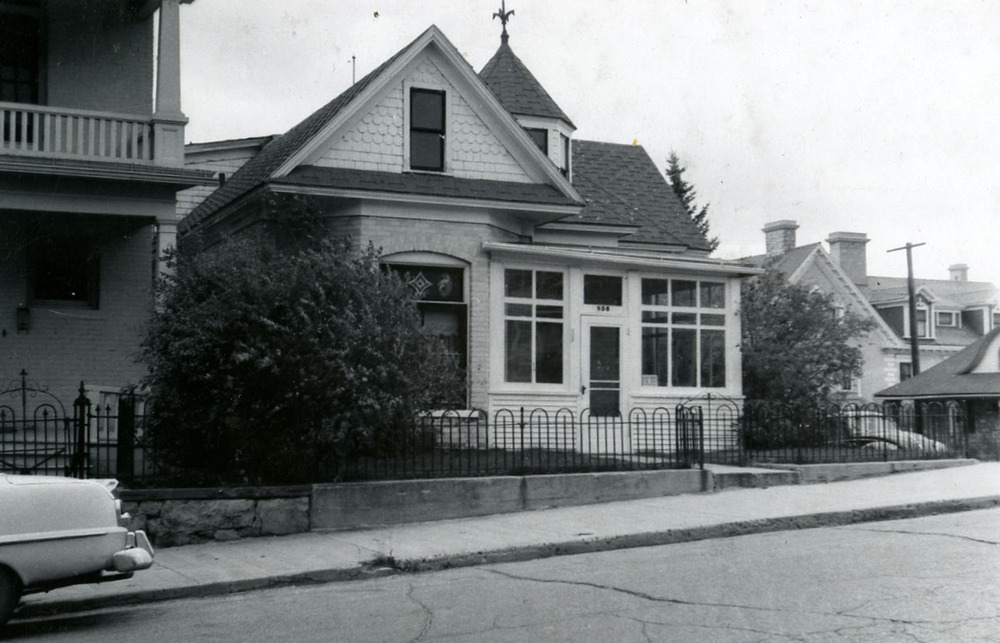
    <title type="html"><![CDATA[856 West Granite]]></title>
    <summary type="html"><![CDATA[<p><strong><em>Stone, brick, and wood combine to add texture to this Queen Anne style residence, built circa 1900. The open front porch with spindlework posts, projecting bay, and small turret topped by a metal finial are hallmarks of the style.</em></strong></p><img src="https://storyofbutte.org/files/fullsize/01df7f59dc058e95535ebf3e794c8374.jpg" alt="856 West Granite" /><br/><p> Insurance agent Wilbur Bachelor, his wife Kitty, and their four children lived here in 1900. Sigmund and Emma Schilling purchased the residence by 1904 and added a rear addition and lap-sided back porch (since enclosed) before 1916. Sigmund emigrated to the United States from Germany in 1884, arriving in Butte by 1885. He worked first as a tailor before opening the Sig Schilling Cigar Co., a billiard and pool hall that sold cigars, tobacco, and candy. A member of Butte’s thriving Jewish community, Sig became a prominent businessman and served as the third president of Temple B’nai Israel, the second synagogue built in Montana. He and his wife Emma participated in many of Butte’s elite social clubs and were frequently mentioned in the Society pages. Sig died in 1936, but Emma continued to reside here into the 1940s.</p><p><em><strong><a href="https://storyofbutte.org/items/show/3490">For more view the original article</a></strong></em></p>]]></summary>
    <published>2024-01-10T03:02:12+00:00</published>
    <updated>2026-04-17T19:58:10+00:00</updated>
    <link rel="alternate" type="text/html" href="https://storyofbutte.org/items/show/3490"/>
    <id>https://storyofbutte.org/items/show/3490</id>
    <author>
      <name>Montana Historical Society</name>
    </author>
  </entry>
  <entry>
    <title type="html"><![CDATA[Remmert/Torreano House]]></title>
    <summary type="html"><![CDATA[<p><strong><em>Queen Anne style cottages proliferated in Butte’s West Side neighborhood in the 1890s, eventually comprising about 14 percent of the neighborhood’s homes. Hipped roofs, hexagonal bay windows with gabled roofs, and mass-produced wood ornamentation are common stylistic elements.</em></strong></p><img src="https://storyofbutte.org/files/fullsize/dd9b68901507f6788cbc7a2b5e5cfc93.jpg" alt="311 South Jackson" /><br/><p> Victor F. Huffman, an engineer at the Butte City Water Co. and his wife Marie, a boardinghouse owner, purchased this Queen Anne style house in 1898 when it was new. After Marie and her sister built the Kenwood boardinghouse on Broadway in 1903, the Huffmans moved there, and they rented this house to various tenants. Pittsmont mine fireman Frank Remmert and his wife Mary purchased the home in 1909. Frank died in 1917, and Mary sold the house to Martin Lisa, owner of the Lisa Cash Grocery. His Italian specialty market was one of more than two hundred family-run grocery stores listed in Butte in 1918. He lived here with his nieces, Angelina Lisa and Irene Torreano, and Irene’s husband Louis, who spent his career in the grocery business. Martin died in 1921 and Irene and Louis remained in residence until 1947.</p><p><em><strong><a href="https://storyofbutte.org/items/show/3488">For more view the original article</a></strong></em></p>]]></summary>
    <published>2024-01-10T02:50:29+00:00</published>
    <updated>2026-04-17T19:58:10+00:00</updated>
    <link rel="alternate" type="text/html" href="https://storyofbutte.org/items/show/3488"/>
    <id>https://storyofbutte.org/items/show/3488</id>
    <author>
      <name>Montana Historical Society</name>
    </author>
  </entry>
  <entry>
    <title type="html"><![CDATA[Ford House]]></title>
    <summary type="html"><![CDATA[<img src="https://storyofbutte.org/files/fullsize/02f515e996388d418f6b97b3ec3b59cd.jpg" alt="521 West Granite Street" /><br/><p>Travers M. and Mary B. Ford built this classic Queen Anne style cottage in the fall of 1888. The home’s brick veneer walls, arched gable-end windows, and projecting front bay add substance to its modest footprint. Travers, an immigrant from England, was a salesman at the Bonner Mercantile and Mary stayed home with their two children. Silver prices plummeted throughout early 1893, impacting many Butte industries. The Fords sold the home to the Butte Savings Bank for $2,000 in December 1893. In 1896, newlyweds Richard A. and Laura Kunkel purchased the residence for $3,200. Richard was an assistant cashier at Daly, Donahoe, and Moyer (later the State Savings Bank). Laura was president of the Homer Club—a literature study group—and often hosted club meetings. The Homer Club, born out of the nationwide woman’s club movement, provided its members social, intellectual, and leadership opportunities independent of male-run charities and church aid groups. A variety of occupants lived here in the 1920s, including explosives salesman H. J. Rodolf, lawyer Clarence Hanley and his wife Helen, and miner Fred Ham, his wife Edith, and their daughter Jennie.</p><p><em><strong><a href="https://storyofbutte.org/items/show/3480">For more view the original article</a></strong></em></p>]]></summary>
    <published>2024-01-10T02:18:52+00:00</published>
    <updated>2026-04-17T19:58:10+00:00</updated>
    <link rel="alternate" type="text/html" href="https://storyofbutte.org/items/show/3480"/>
    <id>https://storyofbutte.org/items/show/3480</id>
    <author>
      <name>Montana Historical Society</name>
    </author>
  </entry>
  <entry>
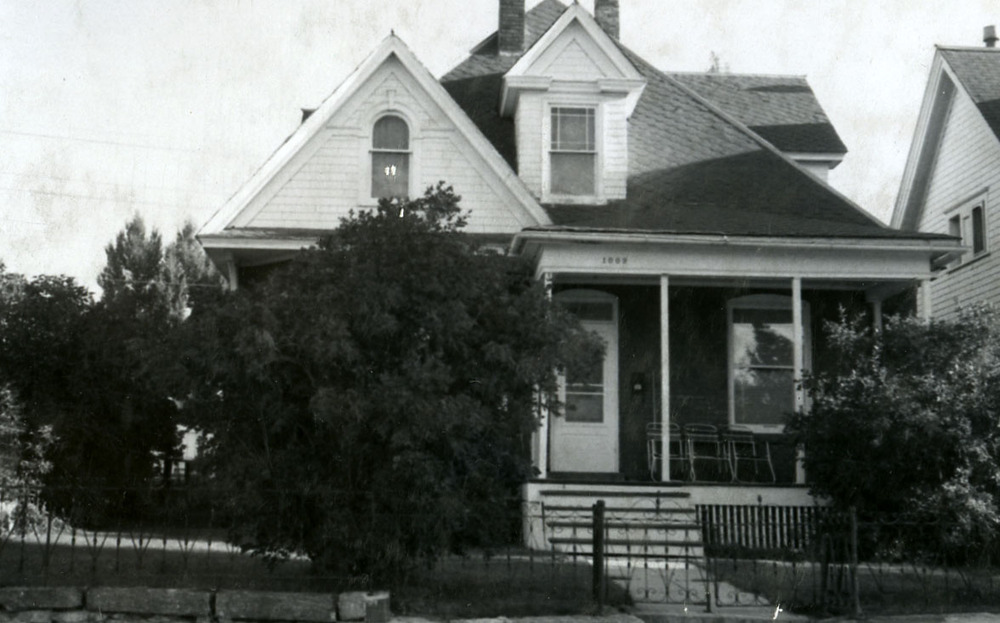
    <title type="html"><![CDATA[1009 Caledonia]]></title>
    <summary type="html"><![CDATA[<p><strong><em>Butte’s burgeoning professional class sought refuge from the clamor and pollution of the mine yards, making the Northwest-Big Butte neighborhood their home. </em></strong></p><img src="https://storyofbutte.org/files/fullsize/8dbee4c0c6faa764acba7931992504dc.jpg" alt="1009 Caledonia Street" /><br/><p>This Queen Anne “Free Classic” style cottage was likely one of fifty homes built during Caledonia Street’s 1905 building boom. The steep gable-on-hipped roof and heavy moldings in the gable ends reflect America’s fascination with classical architecture. Boston and Montana mine superintendent John C. Adams was the first resident in 1905, followed by his assistant George McGee in 1906. Both men were embroiled in F. Augustus Heinze’s war with Amalgamated Copper. When Heinze sold the bulk of his Butte holdings in 1906, McGee moved to Fergus County.  Real estate entrepreneur Charles Jackman and his wife Kate bought the home in 1907. As chairman of the police trial board, Charles played a key role in Mayor W. T. Stodden’s police reform initiative. In 1935, he became the Butte city librarian. Kate was active in the Daughters of the American Revolution and the Foreign Missionary Society. She also hosted the Westside Shakespeare Club, a women’s club dedicated to the study of literature, art, and science.</p><p><em><strong><a href="https://storyofbutte.org/items/show/3478">For more view the original article</a></strong></em></p>]]></summary>
    <published>2024-01-10T02:10:34+00:00</published>
    <updated>2026-04-17T19:58:09+00:00</updated>
    <link rel="alternate" type="text/html" href="https://storyofbutte.org/items/show/3478"/>
    <id>https://storyofbutte.org/items/show/3478</id>
    <author>
      <name>Montana Historical Society</name>
    </author>
  </entry>
  <entry>
    <title type="html"><![CDATA[Nelson-Ivory House ]]></title>
    <summary type="html"><![CDATA[<img src="https://storyofbutte.org/files/fullsize/21a9f7e6005d3afa3856c0da923b2689.jpg" alt="1136 West Broadway Street" /><br/><p>Carriage painter Frank O. Nelson and his wife Elizabeth constructed this richly embellished Queen Anne cottage circa 1897. Key ornamental elements include scalloped shingle siding, scrolled brackets, colored glass windows, turned porch posts, cutout rails, and a spindle frieze. In late 1898, the Nelsons sold the house to John and Matilda Ivory for $1,200. John worked as an underground miner, and Matilda was a private nurse. She was active with Butte’s Woman’s Christian Temperance Union, which campaigned against drinking alcohol. By 1907, a small “alley house” stood in the backyard, built for Matilda’s mother. In 1917, the property changed hands and mine foreman John McGivern and his wife Nellie moved into the main house with their children. Tragedy struck when John died in 1923 and then daughter Ellen died in 1924. Nellie and her surviving children persevered. The family relocated to the alley house and used the main house for rental income. A newspaper reporter, mine shift boss, and a lithographer were among the various renters to occupy the main house during Nellie McGivern’s long ownership tenure, ending with her death in 1965.</p><p><em><strong><a href="https://storyofbutte.org/items/show/3477">For more view the original article</a></strong></em></p>]]></summary>
    <published>2024-01-10T02:06:09+00:00</published>
    <updated>2026-04-17T19:58:09+00:00</updated>
    <link rel="alternate" type="text/html" href="https://storyofbutte.org/items/show/3477"/>
    <id>https://storyofbutte.org/items/show/3477</id>
    <author>
      <name>Montana Historical Society</name>
    </author>
  </entry>
  <entry>
    <title type="html"><![CDATA[Mattison House]]></title>
    <summary type="html"><![CDATA[<p><strong><em>A complex roof shape, hexagonal rooms, and carved and scrolled decoration showcase the Queen Anne style on Charles and Antonia Mattisons’ eclectic 1899 home. </em></strong></p><img src="https://storyofbutte.org/files/fullsize/4e2bd74ed5081687a5677b50d7a7c179.jpg" alt="15 South Excelsior Ave." /><br/><p>The exterior walls were originally clad in brick on the lower level with wood siding on the second floor. Lawyer Charles Mattison was a partner with James Forbis until 1904 and then headed the firm of Mattison, Cavanaugh, and Poore. The Mattisons raised four children in the house, including their oldest daughter, who died of meningitis in 1902. In 1919, Charles died at age fifty, a victim of the influenza pandemic. Butte surgeon Dr. Thomas Witherspoon and his wife Rita, a surgical nurse, purchased the home in 1923. Dr. Witherspoon had served in the medical corps in World War I and returned to become president of the Murray Hospital. He was  an avid sportsman, a founding member of the Butte Chamber of Commerce, president of the Rotary Club and the American Legion, and member of many civic and social organizations. Seeing copper sales slow after World War I, Dr. Witherspoon reroofed the house in copper shingles to show support for Butte’s main industry.</p><p><em><strong><a href="https://storyofbutte.org/items/show/3474">For more view the original article</a></strong></em></p>]]></summary>
    <published>2024-01-10T01:46:51+00:00</published>
    <updated>2026-04-17T19:58:09+00:00</updated>
    <link rel="alternate" type="text/html" href="https://storyofbutte.org/items/show/3474"/>
    <id>https://storyofbutte.org/items/show/3474</id>
    <author>
      <name>Montana Historical Society</name>
    </author>
  </entry>
  <entry>
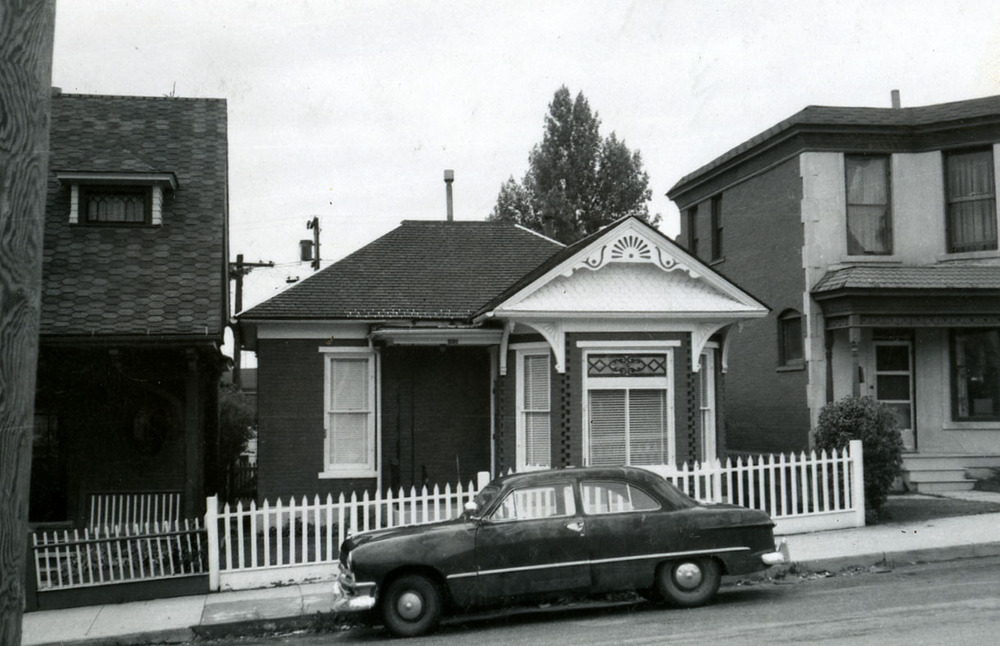
    <title type="html"><![CDATA[Albert Clark House]]></title>
    <summary type="html"><![CDATA[<p><strong><em>An eclectic variety of Queen Anne style cottages define Butte’s architecturally diverse neighborhoods. </em></strong></p><img src="https://storyofbutte.org/files/fullsize/969229f5fb207a8147259246e4a5cc8e.jpg" alt="830 West Quartz Street" /><br/><p>This four-room hipped-roof home originally included a kitchen, parlor (living room), two bedrooms, and an outhouse located near the alley. The house type—widely available in architectural pattern books—was popular in Butte as it was adaptable to many budgets. Wood-frame models without a gabled front bay or decorative embellishments suited smaller budgets, while brick-clad models with front porches, stained-glass windows, and ornamented gable ends appealed to wealthier property owners. Albert Clark, who built this richly decorated home circa 1896, was printing foreman at the Daily Intermountain newspaper and, later, a partner at McKee Printing. He lived here with his mother until she died in 1903. Albert leased the home until 1908 when he sold it to carpenter Hugh Warriner for $3,000. Newlyweds Philo and Edith Hanson purchased the home in 1909, but they soon moved to a new residence on Antimony Street. Through the 1910s, young professionals such as deputy county treasurer David Kehoe and mining engineer Henry Morse rented the house from the Hansons.</p><p><em><strong><a href="https://storyofbutte.org/items/show/3468">For more view the original article</a></strong></em></p>]]></summary>
    <published>2024-01-05T02:36:22+00:00</published>
    <updated>2026-04-17T19:58:09+00:00</updated>
    <link rel="alternate" type="text/html" href="https://storyofbutte.org/items/show/3468"/>
    <id>https://storyofbutte.org/items/show/3468</id>
    <author>
      <name>Montana Historical Society</name>
    </author>
  </entry>
  <entry>
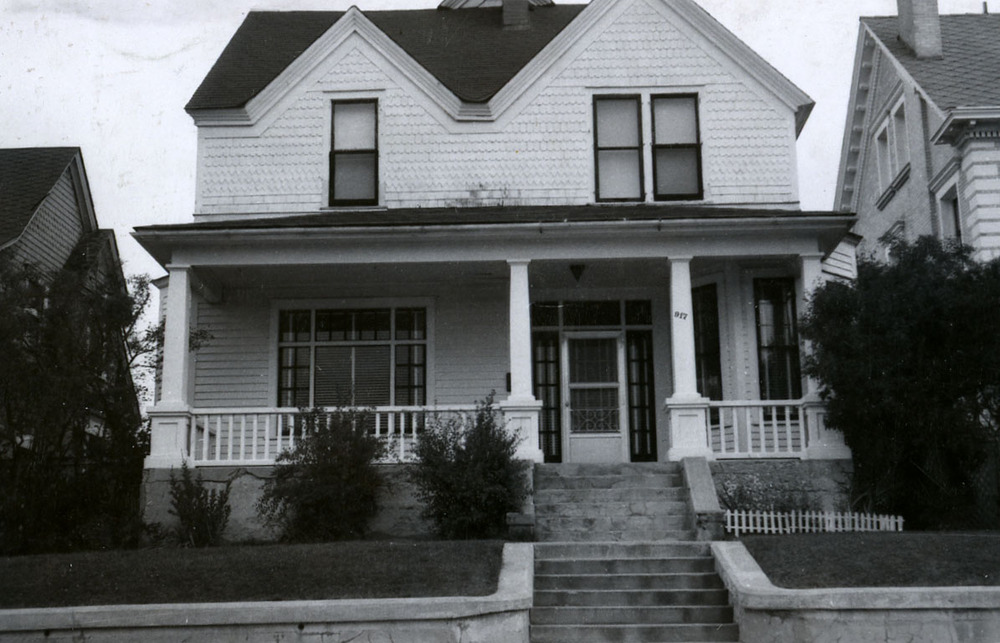
    <title type="html"><![CDATA[Kaufman Residence ]]></title>
    <summary type="html"><![CDATA[<p><strong><em>Architect Henry M. Patterson designed this Queen Anne style house in 1895. Patterson also designed the Butte Public Library, Columbia Gardens Pavilion, and many Butte homes. </em></strong></p><img src="https://storyofbutte.org/files/fullsize/18c193005a11eed0ac6c2f147e4f11aa.jpg" alt="917 West Broadway Street" /><br/><p>William B. Hamilton, a banker and realtor at William A. Clark & Bro., built the house as an investment property and lived next door at number 921. Lawyer John B. Wellcome and wife Emily lived here briefly from 1898 to 1899. John, who represented copper king William A. Clark, was disbarred in 1899 for bribing state legislators to vote for Clark during his campaign for U.S. Senate. A store manager, brewing company president, and two mining superintendents and their families succeeded the Wellcome family. In 1917, pioneer Butte businessman Louis Kaufman and wife Ellen purchased the home. Louis owned the Butte Mining Machinery Co. while Ellen raised children Leonard and Helen. Louis died in 1931, but Ellen remained in residence until 1939. During World War II, Leonard arranged logistics for the Normandy invasion under General Eisenhower and after the war Helen worked in Berlin and Nuremberg, Germany, as a War Department secretary for various U.S. military generals.</p><p><em><strong><a href="https://storyofbutte.org/items/show/3467">For more view the original article</a></strong></em></p>]]></summary>
    <published>2024-01-05T02:31:43+00:00</published>
    <updated>2026-04-17T19:58:09+00:00</updated>
    <link rel="alternate" type="text/html" href="https://storyofbutte.org/items/show/3467"/>
    <id>https://storyofbutte.org/items/show/3467</id>
    <author>
      <name>Montana Historical Society</name>
    </author>
  </entry>
</feed>