Miners' Cottages
The Anaconda Company was by far the largest employer in Butte, especially after the consolidation of the Amalgamated companies into ACM in 1910.
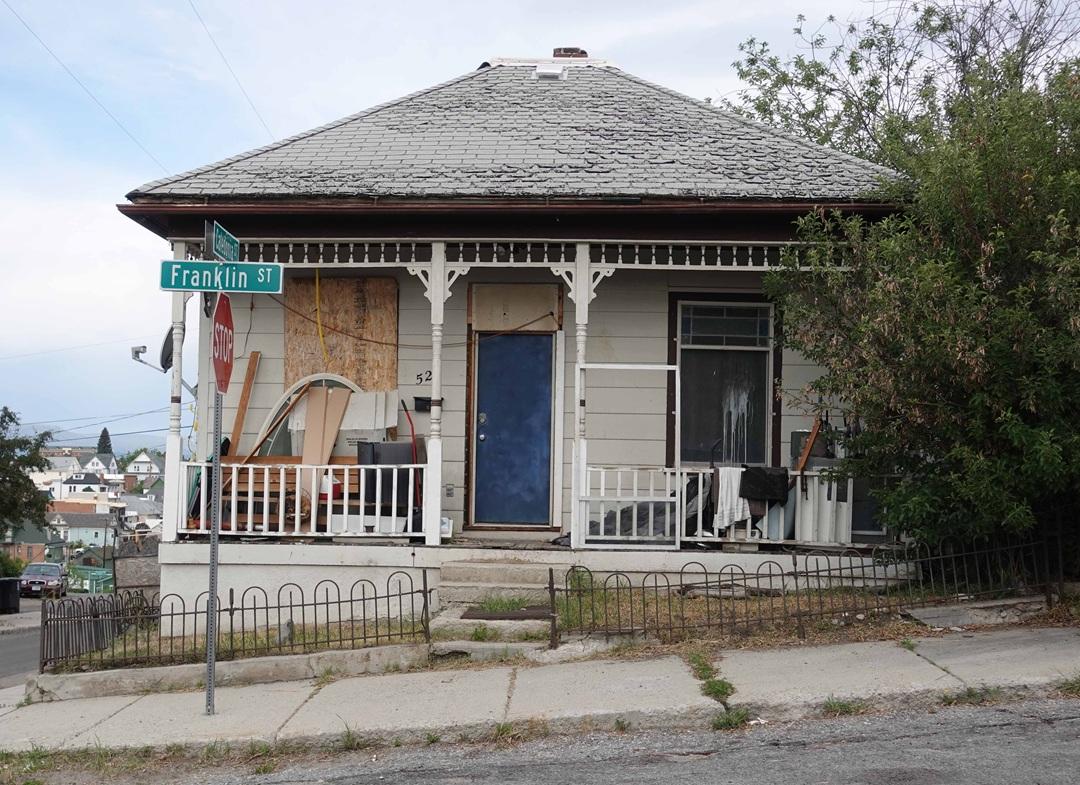
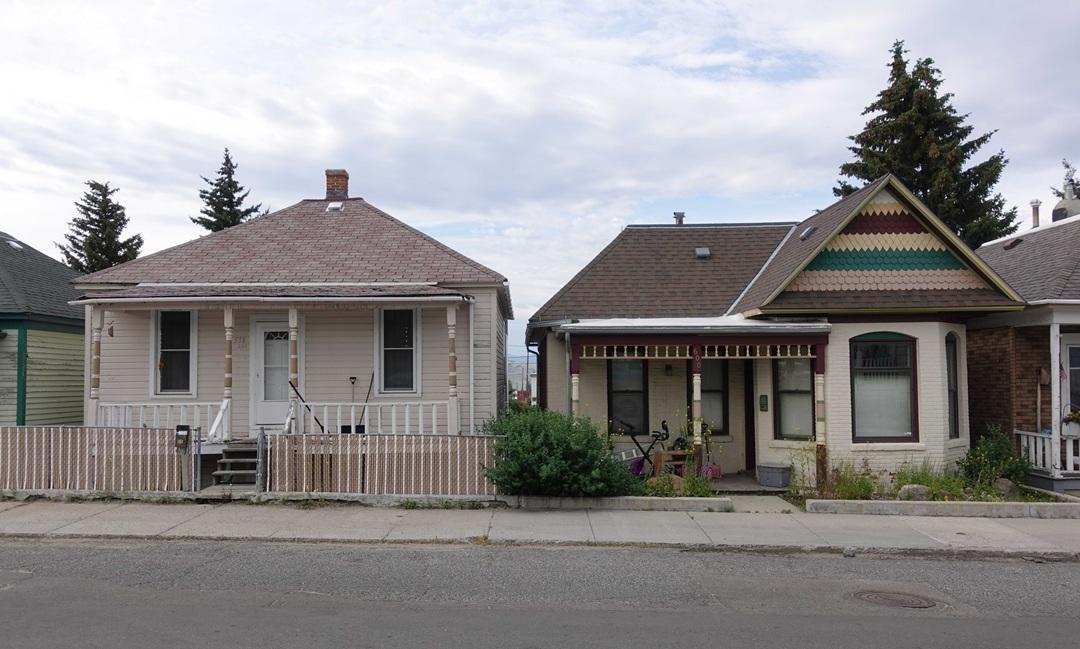
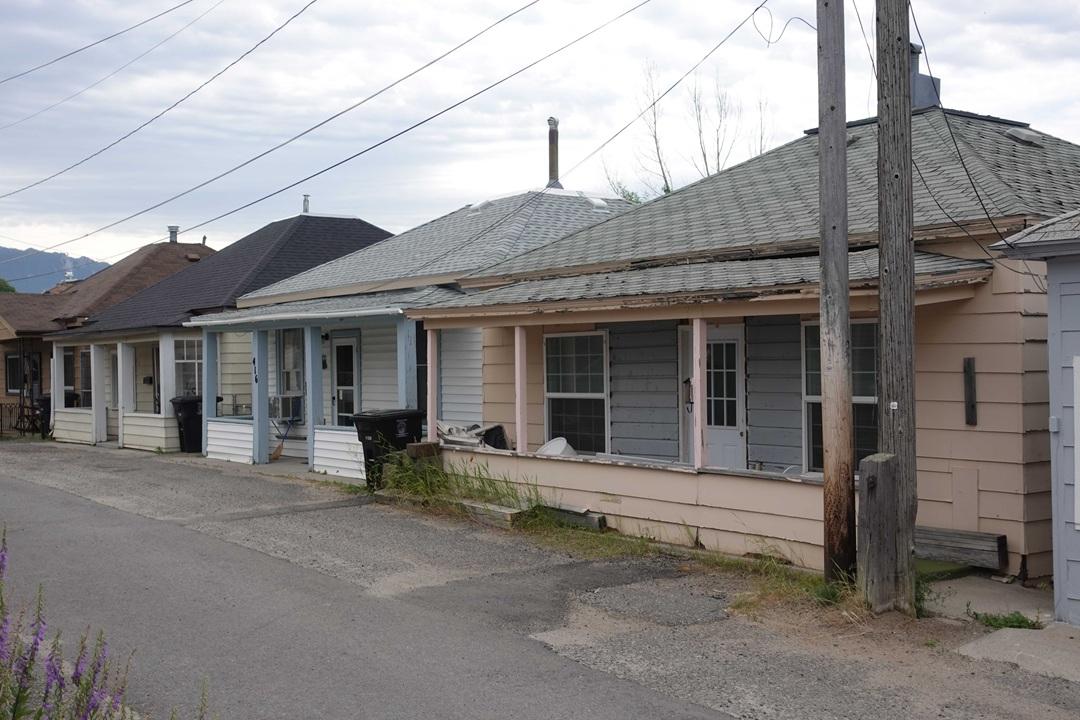
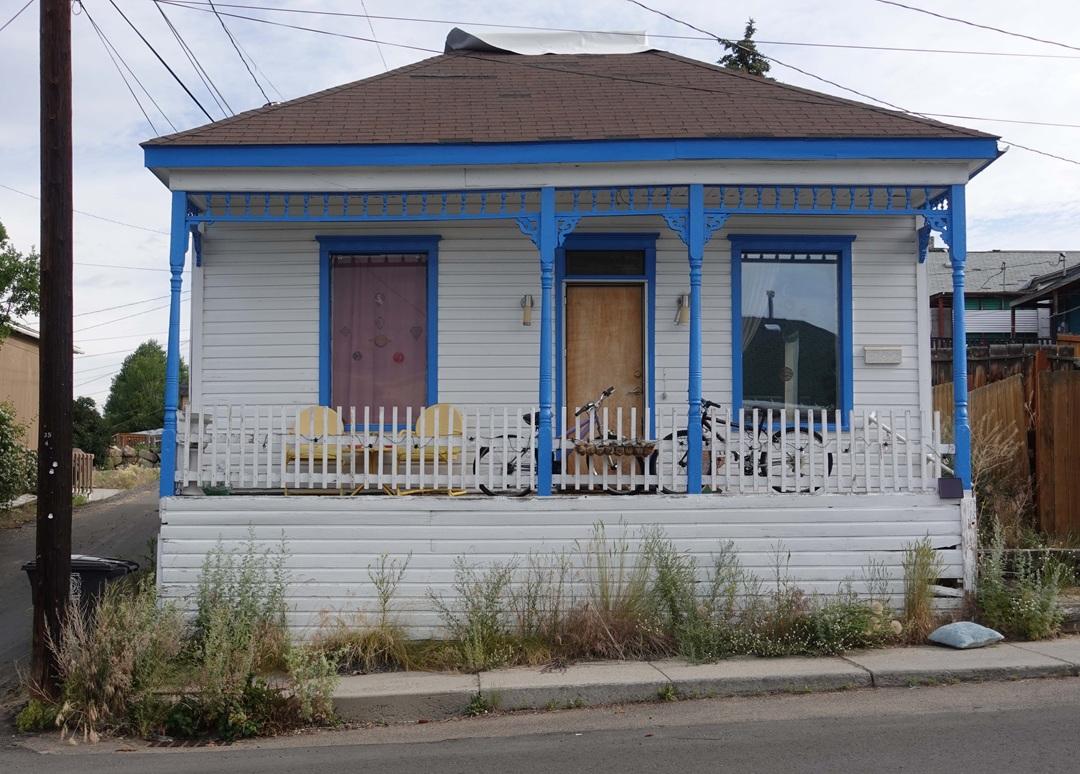
Most of those ACM employees in Butte worked in the mines. There are several miners’ neighborhoods in Butte that are largely extant. Excellent examples are the houses on the 500 block of Franklin, the 600 block of Caledonia, and the 400 block of Virginia. Most of these houses were built before 1900, and the rest were built shortly thereafter. The predominant housing type is the hipped-roof miner’s cottage, a simple four-square, wood-frame structure with a front porch.
According to the U.S. Census of Butte for 1920, heads of households on the 500 block of Franklin included eleven miners, a few hoisting engineers, a pumpman, a boiler maker, a diamond drill setter, a steam fitter, a laborer, and a mine boss. These individuals worked at such mines as the Nettie, High Ore, Elm Orlu, Original, Badger State, Bell, and Leonard. Jobs of other heads of households included a bookkeeper, a housekeeper, a yard master for a railroad, a seamstress, a carpet layer, a cigar store salesman, and a commercial traveler. Many of the families were Irish. Scotland, England, Germany, Austria, and Canada were also represented, as well as families from Ohio, Iowa, and Pennsylvania. The families at 520, 522, and 530 Franklin were from Finland. Occupations of families living along Caledonia were similar. One household headed by Margaret Buchanan, a Canadian, included her three adult sons, all of whom were miners, with one working at the Colusa and one at the Never Sweat.
Residents living along the 300 and 400 blocks of Virginia were much more likely to be miners. Of thirty-five households along those two blocks, twenty-one included miners. Some were heads of households, and some were living with their mothers who were the head-of-household. Men living in these two blocks of Virginia worked at mines like the Black Rock, Original, Anaconda, Mountain View, Speculator, High Ore, and Steward. Thirteen heads of households were women, including some widows. Some of the women worked outside the home at jobs like nurse, housekeeper, dressmaker, washer woman, and milliner. In addition to being miners, these children had jobs such as a wrapper in a laundry, teamster, clerk, and timekeeper. Other men who were heads of households worked as janitor, bartender, carpenter in the mines, and blacksmith. At least nineteen of the households were Irish, six were English, and two Austrian.
Images