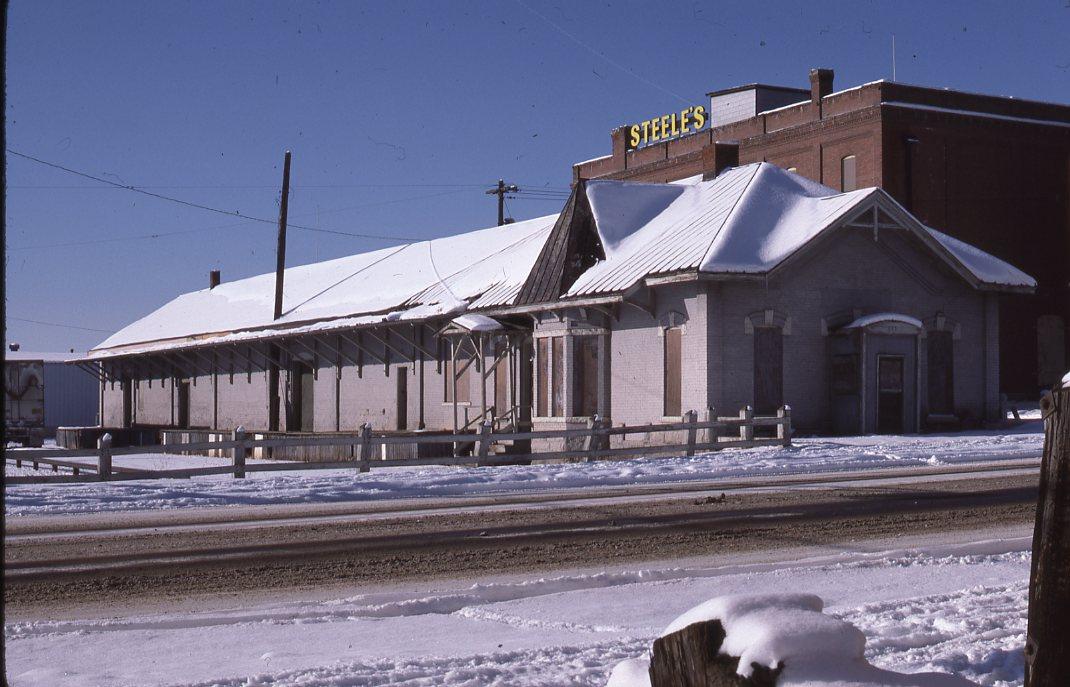
Butte, Anaconda & Pacific Railway
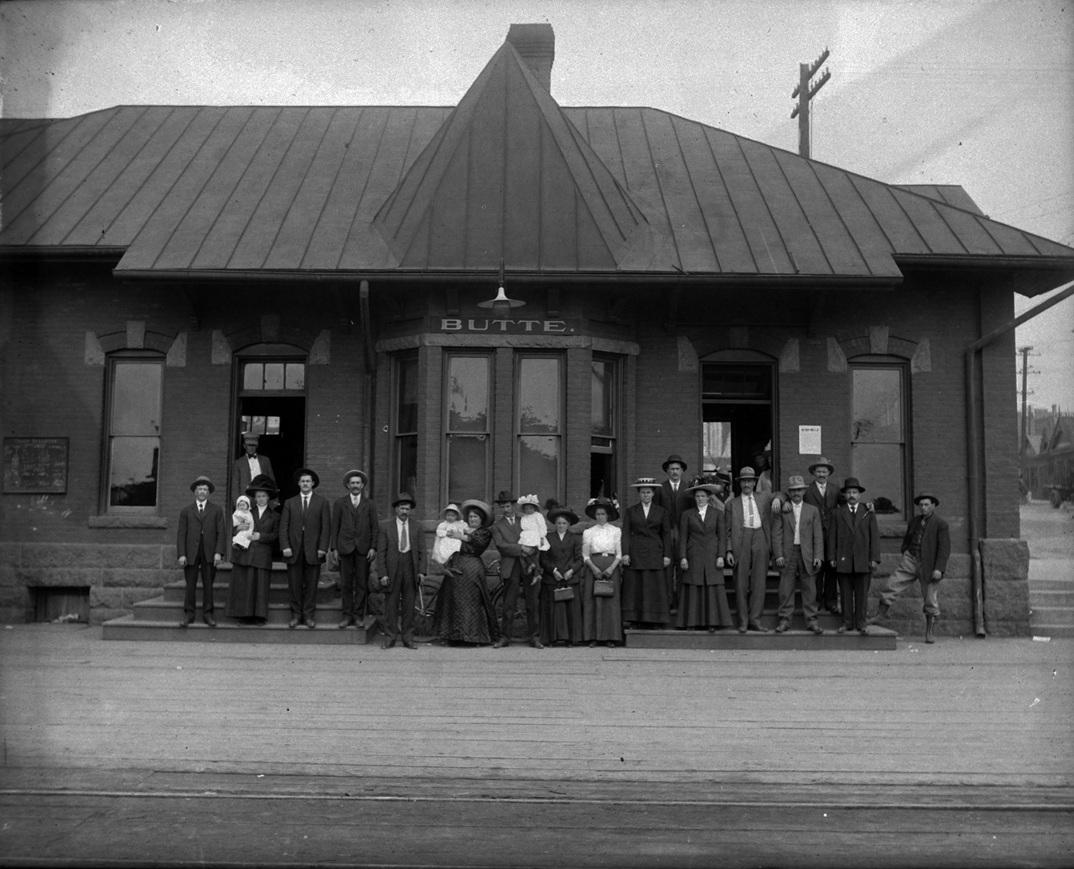
The Anaconda Mining Company, with assistance from the Great Northern Railway, built the Butte, Anaconda & Pacific Railway in 1893. Twenty years after BA&P’s original construction, it decided for reasons of operational economy to switch from steam to electric power.
The BA&P provided an alternative to the poor service on the first railroad between Butte and Anaconda, the Montana Union Railroad, jointly owned by the Union Pacific and Northern Pacific. From its completion, the primary purpose of the BA&P was to carry metallic ores and mill concentrates from the many mines on Butte Hill to the smelter in Anaconda, which after 1902 was the Washoe Reduction Works on the hill east of town.
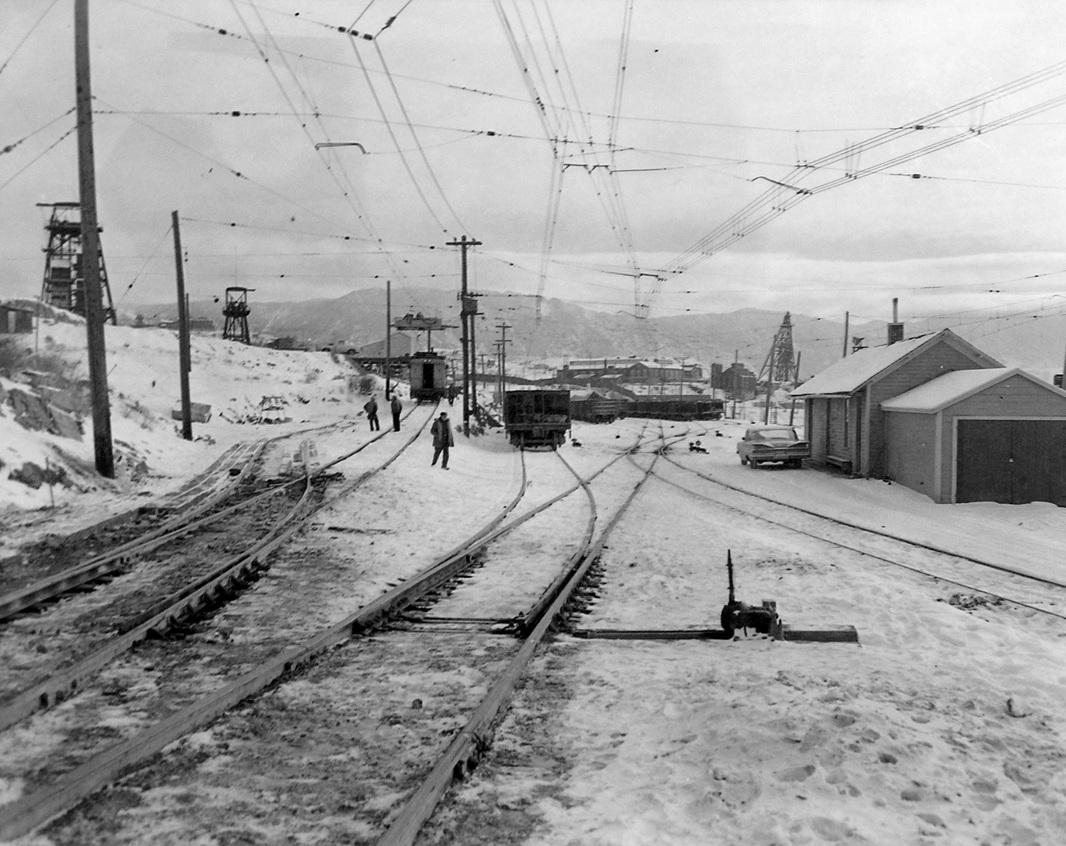
The railway commissioned the General Electric Company to design and oversee installation of the 2400-volt direct-current system in 1913. The year after electrification BA&P moved cars and trains from the mines to the smelter as follows. Switch crews at three places put together or divided trains, with westbound loaded cars from Butte to Anaconda, and empties returned eastbound. Crews on locomotives working on Butte Hill took loaded open-top hopper cars from spur tracks at each mine to the Butte Hill Yard, just northeast of the Steward Mine. Here switch crews created trains of thirty cars, which went west 4.5 miles downhill across Butte Hill and past the School of Mines to the small railroad community of Rocker. There switch crews assembled sixty-car trains for the twenty-mile main line trip through Silver Bow canyon to East Anaconda. At the East Anaconda switchyard, crews broke the long main line into twenty car trains for the steep twisting seven-mile climb to the concentrator on the upper part of smelter hill. After being emptied, the cars reversed the procedure—in longer, lighter trains—back to the mines on Butte Hill.
The BA&P carried more than ores and mill concentrates. Trains also hauled the materials and supplies needed for mining, milling, and smelting, including coal, coke, lumber, heavy mine timbers, and chemicals. Eastward from Anaconda the railway carried the products of smelting, most of which required final processing at the company’s refinery in Great Falls, and other commodities destined for customers outside the Anaconda company, such as fertilizer and sulfuric acid. The railway—a “common carrier” with government mandated public service obligations—also hauled the general freight needed by the residents and businesses of Anaconda, a city with 11,668 residents reported in the 1920 census. Into the early 1920s, four daily passenger trains each way carried people, express, mail, and newspapers. By 1930 the BA&P owned all the tracks on Butte Hill, after the Northern Pacific and Great Northern either dismantled their tracks or sold some sections of line to the BA&P. For its first three decades, the BA&P was the primary transportation to Gregson Hot Springs.
The BA&P ended electric operations in 1967, after the Weed concentrator at Butte’s Berkeley Pit greatly reduced freight traffic to Anaconda. This ended the high frequency of trains that made electrification economical, and so diesel-electric power became more appropriate for a single train each way per day. The railway, with changes in ownership since 1985 (and a different name, 1985-2007: Rarus Railway), continues to carry copper concentrates from the Montana Resources concentrator to connecting rail lines for delivery to distant smelters. The BA&P is currently owned by the Patriot Rail group of railway short lines, which in turn is part of large investment companies in Australia and Japan.
Images