<?xml version="1.0" encoding="UTF-8"?>
<feed xmlns="http://www.w3.org/2005/Atom">
  <title type="text">Story of Butte</title>
  <updated>2026-04-17T19:58:10+00:00</updated>
  <generator uri="http://framework.zend.com" version="1.12.20">Zend_Feed_Writer</generator>
  <link rel="alternate" type="text/html" href="https://storyofbutte.org/"/>
  <link rel="self" type="application/atom+xml" href="https://storyofbutte.org/items/browse?output=rss2"/>
  <id>https://storyofbutte.org/</id>
  <author>
    <name>Story of Butte</name>
    <uri>https://storyofbutte.org</uri>
  </author>
  <link rel="hub" href="https://pubsubhubbub.appspot.com/"/>
  <entry>
    <title type="html"><![CDATA[End Land Use and Community Assets]]></title>
    <summary type="html"><![CDATA[<p><strong><em>End land use is an important consideration when environmental reclamation activities are interwoven and integrated with residential areas in the community, as they are in Butte. </em></strong></p><img src="https://storyofbutte.org/files/fullsize/b1bcf8f2710b996f16833aa6ace2c045.jpg" alt="Copper Mountain Recreation Complex" /><br/><p>In addition, Butte’s historic preservation efforts needed to be balanced with environmental cleanup. The regional historic preservation plan was developed to provide equal respect between economic land use, historic preservation, and environmental issues. All these pieces were considered while choosing remedial actions to protect human health and the environment. </p><p>The NRD program originally resisted providing funds for rebuilding Thompson Park, nine miles south of Butte, because they didn’t recognize that beneficial end-land use is as important a goal as the restoration of the natural resource. However, replacing the lost recreational resources by parlaying the restoration program with the remedial program has contributed to impressive end land use strategies that benefited the community. </p><p>Environmental reclamation with end land use in mind created many community assets, including the Missoula ball fields, the Alice knob walking trail, the Granite Mountain Memorial interpretive area, Foreman's Park, the Chamber of Commerce Building and the Blacktail trail, the BA&P trail, Copper Mountain Park, Skyline Park, and Big Butte.</p><p><em><strong><a href="https://storyofbutte.org/items/show/3524">For more (including 12 images) view the original article</a></strong></em></p>]]></summary>
    <published>2025-02-25T22:29:37+00:00</published>
    <updated>2026-04-17T19:58:10+00:00</updated>
    <link rel="alternate" type="text/html" href="https://storyofbutte.org/items/show/3524"/>
    <id>https://storyofbutte.org/items/show/3524</id>
    <author>
      <name>Jon Sesso</name>
    </author>
  </entry>
  <entry>
    <title type="html"><![CDATA[Surface Water Contamination]]></title>
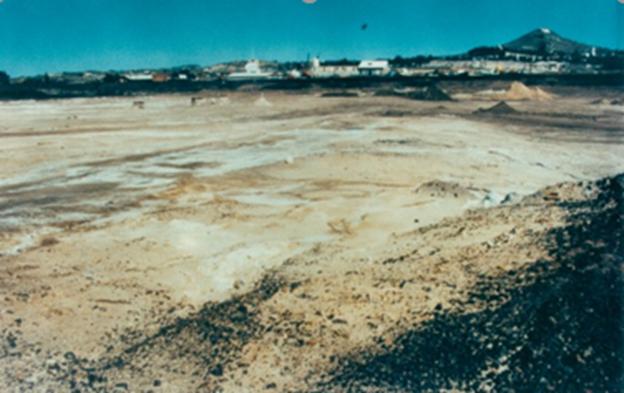
    <summary type="html"><![CDATA[<p><strong><em>The surface water contamination in the 26-mile corridor from Butte to the Warm Spring Ponds was largely created by a 100-year flood in 1908, when floodwaters moved massive amounts of tailings from Butte mines and smelter operations down the creek. </em></strong></p><img src="https://storyofbutte.org/files/fullsize/db9b2c657a2ea3ac0cfd03ea9d3a9666.jpg" alt="Silver Bow Creek, Before" /><br/><p>The Anaconda Company learned its lesson and built the Warm Springs Ponds complex shortly thereafter. But the damage was done. Had it not been for the Superfund Program, these wastes would still be on the banks and in the streambeds of Silver Bow Creek and the Clark Fork River today.</p><p>Instead, through an integrated approach of remedial and restoration actions, Silver Bow Creek has been substantially rebuilt. Millions of cubic yards of tailings and waste have been removed from the creek corridor, the streambed and banks re-built, new vegetation planted and now flourishing, and fish have returned to the watershed, an incredible transformation. Coupled with the remedial action, ecological investments have been made in the channel to create better habitat for fisheries and aquatic species, and access features (e.g., pedestrian trail, restrooms, trailhead parking lots, and more) have been installed so the public can enjoy the restored resources along Silver Bow Creek.</p><p><em><strong><a href="https://storyofbutte.org/items/show/3523">For more (including 4 images) view the original article</a></strong></em></p>]]></summary>
    <published>2025-02-25T22:16:39+00:00</published>
    <updated>2026-04-17T19:58:10+00:00</updated>
    <link rel="alternate" type="text/html" href="https://storyofbutte.org/items/show/3523"/>
    <id>https://storyofbutte.org/items/show/3523</id>
    <author>
      <name>Jon Sesso</name>
    </author>
  </entry>
  <entry>
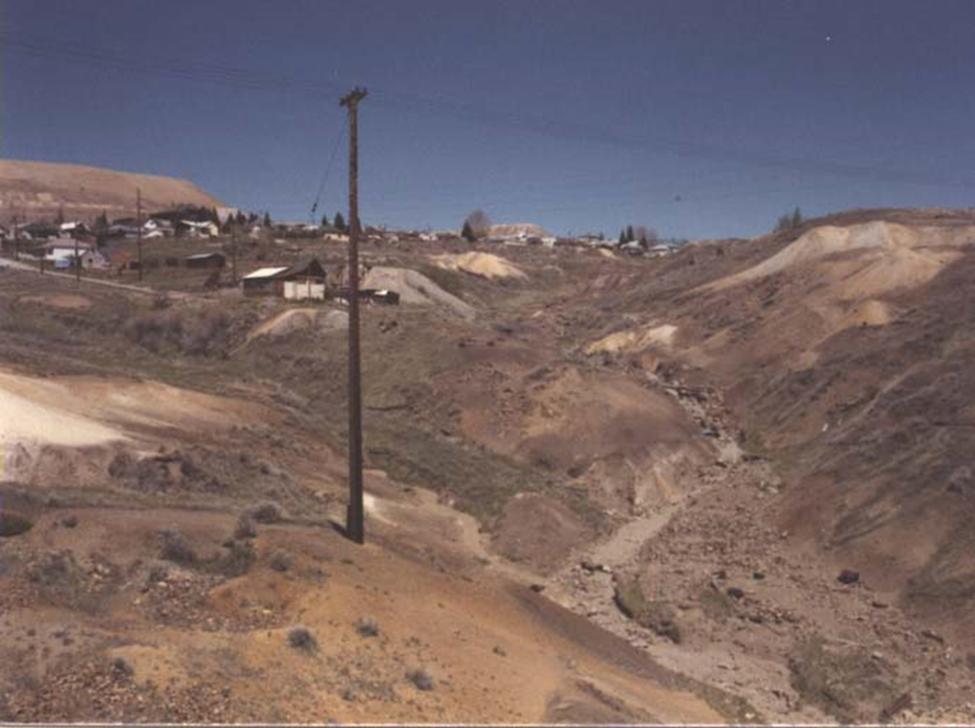
    <title type="html"><![CDATA[Stormwater and Sanitary Sewer Water Contamination]]></title>
    <summary type="html"><![CDATA[<p><strong><em>Stormwater and sanitary sewer water were also contaminated by the heavy metals that Butte's mining industry left behind. Stormwater pollution is an omnipresent challenge and has proved to be a very difficult problem to address.</em></strong></p><img src="https://storyofbutte.org/files/fullsize/52949802fb7cd7e2db44eb076996aa24.jpg" alt="Missoula Gulch, Before " /><br/><p>Because the heavy metals were so widespread at the surface on the Butte Hill, every time it rains the stormwater can sweep these metals down the 11-degree slope and deposit harmful concentrations in Silver Bow Creek and throughout its floodplain. At the same time, Butte’s municipal stormwater collection system is designed to discharge to Silver Bow Creek. This is the reason the Butte-Silver Bow government was named by EPA as a responsible party, along with ARCO and the railroads, to clean up that pollution. </p><p>In this case, the remedial cleanup response has been to 1) cap the contaminated soils on the Hill to eliminate, as much as possible, stormwater contact with the heavy metals; and 2) build a system of ditches, sediment basins and hydraulic control devices to collect the stormwater coming off the Hill. These facilities allow the heavy metals to drop out of the stormwater before reaching Silver Bow Creek. Generally, the solution has been largely successful, with more than 90% reduction in metals in stormwater discharged to Silver Bow Creek.</p><p>But more work remains. To capture the last 10%, the protective caps on the Butte Hill already in place are under review and those that don’t meet standards are being rebuilt. Other areas on the Hill that were never reclaimed (more than 100 acres) will be addressed, and maintenance protocols will continue to be assessed regularly for performance and effectiveness. Maximum action is required on the caps to eliminate contact between stormwater and heavy metals on the surface.</p><p>On the stormwater collection side another series of sediment catch basins are necessary. Over the next few years, these facilities will be installed at the bottom of the Hill, along the Silver Bow Creek corridor and in-line with the major drainages coming down the Hill – Warren Avenue Gulch, Buffalo Gulch and Missoula Gulch. </p><p>Most if not all sanitary sewer collection pipes on the Butte Hill have been embedded in mine waste and tailings since they were installed. The pipes have been deteriorated substantially by the mine waste, and when it rains, stormwater infiltrates through mine wastes into the sanitary pipelines. That water is carried to the sewage treatment plant, producing a marked increase in heavy metals reaching the plant. The solution is to dig up and replace the most deteriorated pipelines, or re-line the largest pipelines to eliminate the infiltration. A multi-million-dollar program has been established to systematically perform the work over the next 20 years.</p><p><em><strong><a href="https://storyofbutte.org/items/show/3522">For more (including 4 images) view the original article</a></strong></em></p>]]></summary>
    <published>2025-02-25T21:37:07+00:00</published>
    <updated>2026-04-17T19:58:10+00:00</updated>
    <link rel="alternate" type="text/html" href="https://storyofbutte.org/items/show/3522"/>
    <id>https://storyofbutte.org/items/show/3522</id>
    <author>
      <name>Jon Sesso</name>
    </author>
  </entry>
  <entry>
    <title type="html"><![CDATA[Protecting the Alluvial Aquifer]]></title>
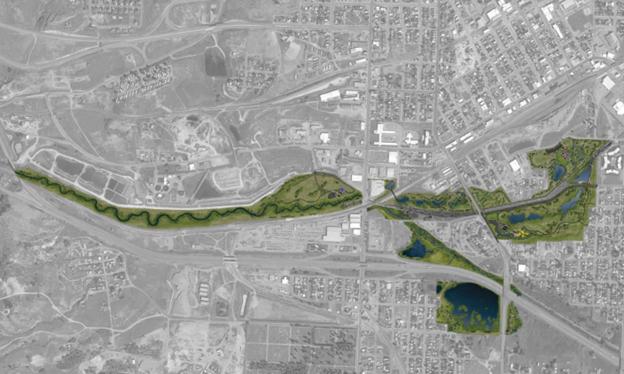
    <summary type="html"><![CDATA[<p><strong><em>Groundwater pollution impacted the alluvial aquifer along the Silver Bow Creek corridor and floodplain in the central part of Butte. The cleanup decisions and strategy have been multi-faceted.</em></strong></p><img src="https://storyofbutte.org/files/fullsize/548a9c4cd7d217c5a3e8ec13c661da1b.jpg" alt="Future Remediation Plan" /><br/><p>Starting in 1996 and ongoing today, the alluvial groundwater is collected through a system of French drains and wells, and the contaminated water is then routed to the Butte Treatment Lagoons (west of Montana Street). After treatment there, the clean water is discharged to Silver Bow Creek.</p><p>The Parrot Tailings Project was completed in 2022 and removed about 700,000 cubic yards of highly contaminated materials from the Silver Bow Creek floodplain, most of which were more than 40 feet below the surface and in contact with alluvial groundwater. The Project also collected nearly 30 million gallons of contaminated water from the aquifer and pumped it to the Montana Resources mine area, to produce a marked improvement in groundwater quality in the Silver Bow Creek corridor.</p><p>The Silver Bow Creek Conservation Area Project is in design now and expected to be implemented starting in 2025. It involves the removal of another one million cubic yards of contaminated materials in proximity to alluvial groundwater. The project also includes a series of sediment basins to collect stormwater coming down off the Butte Hill, where during large storm events heavy metals can drop out before the water is allowed to enter Silver Bow Creek. After these remedial actions are complete, a 120-acre park with recreational facilities will be built in the area as the end land use.</p><p>The Montana Pole and Treating Plant Project is unique in the Butte Superfund story – instead of a heavy metals problem, the chief contaminant at this site is pentachlorophenol (PCP) which was mixed with oil to preserve poles, posts and bridge timbers. The hazardous substances were discharged to a ditch which eventually flowed to Silver Bow Creek, contaminating the soil, sediment, surface water and groundwater throughout the 80-acre site. By 2022, most of the surface contamination was remediated, but the remnants of PCP/oil mixture will have to be pumped up with the groundwater and processed through an onsite, specialized water treatment facility for the next 20 years.</p><p><em><strong><a href="https://storyofbutte.org/items/show/3521">For more (including 4 images) view the original article</a></strong></em></p>]]></summary>
    <published>2025-02-25T21:20:23+00:00</published>
    <updated>2026-04-17T19:58:10+00:00</updated>
    <link rel="alternate" type="text/html" href="https://storyofbutte.org/items/show/3521"/>
    <id>https://storyofbutte.org/items/show/3521</id>
    <author>
      <name>Jon Sesso</name>
    </author>
  </entry>
  <entry>
    <title type="html"><![CDATA[Groundwater Contamination]]></title>
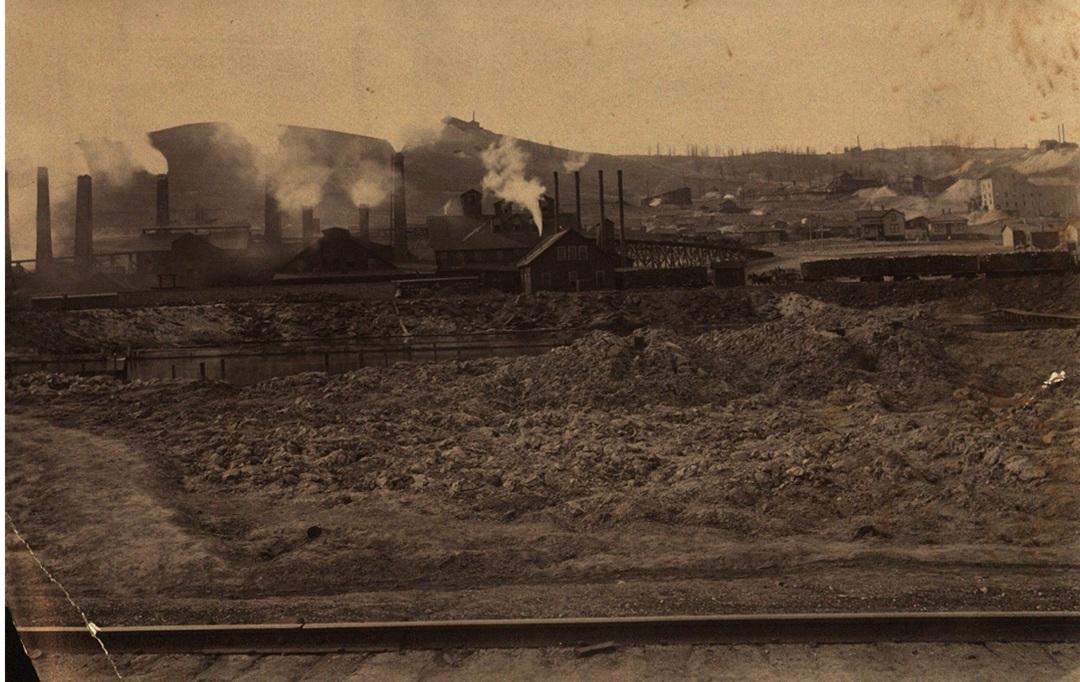
    <summary type="html"><![CDATA[<p><strong><em>Mining in Butte severely impacted water resources – groundwater, stormwater, surface water, drinking water, and even sanitary sewer water – all contaminated by the heavy metals brought to the surface from the Richest Hill on Earth.</em></strong></p><img src="https://storyofbutte.org/files/fullsize/4bb60e6d01b97fb6c82e9383d488936f.jpg" alt="Butte Before the Pit" /><br/><p>The seminal contributor to groundwater contamination is the Berkeley Pit, a problem created in 1982 when ARCO ceased mining activities and turned off the pumps at the 3,900-foot level below the surface in the Kelly Mine. Thousands of miles of underground mine workings and the Berkeley Pit flooded as the groundwater started rising to its natural level. In the Pit, that water, when exposed to heavy metals on the Pit walls and air (oxygen), became a toxic soup that requires perpetual monitoring and management. </p><p>Given the adverse impacts of this contamination, the groundwater in large portions of Butte’s urban area can’t be used for drinking. The extent of the damage, in volumetric and economic terms, is enormous. For just the bedrock aquifer on the Butte Hill, lost ground water resources are estimated at 6,900 gallons per minute (gpm). By comparison, 5,000 gpm equates to seven million gallons per day, which is about the average amount of water used by Butte citizens on a typical day. In economic terms, approximately 3,000 residential properties and 350 commercial parcels are situated over the contaminated aquifers on the Hill. If these aquifers were not contaminated, the residents and businesses could have used a substantial portion of the groundwater resources as a source of drinking water through private wells. </p><p>By 1994, the EPA determined that it was “technically impractical” to remediate this contamination. They stipulated that, to protect human health, a ground water control area and other restrictions needed to be put in place to limit the use of existing wells and prohibit new wells in specific areas. EPA also approved the proposed plan from ARCO and Montana Resources (the active mine operator in 1994 and still today) to allow the groundwater to enter the Berkeley Pit until the level reached 5,350 feet above sea level. This is about 60 feet below a “Critical Water Level” where contamination could potentially begin to adversely affect alluvial groundwater resources. Once the water level in any of the underground mines surrounding the Pit reached 5,350, which occurred in 2018, pump and treat operations began. Today, approximately seven million gallons per day are pumped out of or diverted away from the Berkeley Pit, processed through two treatment plants, and used in active mining operations or discharged into Silver Bow Creek.</p><p><em><strong><a href="https://storyofbutte.org/items/show/3519">For more (including 5 images) view the original article</a></strong></em></p>]]></summary>
    <published>2025-02-25T21:00:00+00:00</published>
    <updated>2026-04-17T19:58:10+00:00</updated>
    <link rel="alternate" type="text/html" href="https://storyofbutte.org/items/show/3519"/>
    <id>https://storyofbutte.org/items/show/3519</id>
    <author>
      <name>Jon Sesso</name>
    </author>
  </entry>
  <entry>
    <title type="html"><![CDATA[Residential Metals Abatement Program]]></title>
    <summary type="html"><![CDATA[<p><strong><em>More than 4,000 properties in Butte – and that number will continue to increase – became collection points for heavy metals, including residential neighborhoods, school playgrounds and parks. </em></strong></p><img src="https://storyofbutte.org/files/fullsize/cdffcfd8a4d0104f94409e8ec1c54e8a.jpg" alt="Residential Attic Cleanup" /><br/><p>Homes, schools and parks were either built on top of soils containing heavy metals, or dust in the air from mining and smelting activities settled on the ground or in house attics. These threats to human health were able to be addressed because of the Superfund program. </p><p>Between 1995 and 2024, after extensive sampling to identify and locate where metals contamination exceeded standards – specifically for lead, arsenic and mercury – almost 3,000 properties were abated, while another 1,000 properties are on a waiting list. In October 2024, the EPA proposed more stringent cleanup standards for these contaminants, triggering re-sampling of many properties, increasing the footprint of the area to be sampled, and adding thousands of properties to the abatement list to be addressed under the Superfund Program.</p><p>In this case, the remedy is all about protecting human health. If contaminant levels exceed the standard, 12 inches of soil is removed from the yards/parks/play areas and replaced with clean soil and sod or whatever ground covers the owner had in place. Interior spaces, with an emphasis on attics, are cleared of dust and other materials, such as contaminated insulation, using high powered vacuums. </p><p>The Program, which also includes biomonitoring and blood lead testing for children – the population most sensitive to lead poisoning – is expected to continue in Butte over the next several decades, and until such time as all threats to human health have been addressed.</p><p><em><strong><a href="https://storyofbutte.org/items/show/3518">For more (including 3 images) view the original article</a></strong></em></p>]]></summary>
    <published>2025-02-25T20:23:01+00:00</published>
    <updated>2026-04-17T19:58:10+00:00</updated>
    <link rel="alternate" type="text/html" href="https://storyofbutte.org/items/show/3518"/>
    <id>https://storyofbutte.org/items/show/3518</id>
    <author>
      <name>Jon Sesso</name>
    </author>
  </entry>
  <entry>
    <title type="html"><![CDATA[Soil Cleanup]]></title>
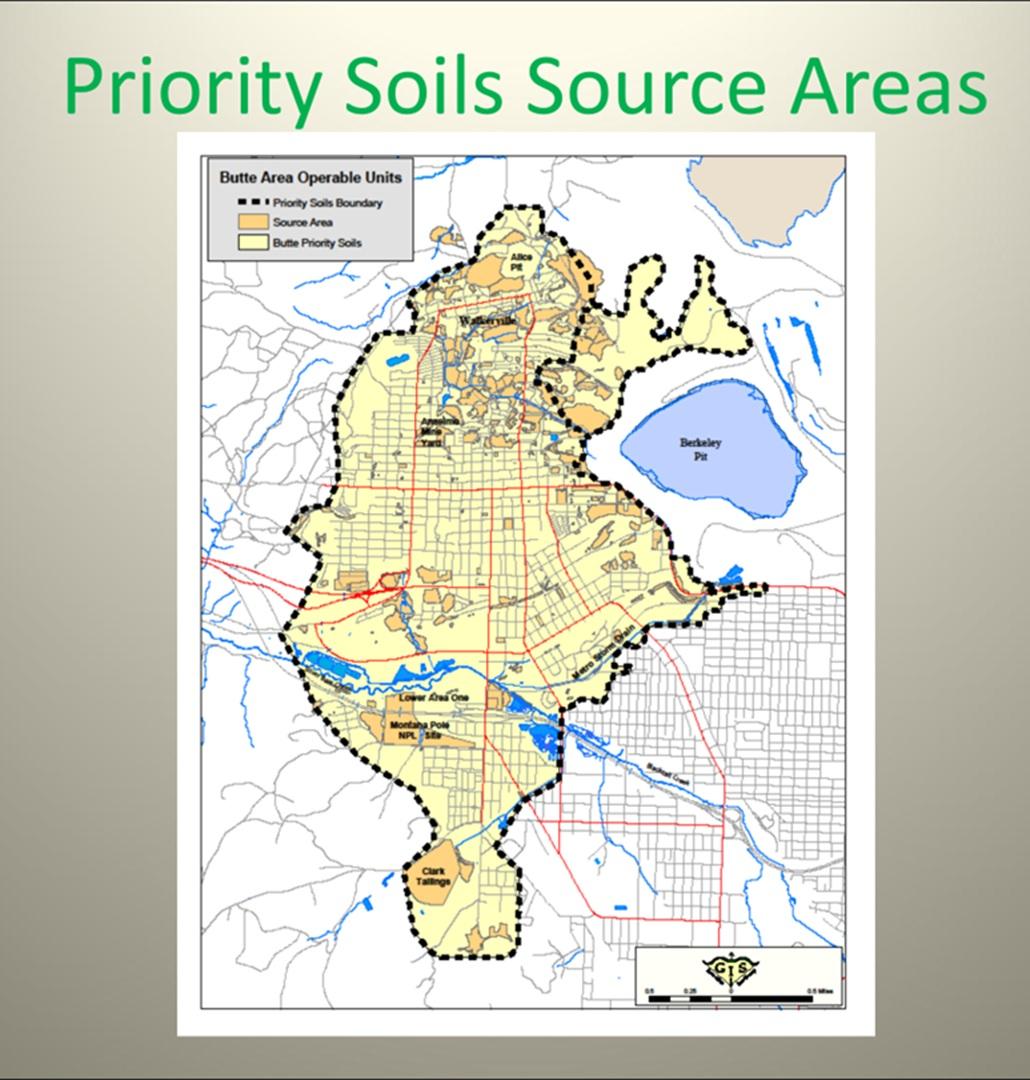
    <summary type="html"><![CDATA[<p><strong><em>In telling the Superfund story about how decisions were made to clean up the soil in Butte, it’s important to understand just how prevalent the heavy metals were and remain in that soil. </em></strong></p><img src="https://storyofbutte.org/files/fullsize/9cfc9a9cb141a0d70ead32d9d53668c9.jpg" alt="Priority Soils Map" /><br/><p>Butte is often called the Richest Hill on Earth, mostly because of the millions and millions of tons of copper mined from the earth and used to fight world wars and electrify the nation. But the reality is that the earth underlying Butte is made up of many other elements. Butte’s soil and ore bodies contain molybdenum, gold, silver, aluminum, zinc, lead, manganese, iron, cadmium, and more, all of which, at one time or another, were mined in and around Butte. In addition, arsenic is attached to the ore bodies, which, when brought to the surface, created another serious environmental hazard.</p><p>Of course, not everyone considered the arsenic a problem. In fact, in 1889, when Copper King William Clark was confronted about the issue, he famously retorted, “there’s just enough arsenic there” that the women “are renowned wherever they go for their beautiful complexions.” The same William Clark, giving the final speech of his short tenure after having bought a seat in the US. Senate, related jousting with President Theodore Roosevelt and his Forest Service Chief Gifford Pinchot about the ill effects of mining and boasting how “Those who succeed us can well take care of themselves.”</p><p>Compounding the issue of abundant heavy metals in the soil were past mining and smelting practices. From the giant Anaconda Company to the hundreds of individual miners prospecting their claims, the ore bodies would be brought to the surface, the precious metals separated out and sold off, and the spoils (i.e., tailings and waste rock) left on the ground or next to the stream to decay and erode as part of the landscape and environment. Further, those spoils would be used to backfill foundations for commercial buildings and residential homes, or as the base course for city streets and ballast for railroad corridors.</p><p>Along comes Superfund and the challenge of mitigating the adverse impacts of these heavy metals. What to do, and how to do it? Total removal was investigated and evaluated, but judged impractical. Then, how far down to dig? – there was really no bottom level where the heavy metal concentrations would be acceptable to protect humans and the environment. </p><p>Consequently, the most prevalent soil cleanup remedy used in Butte has been a waste-in-place/capping technique: removing the top 18 inches of dirt which contains the highest concentration of metals and contaminants, regrading the surfaces to minimize erosion from stormwater runoff, importing clean fill materials (metals-free, to the greatest extent possible), and covering the surface with enough healthy (organic content) topsoil to support a vegetated “protective cap.” The caps are then monitored for performance and effectiveness to eliminate human contact with the heavy metals and stormwater runoff carrying metals down the steep pitch of the Butte Hill to the tiny, low-flow surface streams at the bottom, Blacktail Creek and Silver Bow Creek.</p><p>On the Butte Hill, there are approximately 200 individual mine waste source areas that have been identified, mapped, reclaimed and are now being monitored, ranging in size from one-half to 50 acres. Over the years, there have been fits and starts in learning how to build the protective caps properly and keep the vegetation in good condition. Many sites have performed well; several have not and have had to be redone periodically to meet performance objectives. This waste-in-place remedy requires a perpetual maintenance effort, which is managed and implemented by the local government and paid for by ARCO. Trust funds have been established to ensure the residents of Butte will never bear the cost of these maintenance activities.</p><p>Another important aspect of the waste-in-place remedy and an overarching chapter of the Superfund story is the community’s demand for beneficial end land uses of the capped sites and remediated areas. In other words, if the community is going to tolerate forever that the heavy metals are buried underground, there needs to be tangible, long-term benefits in compensation. The results have been significant throughout the community, including parks, open space areas and a multi-million-dollar Redevelopment Trust. </p><p><em><strong><a href="https://storyofbutte.org/items/show/3517">For more (including 9 images) view the original article</a></strong></em></p>]]></summary>
    <published>2025-02-25T17:10:39+00:00</published>
    <updated>2026-04-17T19:58:10+00:00</updated>
    <link rel="alternate" type="text/html" href="https://storyofbutte.org/items/show/3517"/>
    <id>https://storyofbutte.org/items/show/3517</id>
    <author>
      <name>Jon Sesso</name>
    </author>
  </entry>
  <entry>
    <title type="html"><![CDATA[Superfund Legislation]]></title>
    <summary type="html"><![CDATA[<p><strong><em>Until 1980, there was very little that could be done to abate and mitigate the adverse impacts of Butte's mining industry on residents and the environment. There were no laws that governed the historic mining activities, and no violations to enforce. Then things changed.</em></strong></p><img src="https://storyofbutte.org/files/fullsize/70d3cb571af02df5b509f9479061e93d.jpg" alt="1889 Landscape" /><br/><p>In 1980, the U.S. Congress, faced with mounting legacy pollution problems across the country (e.g., companies discharging toxic substances in public waterways and landfills), enacted a new federal law – CERCLA, the Comprehensive Environmental Response, Compensation, and Liability Act. The law is commonly referred to as Superfund because provisions of the statute created taxes levied on chemical and oil companies, among others, with proceeds deposited in an independent “fund.” This fund was used to empower the U.S. Environmental Protection Agency to identify and compel responsible parties to clean up hazardous sites, and to pay for cleanups at “orphan” sites where no liable party could be identified. </p><p>The Superfund statute is quite unique (and controversial) in that it can be enforced retroactively, after the pollution occurred and regardless of whether the polluter (aka, the responsible party) did or did not violate any other environmental laws when creating the hazardous conditions. For Butte, the ramifications of this new law were truly transformational in terms of addressing the pollution impacts of the past that would never have been dealt with otherwise.</p><p>By 1983, the Butte/Silver Bow Creek Site, including the Berkeley Pit, was among the first sites placed on the Superfund National Priority List – the first of four regional federal Superfund Sites extending over 120 miles from Butte to the Milltown Dam in Milltown along and within the Upper Clark Fork River Basin. Then and still today, these four sites together constitute the largest Superfund site in the United States.</p><p>In a very significant way Butte’s Superfund story started a few years earlier, in 1976, when the Atlantic Richfield Company (now the British Petroleum/Atlantic Richfield Company, hereinafter referred to as ARCO) bought all Anaconda Company holdings. Hence, when CERCLA became law in 1980, ARCO was on the hook to pay for most of the Superfund cleanup actions in the Upper Clark Fork River Basin. Essentially, ARCO would have to pay the tab for all the pollution that occurred under decades of Anaconda Company ownership. Thus began what has now been an over 40-year journey of a multitude of remediation actions compelling ARCO to perform and manage soil and water cleanup work on the Butte Hill, the Berkeley Pit and the Silver Bow Creek corridor/watershed.</p><p>ARCO was also responsible for restoration damages in Butte and the Upper Clark Fork River Basin (the second part of CERCLA) that would ultimately lead to a multi-million-dollar ($188 million plus interest earned) settlement with the State of Montana. The funds have been used by the State since 1999, in concert with remedial work, to restore and replace damaged and lost natural resources in the Basin. </p><p><em><strong><a href="https://storyofbutte.org/items/show/3516">For more (including 7 images) view the original article</a></strong></em></p>]]></summary>
    <published>2025-02-25T16:29:07+00:00</published>
    <updated>2026-04-17T19:58:10+00:00</updated>
    <link rel="alternate" type="text/html" href="https://storyofbutte.org/items/show/3516"/>
    <id>https://storyofbutte.org/items/show/3516</id>
    <author>
      <name>Jon Sesso</name>
    </author>
  </entry>
</feed>