Stamp Mills

Old Lexington Gardens is a recent landscape feature installed on the west side of a rise where the old Washington School was once located, between Broadway and Granite, just east of Arizona Street.
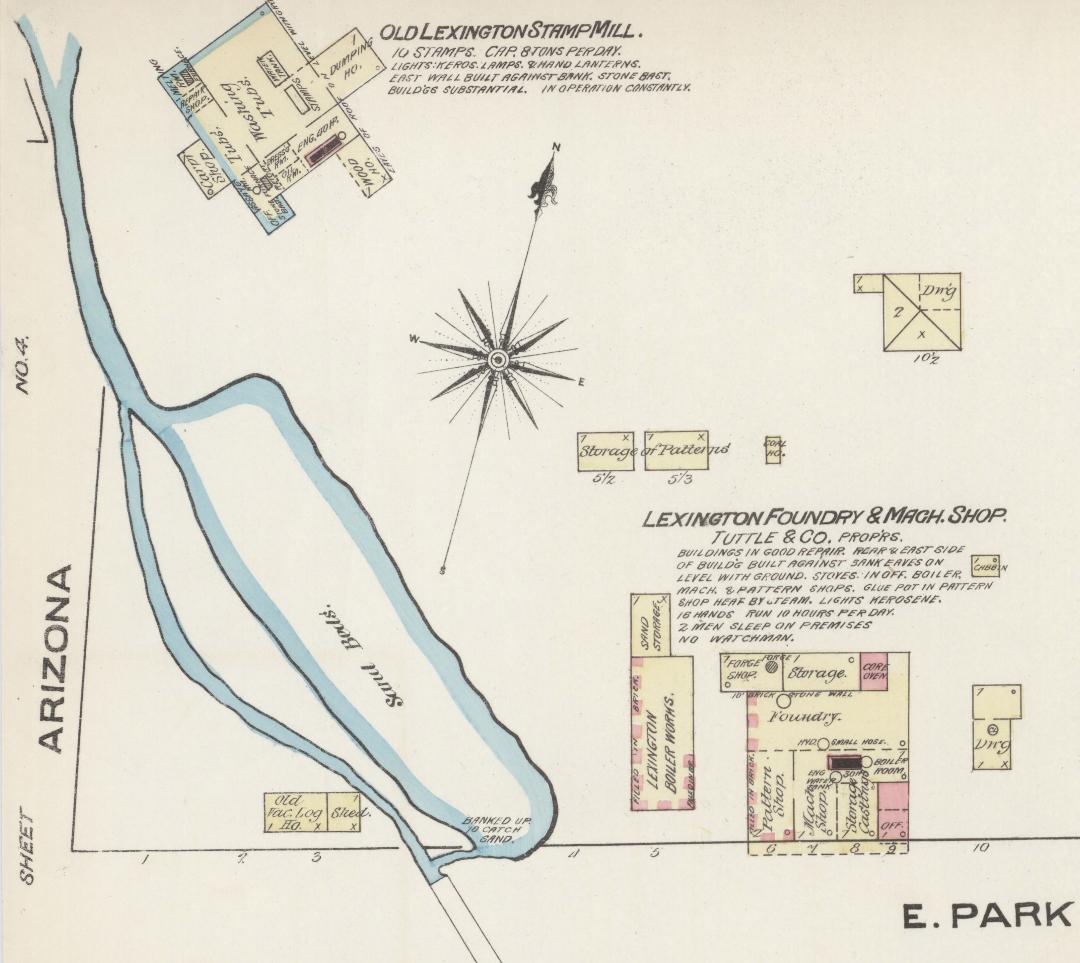
In addition to a variety of ornamental plantings, the Old Lexington Gardens features a small wooden headframe and two five-stamp batteries. The stamps were used in the old Lexington mill, which sat nearby, where the southeast corner of Broadway and Arizona is now located.
Generating a profit from mining requires more steps than simply removing ore from the ground. The ore must be processed to yield a useful product, and the product must be transported to market. The potential products that first attracted miners to Butte were precious metals, gold and silver. To extract the precious metals from ore, the ore first had to be crushed to a sufficiently small particle size for processing. When underground mining began in Butte in the late 1860s, the principal technology for crushing ore was the stamp mill, a name that referred both to the mechanized piece of equipment and to the building that housed the process. A stamp mill was a device that worked like a mortar and pestle. A battery of stamps included an iron or steel mortar box that held the ore as it was being crushed; several stamp stems, each with a cast iron shoe at the bottom, that dropped by gravity onto the ore; a camshaft; and a wooden frame that held the parts of the battery together. Each stem had a tappet at the top making it possible for the camshaft along the top of the battery to lift and drop each stamp in particular sequence. A belt attached to a steam engine turned the camshaft. After the ore was crushed, it could be moved to an amalgamation apparatus in which mercury would combine with the particles of gold and silver to form an amalgam, similar to the amalgam of mercury and gold or silver that dentists once used for fillings. The amalgam could then be removed to a retort (also called a mercury still), which heated the amalgam to a temperature at which the mercury evaporated, leaving molten gold and silver that could be cast into bars of bullion. The mercury vapor was captured and condensed to a liquid to be used again.
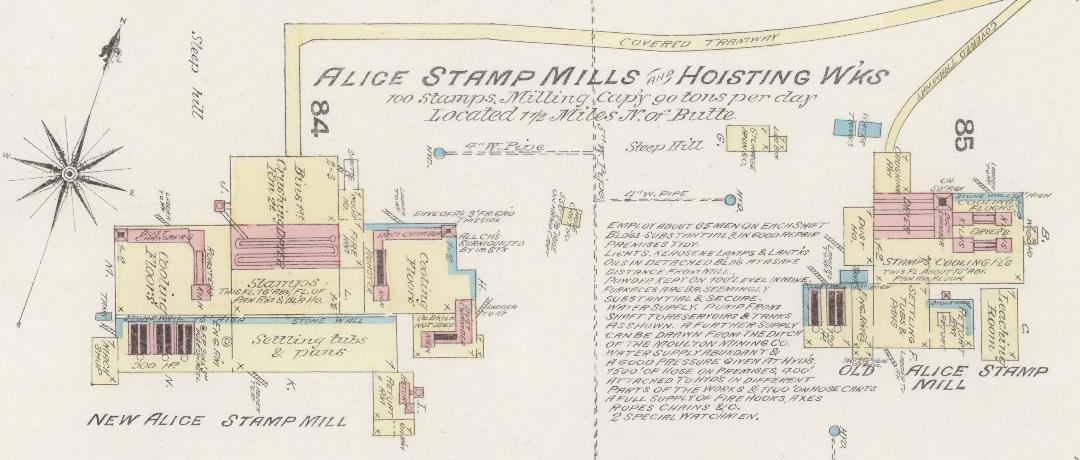
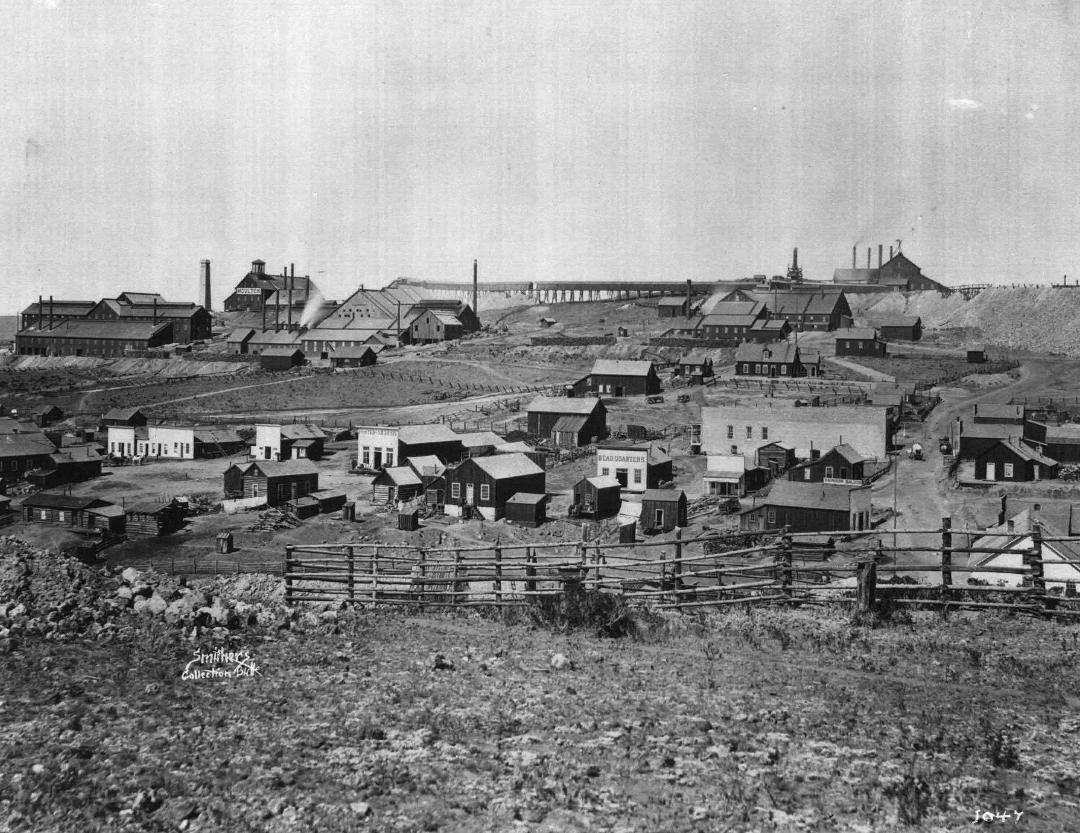
All Butte’s largest silver mills (Alice, Moulton, Lexington, and Silver Bow) used stamp mills to crush and process their ores, as did the earlier, pioneering mills (Hendrie, Dexter, Centennial, Grove Gulch, and others). Butte’s silver ores were more complex than free-milling ores (meaning ores that could yield precious metal by crushing and simple amalgamation), so the successful mills first had to roast the ore with salt so that the precious metals could be recovered by amalgamation. Charles Hendrie had built what came to be called the Old Lexington Mill in 1868. It was not a success. Andrew Jackson Davis bought Lexington mine in 1876 and acquired and rehabilitated Hendrie’s mill in 1877, making the operation a success. The mill was usually called the Davis mill. He sold the mine and mill to a French syndicate in 1881. That company built a new, larger mill, with apparatus for roasting the ore, just southwest of the Lexington shaft in Walkerville, at which time the Davis mill came often to be called the Old Lexington mill. Without capacity to roast ore, the Old Lexington mill operated only intermittently until 1890, and it was dismantled in 1891. None of Butte’s silver mines survive except the Lexington, in Walkerville, which became a zinc mine after the end of the silver era.
By 1879, as Butte was booming as a silver-mining camp, some miners were finding ore that was rich in copper. They, too, had to find a way to process their ore at Butte to earn a profit, but that entailed a differing kind of milling (called concentration) and smelting. Butte became a world-class mining center because of its copper production. Nevertheless, it was silver that led to the major investments of capital that made Butte a booming mining center for copper.
Images