The Railways of Butte
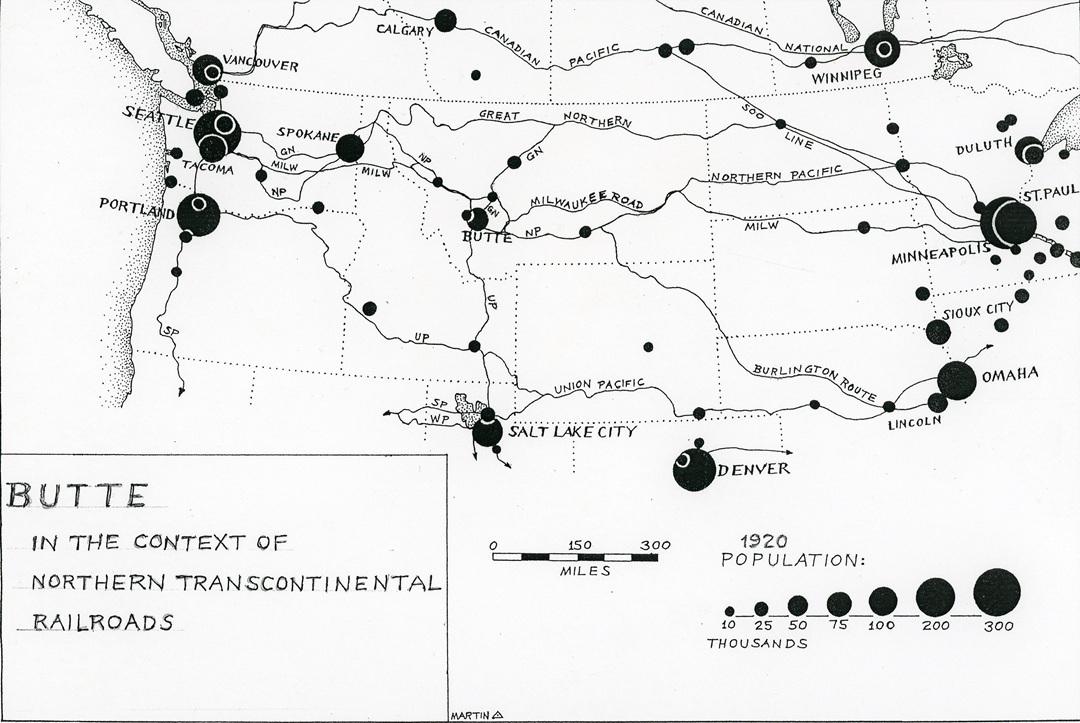
For most of a century, Butte was by several measures the most important and varied railroad center in the northern Rockies. In 1911, thirty years after the Union Pacific reached Butte, four transcontinental railways—linking the Midwest and the Pacific coast—served the city.
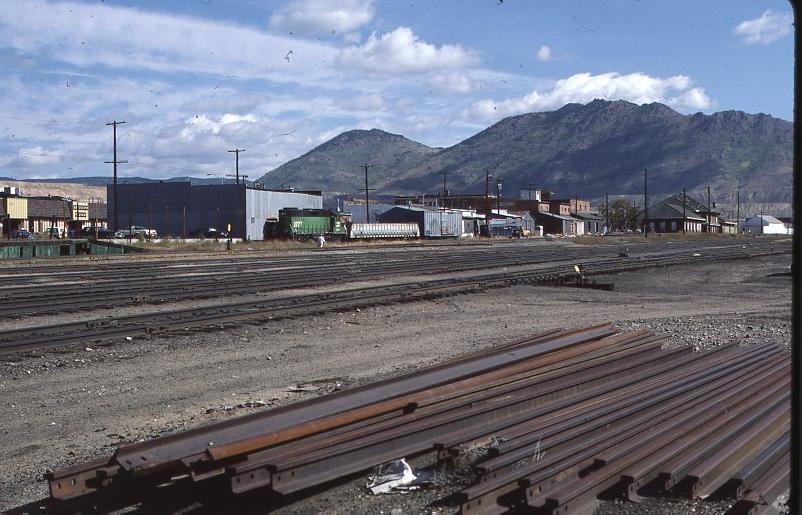
Two companies had through main lines (Northern Pacific, Milwaukee Road) and two had Butte at the ends of secondary lines (Union Pacific, Great Northern). The city also was the east end of a heavily trafficked short line, the Butte, Anaconda & Pacific. For urban transit, there was both an extensive street railway system and—for nearly a decade before 1900—a cable car line on Main Street. The railroad presence in Butte included passenger stations and freight houses, switchyards, locomotive terminals, and many industrial spur tracks. Railway employees worked on trains and switch crews, in stations and offices, on maintenance of right-of-way and track, and in roundhouses and repair shops. In 1916, railway work in Butte employed at least 850 people, with over 600 on the five intercity companies, more than 200 on the street railway, and about 30 Railway Mail Service employees based in Butte who worked in the mail cars in passenger trains.
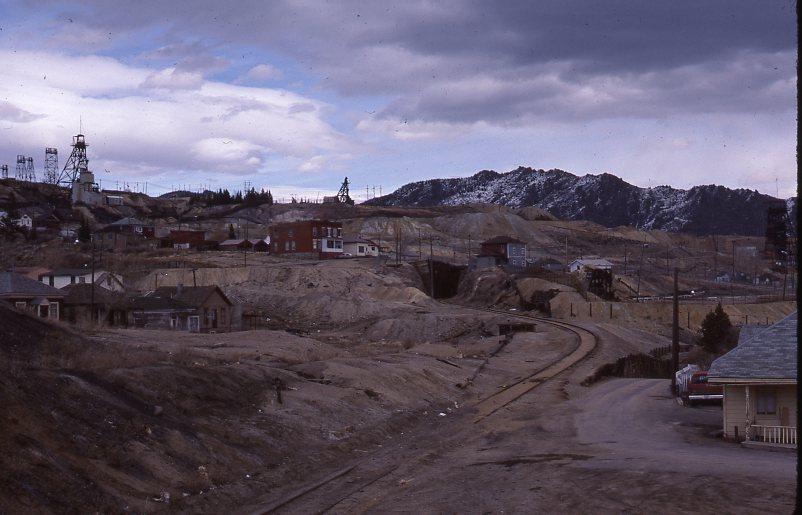
The railroads carried freight for the major economic activity of Butte and Anaconda: the mining and processing of the metallic ores of copper, zinc, silver, and manganese. The density of rail lines in Butte was most evident amid the mines on the middle and upper parts of Butte Hill. In the years around 1900, three railroads together had dozens of miles of track on the Hill: the Northern Pacific, the Great Northern, and the Butte, Anaconda & Pacific. A contemporary noted, with some exaggeration, “So complete has this system of railroad development proceeded that ‘the hill’ is a perfect network of lines, running in every conceivable direction and at all manner of grades, the hill on closer inspection appearing to be terraced at every few yards by recurring tracks.” (Harry C. Freeman, A Brief History of Butte, Montana: The World’s Greatest Mining Camp, 1900, p. 96). The tracks passed close to mines and waste rock dumps, houses, businesses, schools, and churches.
The rail companies also brought to Butte the basic materials and finished goods for consumers and businesses in a city that in 1916-1917 reached a peak population of about 90,000. The concentration of rail lines in Butte made the city a regional center for wholesale businesses distributing, for example, food and medicine.
Butte’s location where railway main lines radiated in the four cardinal directions made it a destination or stopping point for passengers, some famous and most unremarked. For six decades, presidents and candidates for that office paused or stopped at Butte’s passenger stations: from perennial candidate William Jennings Bryan (August 1897) and President Theodore Roosevelt (May 1903) to candidates of both parties, Thomas E. Dewey and Harry S Truman (June 1948) and Dwight D. Eisenhower (October 1952). Trains brought the stars of drama, music, and vaudeville whose fame filled entertainment venues of uptown Butte. Wild West shows featuring “Buffalo Bill” Cody required several trains to carry the hundreds of people and horses who performed on Butte Flat three times between 1908 and 1914.
Images