Milwaukee Road
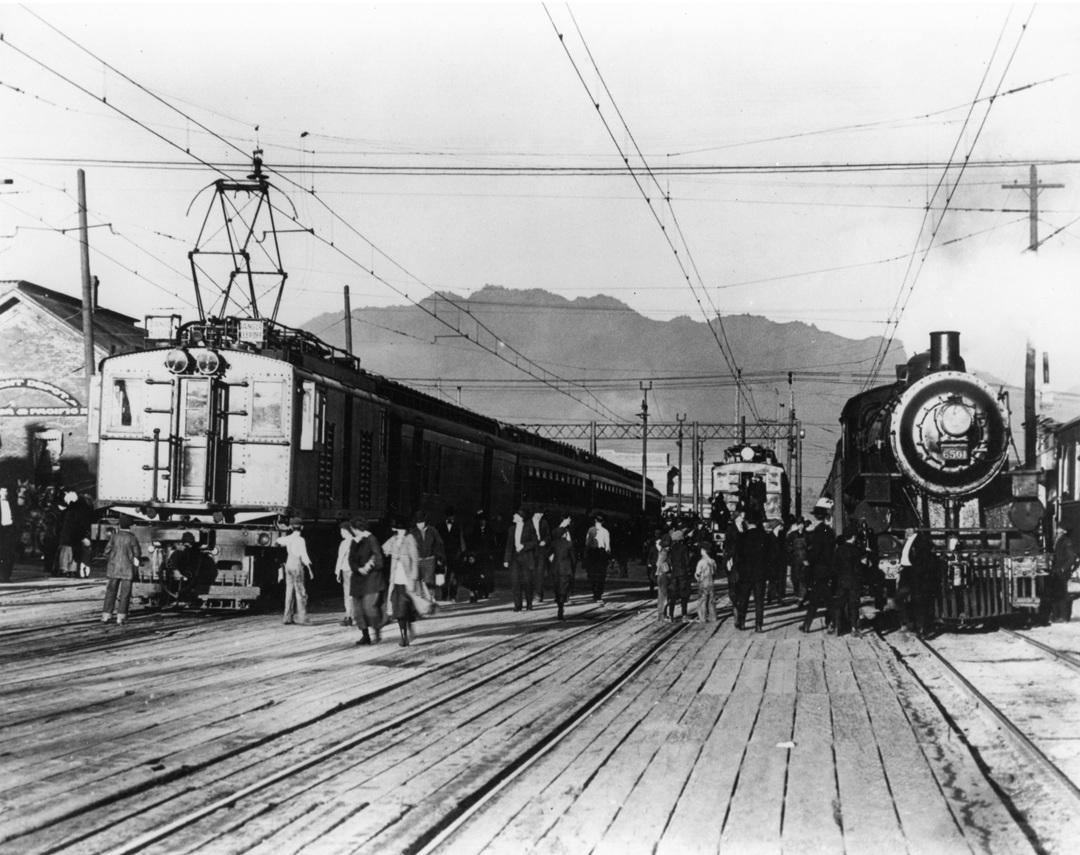
One of the last transcontinental railroads, completed in 1909, the Chicago, Milwaukee & St. Paul Railway had a prominent presence in Butte, as represented by its large passenger station. From its construction and into the 1920s, the Milwaukee Road had several operational and technological links with the Butte, Anaconda & Pacific, particularly in the realm of railway electrification.
In the Milwaukee Road’s earliest years in Butte, before electrification, it temporarily used BA&P tracks for eleven miles west of Butte. Both companies alternately used each other’s passenger stations. For a decade beginning in 1914, the Milwaukee Road owned 49% of the shares in the privately held stock of the BA&P.
Between 1911 and 1913 both the BA&P and Milwaukee acted to adopt electric power for main line operations. Both companies were persuaded by the General Electric Company’s sales efforts and influential corporate links with Anaconda Copper Mining Company and hydroelectric enterprises that combined in 1912 to form the Montana Power Company. Both railroads selected a system that General Electric designed and then oversaw construction. It used direct current, with the BA&P and Milwaukee respectively adopting 2400 and 3000-volt power.
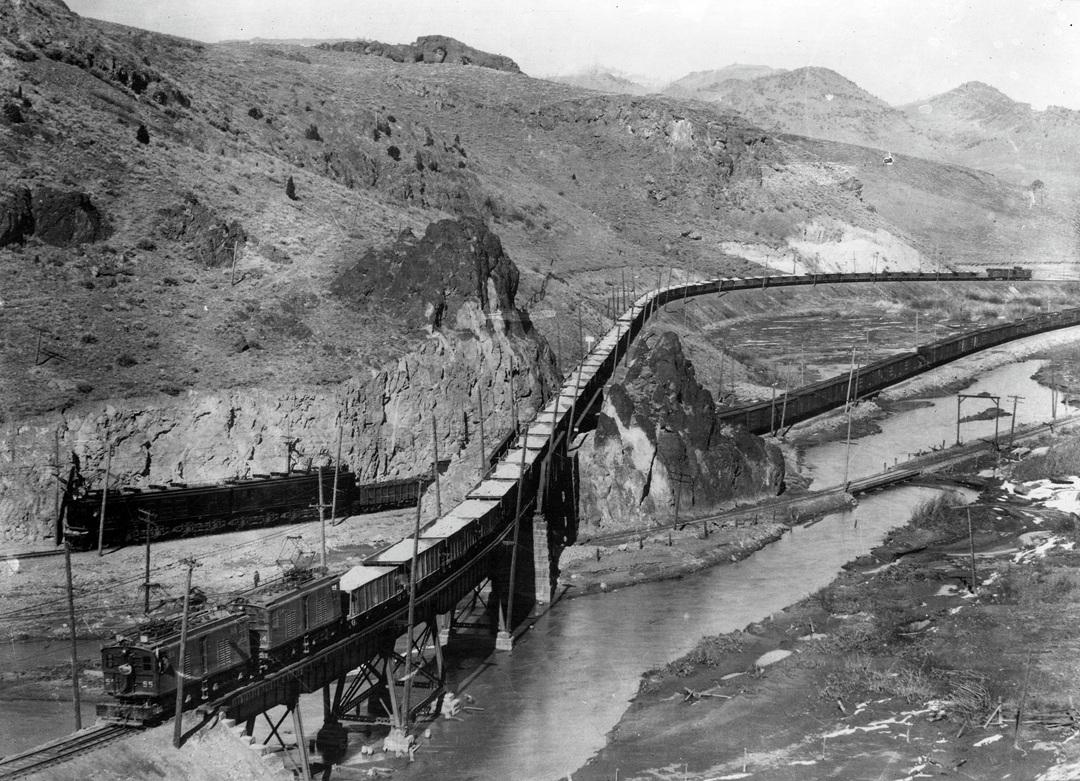
The Milwaukee Road chose to electrify the part of its Chicago-Puget Sound line that crossed three mountain ranges in Montana and Idaho. By 1917, 440 miles of the Milwaukee’s transcontinental line between Harlowton, Montana and Avery, Idaho were under wires. Three years later, 210 miles in central and western Washington, crossing two mountain ranges, were also electrified. The electrification of both sections required 11,600 tons of copper: for electric wires over 650 miles of main line track as well as passing sidings, spur tracks, and switchyards; for signals and electrical machinery in twenty-two substations; and in locomotives. In the 1920s, the Milwaukee Road advertised that it operated “The World’s Longest Electrified Railroad.” Nearly two-thirds of the transcontinental line under wire—415 miles—was in Montana. For fifty years after 1917, in a rare arrangement, two intercity electric railroads—the Milwaukee and the BA&P—ran closely within sight of each other for fourteen miles, from the west edge of Butte to the west end of Silver Bow canyon.
The Milwaukee Road continued electric operations two decades after most other electrified sections of railroads outside the northeast U.S. converted to diesel-electric engines. In 1973 Milwaukee management, faced with rising costs of using equipment many decades old, decided to end electric operations over the Rocky Mountains; the last such trains ran in June 1974.
Burdened with large debts from construction of the line to Puget Sound, the Milwaukee Road for decades suffered financial weakness and went through three bankruptcies. The first, 1925-1928, resulted in a change of name, to Chicago, Milwaukee, St. Paul & Pacific Railroad. The last, in 1977, resulted three years later in the end of rail service west of Miles City, Montana. Most of the tracks were removed in the early 1980s.
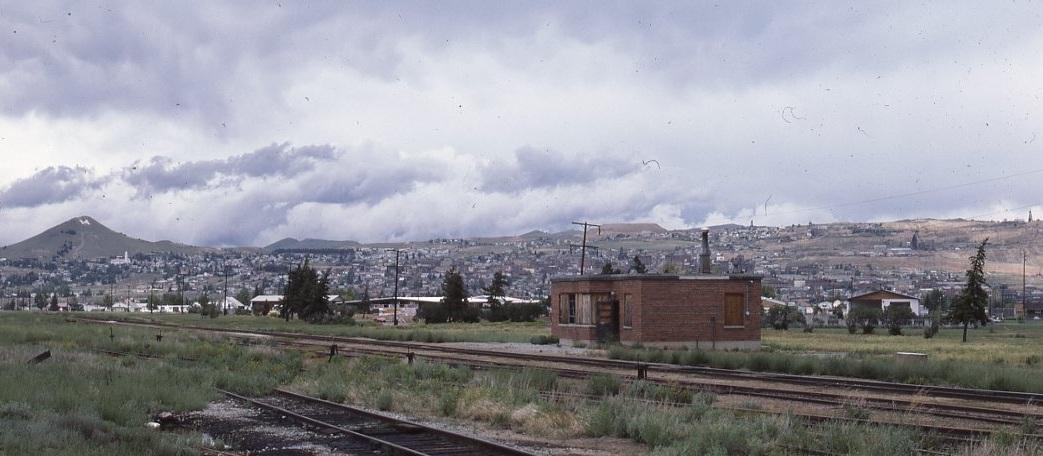
Butte has the only surviving track remnant of the Milwaukee Road’s transcontinental route in the 705 miles between Miles City, Montana and St. Maries, Idaho. BNSF now operates over about 5.5 miles of this former Milwaukee Road main line track on the southwest edge of Butte, between the BNSF ex-Northern Pacific main line at the north end and the Butte Industrial Park at the south end. Ceramic fragments of dining car plates, bowls, and cups can still be found along the track, sixty years after the Milwaukee Road’s last passenger trains ran through Butte.
Images