<?xml version="1.0" encoding="UTF-8"?>
<feed xmlns="http://www.w3.org/2005/Atom">
  <title type="text">Story of Butte</title>
  <updated>2026-04-17T19:58:11+00:00</updated>
  <generator uri="http://framework.zend.com" version="1.12.20">Zend_Feed_Writer</generator>
  <link rel="alternate" type="text/html" href="https://storyofbutte.org/"/>
  <link rel="self" type="application/atom+xml" href="https://storyofbutte.org/items/browse?output=rss2"/>
  <id>https://storyofbutte.org/</id>
  <author>
    <name>Story of Butte</name>
    <uri>https://storyofbutte.org</uri>
  </author>
  <link rel="hub" href="https://pubsubhubbub.appspot.com/"/>
  <entry>
    <title type="html"><![CDATA[Milwaukee Road]]></title>
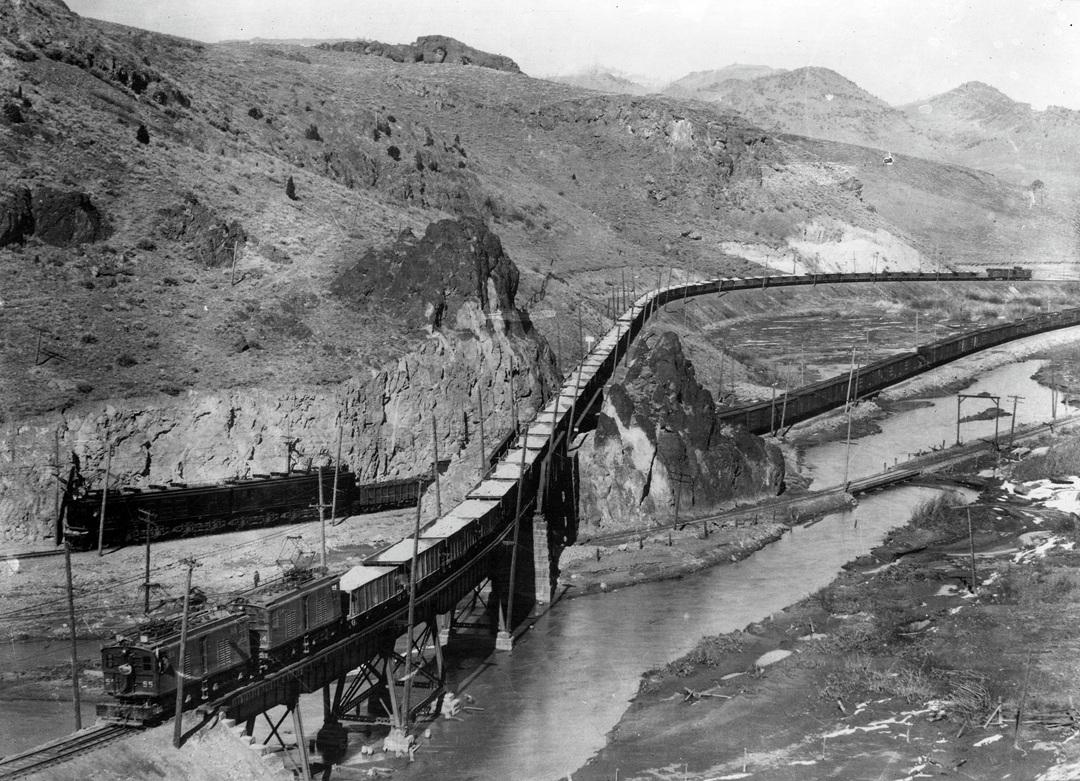
    <summary type="html"><![CDATA[<p><strong><em>One of the last transcontinental railroads, completed in 1909, the Chicago, Milwaukee & St. Paul Railway had a prominent presence in Butte, as represented by its large passenger station. From its construction and into the 1920s, the Milwaukee Road had several operational and technological links with the Butte, Anaconda & Pacific, particularly in the realm of railway electrification.</em></strong></p><img src="https://storyofbutte.org/files/fullsize/58b21efc7224f96d3436062e088017dd.jpg" alt="Trains on two electrified railroads in Silver Bow canyon." /><br/><p>In the Milwaukee Road’s earliest years in Butte, before electrification, it temporarily used BA&P tracks for eleven miles west of Butte. Both companies alternately used each other’s passenger stations. For a decade beginning in 1914, the Milwaukee Road owned 49% of the shares in the privately held stock of the BA&P.</p><p>Between 1911 and 1913 both the BA&P and Milwaukee acted to adopt electric power for main line operations. Both companies were persuaded by the General Electric Company’s sales efforts and influential corporate links with Anaconda Copper Mining Company and hydroelectric enterprises that combined in 1912 to form the Montana Power Company. Both railroads selected a system that General Electric designed and then oversaw construction. It used direct current, with the BA&P and Milwaukee respectively adopting 2400 and 3000-volt power. </p><p>The Milwaukee Road chose to electrify the part of its Chicago-Puget Sound line that crossed three mountain ranges in Montana and Idaho. By 1917, 440 miles of the Milwaukee’s transcontinental line between Harlowton, Montana and Avery, Idaho were under wires. Three years later, 210 miles in central and western Washington, crossing two mountain ranges, were also electrified. The electrification of both sections required 11,600 tons of copper: for electric wires over 650 miles of main line track as well as passing sidings, spur tracks, and switchyards; for signals and electrical machinery in twenty-two substations; and in locomotives. In the 1920s, the Milwaukee Road advertised that it operated “The World’s Longest Electrified Railroad.” Nearly two-thirds of the transcontinental line under wire—415 miles—was in Montana. For fifty years after 1917, in a rare arrangement, two intercity electric railroads—the Milwaukee and the BA&P—ran closely within sight of each other for fourteen miles, from the west edge of Butte to the west end of Silver Bow canyon.</p><p>The Milwaukee Road continued electric operations two decades after most other electrified sections of railroads outside the northeast U.S. converted to diesel-electric engines. In 1973 Milwaukee management, faced with rising costs of using equipment many decades old, decided to end electric operations over the Rocky Mountains; the last such trains ran in June 1974.</p><p>Burdened with large debts from construction of the line to Puget Sound, the Milwaukee Road for decades suffered financial weakness and went through three bankruptcies. The first, 1925-1928, resulted in a change of name, to Chicago, Milwaukee, St. Paul & Pacific Railroad. The last, in 1977, resulted three years later in the end of rail service west of Miles City, Montana. Most of the tracks were removed in the early 1980s.</p><p>Butte has the only surviving track remnant of the Milwaukee Road’s transcontinental route in the 705 miles between Miles City, Montana and St. Maries, Idaho. BNSF now operates over about 5.5 miles of this former Milwaukee Road main line track on the southwest edge of Butte, between the BNSF ex-Northern Pacific main line at the north end and the Butte Industrial Park at the south end. Ceramic fragments of dining car plates, bowls, and cups can still be found along the track, sixty years after the Milwaukee Road’s last passenger trains ran through Butte.</p><p><em><strong><a href="https://storyofbutte.org/items/show/3536">For more (including 4 images) view the original article</a></strong></em></p>]]></summary>
    <published>2025-03-18T16:20:28+00:00</published>
    <updated>2026-04-17T19:58:11+00:00</updated>
    <link rel="alternate" type="text/html" href="https://storyofbutte.org/items/show/3536"/>
    <id>https://storyofbutte.org/items/show/3536</id>
    <author>
      <name>Dale Martin</name>
    </author>
  </entry>
  <entry>
    <title type="html"><![CDATA[Anselmo Railroad Display]]></title>
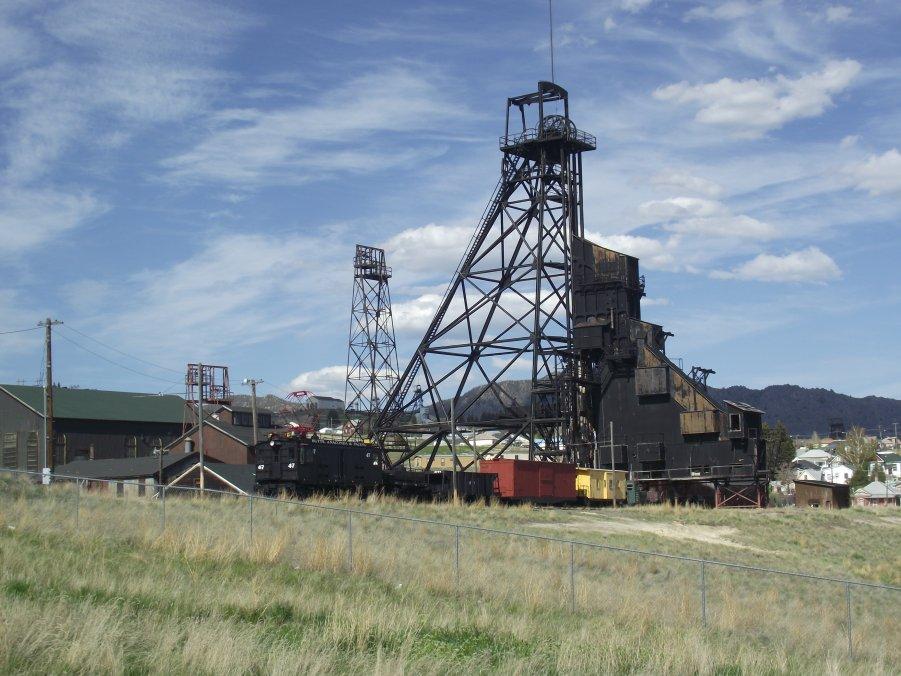
    <summary type="html"><![CDATA[<p><strong><em>The pioneering role of the Butte-Anaconda area in railway electrification is best represented by an electric engine and connected booster on display at the Anselmo Mine yard. </em></strong></p><img src="https://storyofbutte.org/files/fullsize/ddc46eb4789f214292d15de5d65d7180.jpg" alt="Railroad Display at Anselmo Mine Yard" /><br/><p>The effective power of a railroad locomotive depends on both the energy developed and the number of wheels conveying power to the rails. When the BA&P electrified, it ordered booster units to be permanently coupled to three of the “boxcab” engines for slow switching service. The railway called each of the paired engine and booster a “tractor truck,” while the crews use the nickname “cow and calf.” The booster increased the wheels delivering power to the rail from eight wheels on the engine to twelve wheels. The engine and booster were built by two companies, both with manufacturing plants in Schenectady, New York. General Electric manufactured the unseen electrical components of the engines, and the American Locomotive Company supplied the visible structural body and undercarriage.</p><p>Former BA&P employees Leno Bazzanella and Kevin Shannon restored the combined unit to display condition. Also on display are an open-top hopper car for carrying ore, a wooden boxcar, and bay-window caboose. Less visible, under the tipple, is a former line car—built with an insulated platform on the roof for working on the overhead catenary—modified in the late 1980s for carrying tourists.</p><p><em><strong><a href="https://storyofbutte.org/items/show/3535">For more (including 2 images) view the original article</a></strong></em></p>]]></summary>
    <published>2025-03-18T16:07:13+00:00</published>
    <updated>2026-04-17T19:58:11+00:00</updated>
    <link rel="alternate" type="text/html" href="https://storyofbutte.org/items/show/3535"/>
    <id>https://storyofbutte.org/items/show/3535</id>
    <author>
      <name>Dale Martin</name>
    </author>
  </entry>
  <entry>
    <title type="html"><![CDATA[Rocker]]></title>
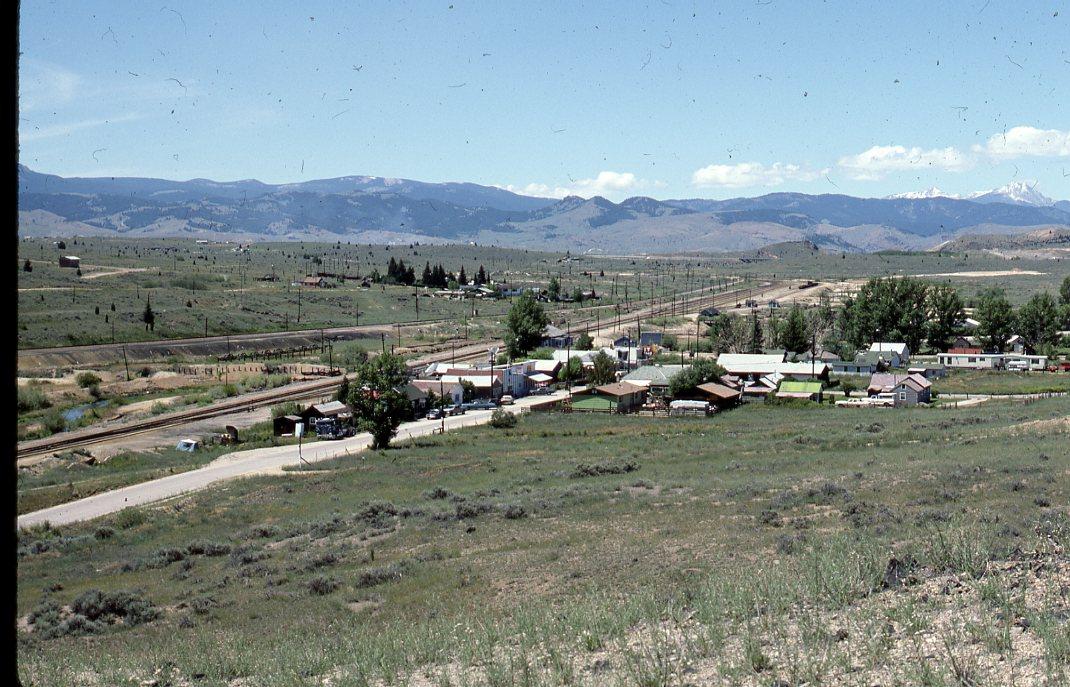
    <summary type="html"><![CDATA[<p><strong><em>The small unincorporated former railroad community of Rocker is located four miles west of uptown Butte, in a narrow part of the Silver Bow Creek valley. For over a half-century, Rocker exemplified the physical complexity of railway electrification. </em></strong></p><img src="https://storyofbutte.org/files/fullsize/2b8ce868c8f2c658ce319fbdfe5cc03e.jpg" alt="Rocker" /><br/><p>The 1920 federal census reported 271 people living in the precinct of Rocker; thirty years later it had 205 residents. Through most of the twentieth century, four railroads operated trains through Rocker on closely spaced tracks on the valley floor.</p><p>For the Butte, Anaconda & Pacific, Rocker was the busiest place between Butte and Anaconda. It was the junction of two lines to the east: the upper Butte Hill line and the lower main line through Butte’s warehouse district to a switchyard east of South Arizona Street shared with the Great Northern Railway. An array of steel cables spanned the switchyard, from which were suspended the high-voltage copper wires over all ten tracks. The switchmen in the yard worked under those wires, which included riding on loaded ore cars to assemble trains bound for Anaconda. An industrial folk tale conveys the nature of work in that environment. If a switchman riding on one car in a string of loaded hopper cars needed to be several cars away, in the direction opposite of the cars’ movement, he jumped up and grabbed the overhead wire. Below him the cars rolled by. He let go to land on the car on where he needed to be.</p><p>The BA&P’s properties at Rocker included a depot with telegraph office, a three-stall engine house, a base with a bunkhouse for maintenance-of-way and track, a yard office that oversaw switching operations, a switchyard, a spur track to Anaconda’s timber framing mill, and scale house and scale for weighing loaded freight cars. In the early twentieth century, when many people lived within walking distance of their work, those who worked on trains, in the switchyard, in offices, and on track crews lived in houses north of the BA&P tracks. Beginning in the 1960s, changes in mining and ore milling resulted in diminished importance and variety of railway functions at Rocker. Currently, the surviving structures—close to the public parking lot—are the station, a badly damaged shed for track maintenance equipment, and the car scale and scale house. Farther west is the yard office. The switchyard is used to store freight cars.</p><p><em><strong><a href="https://storyofbutte.org/items/show/3534">For more (including 2 images) view the original article</a></strong></em></p>]]></summary>
    <published>2025-03-17T21:30:42+00:00</published>
    <updated>2026-04-17T19:58:11+00:00</updated>
    <link rel="alternate" type="text/html" href="https://storyofbutte.org/items/show/3534"/>
    <id>https://storyofbutte.org/items/show/3534</id>
    <author>
      <name>Dale Martin</name>
    </author>
  </entry>
  <entry>
    <title type="html"><![CDATA[Butte, Anaconda &amp; Pacific Railway ]]></title>
    <summary type="html"><![CDATA[<p><strong><em>The Anaconda Mining Company, with assistance from the Great Northern Railway, built the Butte, Anaconda & Pacific Railway in 1893. Twenty years after BA&P’s original construction, it decided for reasons of operational economy to switch from steam to electric power. </em></strong></p><img src="https://storyofbutte.org/files/fullsize/5eb6453b667e11034e3225bcb5c7f3f8.jpg" alt="BA&amp;P Station" /><br/><p>The BA&P provided an alternative to the poor service on the first railroad between Butte and Anaconda, the Montana Union Railroad, jointly owned by the Union Pacific and Northern Pacific. From its completion, the primary purpose of the BA&P was to carry metallic ores and mill concentrates from the many mines on Butte Hill to the smelter in Anaconda, which after 1902 was the Washoe Reduction Works on the hill east of town. </p><p>The railway commissioned the General Electric Company to design and oversee installation of the 2400-volt direct-current system in 1913.  The year after electrification BA&P moved cars and trains from the mines to the smelter as follows. Switch crews at three places put together or divided trains, with westbound loaded cars from Butte to Anaconda, and empties returned eastbound. Crews on locomotives working on Butte Hill took loaded open-top hopper cars from spur tracks at each mine to the Butte Hill Yard, just northeast of the Steward Mine. Here switch crews created trains of thirty cars, which went west 4.5 miles downhill across Butte Hill and past the School of Mines to the small railroad community of Rocker. There switch crews assembled sixty-car trains for the twenty-mile main line trip through Silver Bow canyon to East Anaconda. At the East Anaconda switchyard, crews broke the long main line into twenty car trains for the steep twisting seven-mile climb to the concentrator on the upper part of smelter hill. After being emptied, the cars reversed the procedure—in longer, lighter trains—back to the mines on Butte Hill.</p><p>The BA&P carried more than ores and mill concentrates. Trains also hauled the materials and supplies needed for mining, milling, and smelting, including coal, coke, lumber, heavy mine timbers, and chemicals. Eastward from Anaconda the railway carried the products of smelting, most of which required final processing at the company’s refinery in Great Falls, and other commodities destined for customers outside the Anaconda company, such as fertilizer and sulfuric acid. The railway—a “common carrier” with government mandated public service obligations—also hauled the general freight needed by the residents and businesses of Anaconda, a city with 11,668 residents reported in the 1920 census. Into the early 1920s, four daily passenger trains each way carried people, express, mail, and newspapers. By 1930 the BA&P owned all the tracks on Butte Hill, after the Northern Pacific and Great Northern either dismantled their tracks or sold some sections of line to the BA&P. For its first three decades, the BA&P was the primary transportation to Gregson Hot Springs. </p><p>The BA&P ended electric operations in 1967, after the Weed concentrator at Butte’s Berkeley Pit greatly reduced freight traffic to Anaconda. This ended the high frequency of trains that made electrification economical, and so diesel-electric power became more appropriate for a single train each way per day. The railway, with changes in ownership since 1985 (and a different name, 1985-2007: Rarus Railway), continues to carry copper concentrates from the Montana Resources concentrator to connecting rail lines for delivery to distant smelters. The BA&P is currently owned by the Patriot Rail group of railway short lines, which in turn is part of large investment companies in Australia and Japan.</p><p><em><strong><a href="https://storyofbutte.org/items/show/3533">For more (including 4 images) view the original article</a></strong></em></p>]]></summary>
    <published>2025-03-17T21:25:07+00:00</published>
    <updated>2026-04-17T19:58:10+00:00</updated>
    <link rel="alternate" type="text/html" href="https://storyofbutte.org/items/show/3533"/>
    <id>https://storyofbutte.org/items/show/3533</id>
    <author>
      <name>Dale Martin</name>
    </author>
  </entry>
  <entry>
    <title type="html"><![CDATA[Butte Street Railway ]]></title>
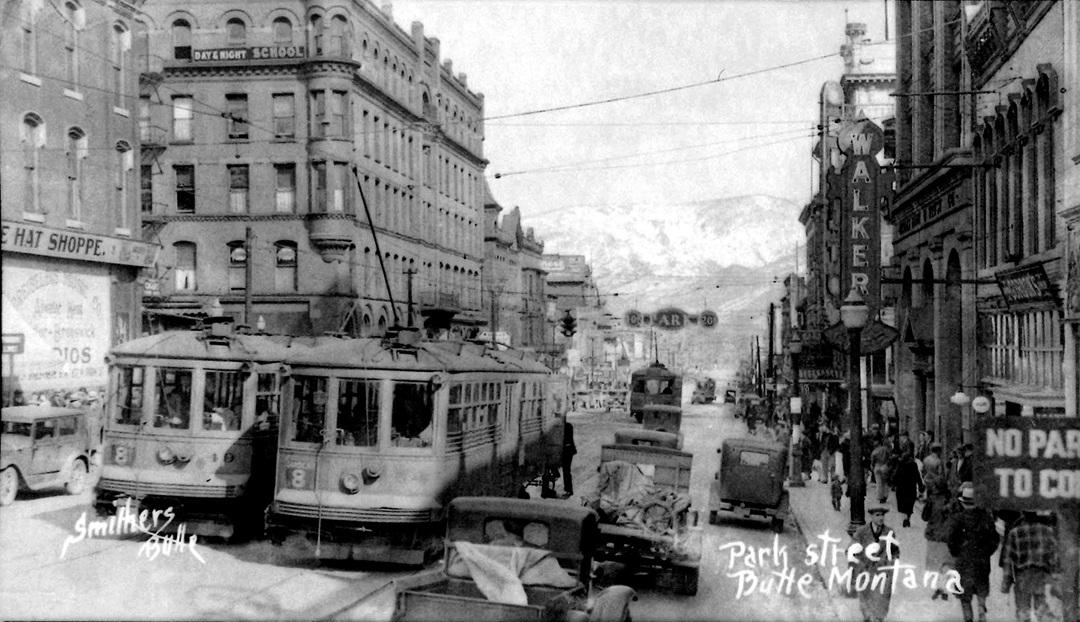
    <summary type="html"><![CDATA[<p><strong><em>The first electric railways appeared in the 1880s, built specifically for passenger service on urban street railways. Butte’s street railway system began operation in 1886, briefly with horses and then small steam engines pulling cars.</em></strong></p><img src="https://storyofbutte.org/files/fullsize/ae3e6dbf473ce8b576e8d22435154e37.jpg" alt="Streetcars" /><br/><p> In 1890 electric streetcar service began and then ran for nearly a half century. Based at the carbarn and repair shop just east of Front Street, the system grew to thirty-five miles of track that reached Walkerville in the north, Columbia Gardens in the east, and the Country Club to the south. On a couple of routes, short electric trains carried ore from several mines to concentrating mills. The 1920s and 1930s saw passenger traffic decline. The year 1936 started with major track improvements uptown, seemingly assuring a busy future ahead. However, the owner—Anaconda Copper Mining Company—in an “unexpected” move, sold the system. The purchaser was a nationwide company, National City Lines, which operated urban transit motor buses. As it had done in other cities, the new owner quickly replaced the streetcars with new buses. With the approval of the Montana Public Service Commission, the last streetcars ran on September 22, 1937.</p><p><em><strong><a href="https://storyofbutte.org/items/show/3531">For more (including 4 images) view the original article</a></strong></em></p>]]></summary>
    <published>2025-03-17T21:12:37+00:00</published>
    <updated>2026-04-17T19:58:10+00:00</updated>
    <link rel="alternate" type="text/html" href="https://storyofbutte.org/items/show/3531"/>
    <id>https://storyofbutte.org/items/show/3531</id>
    <author>
      <name>Dale Martin</name>
    </author>
  </entry>
  <entry>
    <title type="html"><![CDATA[Power for Trains ]]></title>
    <summary type="html"><![CDATA[<p><strong><em>Steam locomotives pulled trains from the beginning of railroads in the 1820s for over a century into the 1950s. Northern Pacific locomotive No. 25 was built to haul main line freight trains at low speeds. </em></strong></p><img src="https://storyofbutte.org/files/fullsize/af4db914fa65c2ed3fba65de21788537.jpg" alt="Northern Pacific Steam Locomotive Number 25" /><br/><p>The Schenectady Locomotive Works, near Albany, New York, built the engine in 1899. It is a “Consolidation” type, based on its wheel arrangement, a 2-8-0: a two-wheel pilot truck, eight drive wheels, and no trailing truck. For much of its sixty-year working life it pulled freight trains on the NP out of Butte, often eastward over Homestake Pass. It could also work as a “helper” assisting freight trains up the steep grades on both sides of the pass. During the 1950s, as diesel-electric power replaced steam engines, the NP donated a few of the latter to cities with important NP functions. </p><p>The roundhouse was an essential building in the era of steam locomotives. At these semi-circular buildings, located around a turntable in a circular pit, workers inspected, cleaned, did regular maintenance, and made light repairs on engines between runs, which before the 1920s were 100 to 150 miles long. The Great Northern roundhouse crew included machinists, boilermakers, blacksmiths, helpers, and engine wipers. Hostlers shuttled engines between the roundhouse and the passenger station or freight yard. In 1916 the GN employed about thirty workers at its Butte roundhouse. </p><p><em><strong><a href="https://storyofbutte.org/items/show/3530">For more (including 2 images) view the original article</a></strong></em></p>]]></summary>
    <published>2025-03-17T17:53:25+00:00</published>
    <updated>2026-04-17T19:58:10+00:00</updated>
    <link rel="alternate" type="text/html" href="https://storyofbutte.org/items/show/3530"/>
    <id>https://storyofbutte.org/items/show/3530</id>
    <author>
      <name>Dale Martin</name>
    </author>
  </entry>
  <entry>
    <title type="html"><![CDATA[Northern Pacific Freight House]]></title>
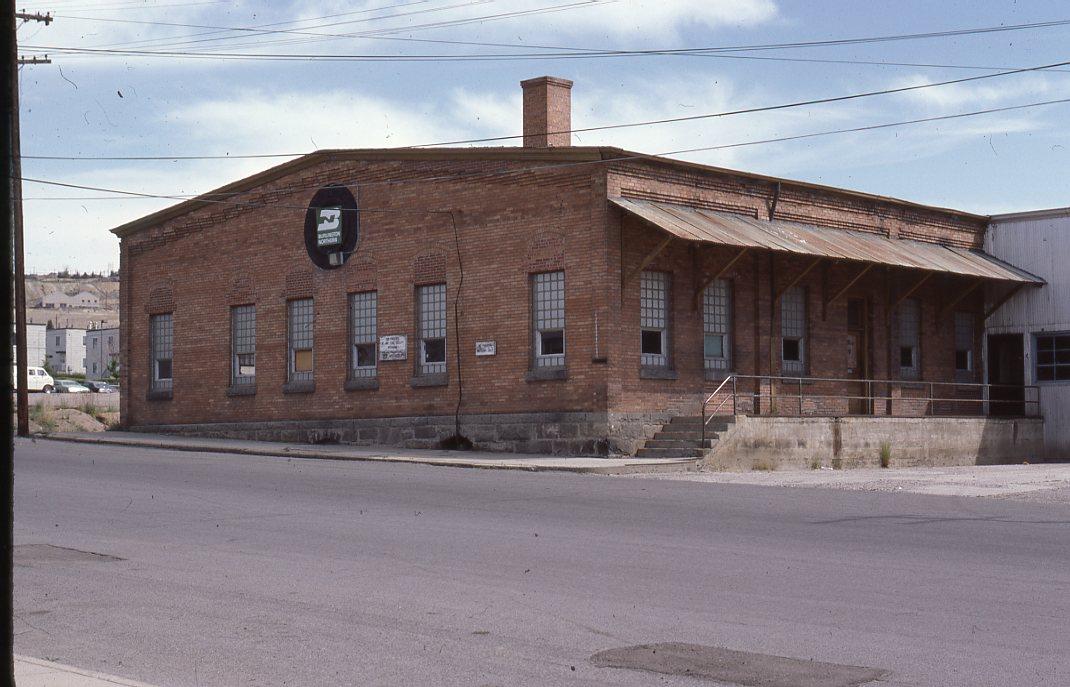
    <summary type="html"><![CDATA[<p><strong><em>In cities like Butte, most railroads had separate buildings for passengers and freight.  This Northern Pacific freight house had two tracks on the south side and wagon/motor truck loading on the north side.</em></strong></p><img src="https://storyofbutte.org/files/fullsize/89ade5aaaa56c581424bf54427e1217d.jpg" alt="Northern Pacific Freight House" /><br/><p>Since the beginning of railways, most freight moved in carload lots. This included metallic ores, coal, lumber, wheat, flour, fresh produce, livestock, wool, manufactured goods, and other commodities destined for processing plants, wholesale warehouses, or retail businesses. The cars were loaded and unloaded on spur tracks at each end of the cars’ journeys. However, some freight did not completely fill carload space, and thus a single boxcar could hold many separate freight shipments. This was called “less-than-carload" freight, abbreviated “L.C.L.” In large cities L.C.L. was handled in railroad “freight houses” with large warehouse space and an office at one end. Inside, workers with carts and hand trucks moved freight in both directions between wagons or motor trucks on one side of the building and rail boxcars on the other side. </p><p><em><strong><a href="https://storyofbutte.org/items/show/3529">For more view the original article</a></strong></em></p>]]></summary>
    <published>2025-03-17T17:41:55+00:00</published>
    <updated>2026-04-17T19:58:10+00:00</updated>
    <link rel="alternate" type="text/html" href="https://storyofbutte.org/items/show/3529"/>
    <id>https://storyofbutte.org/items/show/3529</id>
    <author>
      <name>Dale Martin</name>
    </author>
  </entry>
  <entry>
    <title type="html"><![CDATA[Great Northern Passenger Station]]></title>
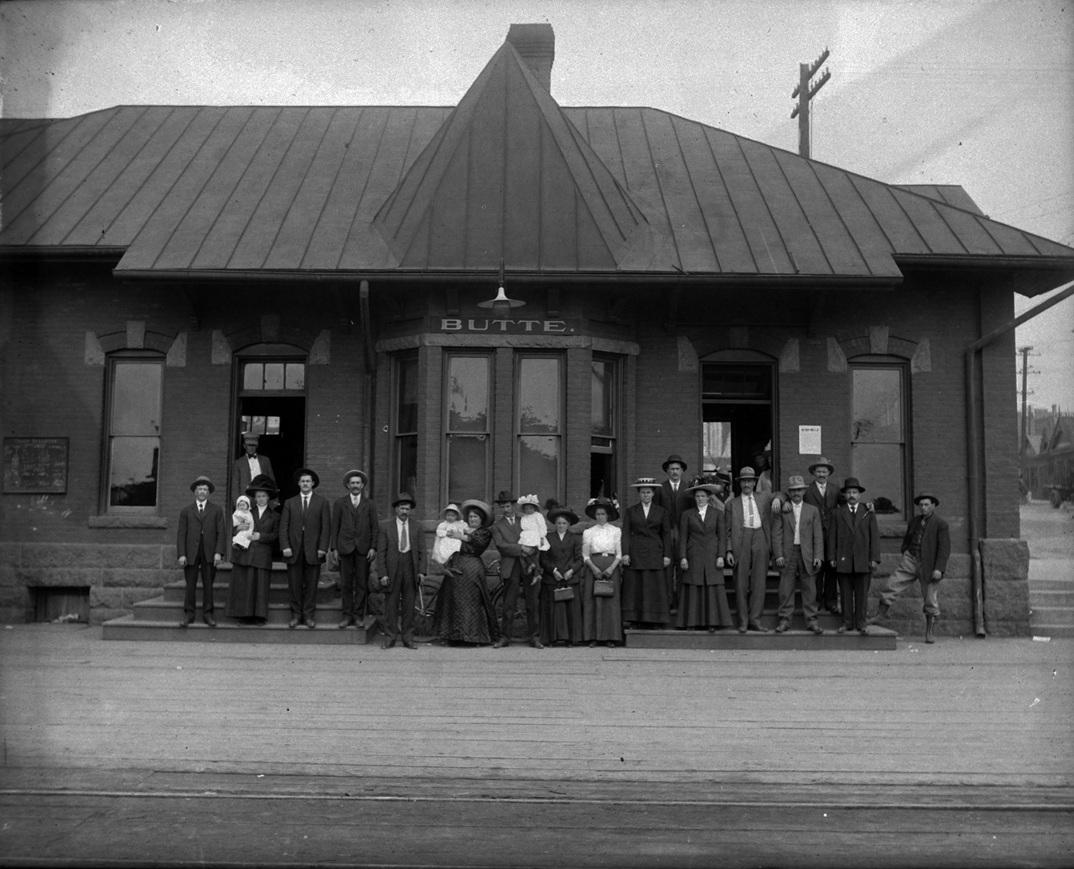
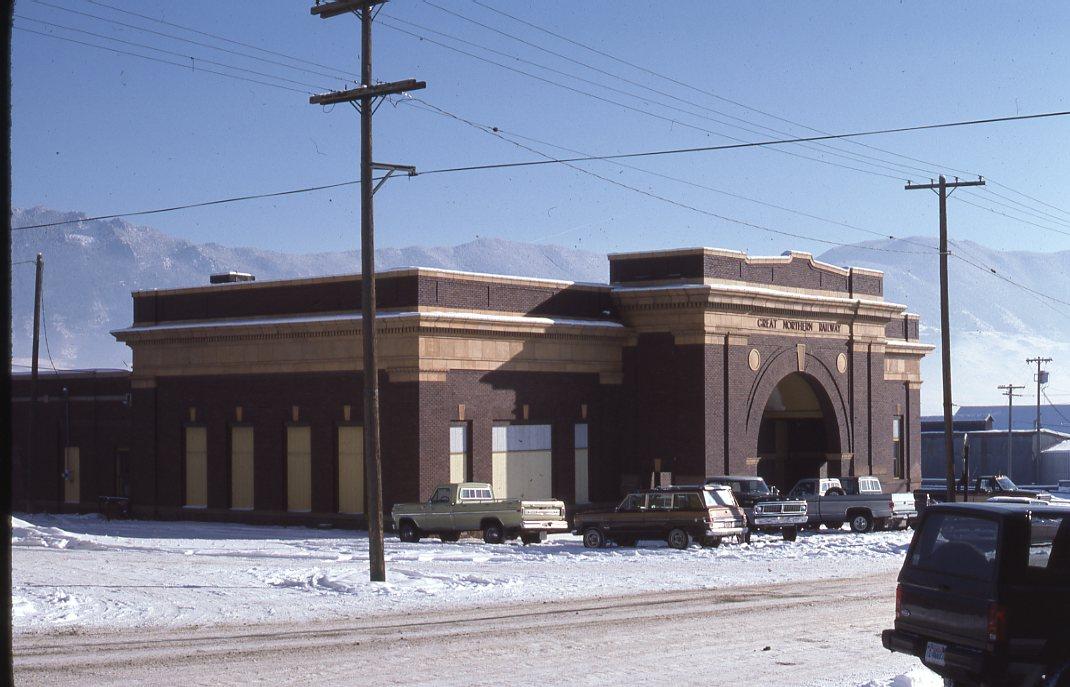
    <summary type="html"><![CDATA[<p><strong><em>The St. Paul, Minneapolis, & Manitoba Railway, renamed the Great Northern Railway in 1890, reached Butte from the northeast in 1888. </em></strong></p><img src="https://storyofbutte.org/files/fullsize/e96e25cbe76e8d27142b09d52c286bc4.jpg" alt="Great Northern Station, Front" /><br/><p>It first used a couple small passenger stations in Butte, including that of the Butte, Anaconda & Pacific. On February 1, 1914, the Great Northern formally opened the brick and concrete depot on South Arizona Street. This station served the railway’s passenger trains that connected Havre on the transcontinental line to Great Falls, Helena, and Butte. At the end of a secondary main line, the depot saw less traffic than the Northern Pacific-Union Pacific depot. In the busy 1910s, four trains per day originated or terminated at the depot. Beyond linking Butte with Great Falls, one pair of trains—the Judith Special—reached further southeast from Great Falls to Lewistown.</p><p>The decline of rail passenger service in subsequent decades reduced traffic to a single pair of trains. Great Northern’s last scheduled passenger train service was a single self-propelled rail car, nicknamed the “galloping goose.” Service to Butte ended on September 6, 1961.</p><p>Just to the south and east of the Great Northern passenger station is the switchyard that for decades was jointly operated by the Great Northern and the Butte, Anaconda & Pacific. During the decades that the BA&P used electric power, two of the yard tracks had the necessary wires overhead. At this yard, the BA&P turned over to the Great Northern cars loaded at the Anaconda smelter with copper and zinc that required finishing at the refinery at Black Eagle, across the Missouri River from Great Falls. Much of the traffic consisted of copper anodes, large cast slabs with “ears” from which the anodes were suspended on frames in specialized flat cars. The suspended anodes clacked against each other as the trains moved. This switchyard is still active, with trains carrying copper concentrates westward from Montana Resources plant on the way to the connecting railroads. </p><p><em><strong><a href="https://storyofbutte.org/items/show/3527">For more (including 2 images) view the original article</a></strong></em></p>]]></summary>
    <published>2025-03-17T17:22:22+00:00</published>
    <updated>2026-04-17T19:58:10+00:00</updated>
    <link rel="alternate" type="text/html" href="https://storyofbutte.org/items/show/3527"/>
    <id>https://storyofbutte.org/items/show/3527</id>
    <author>
      <name>Dale Martin</name>
    </author>
  </entry>
  <entry>
    <title type="html"><![CDATA[Northern Pacific-Union Pacific Passenger Station]]></title>
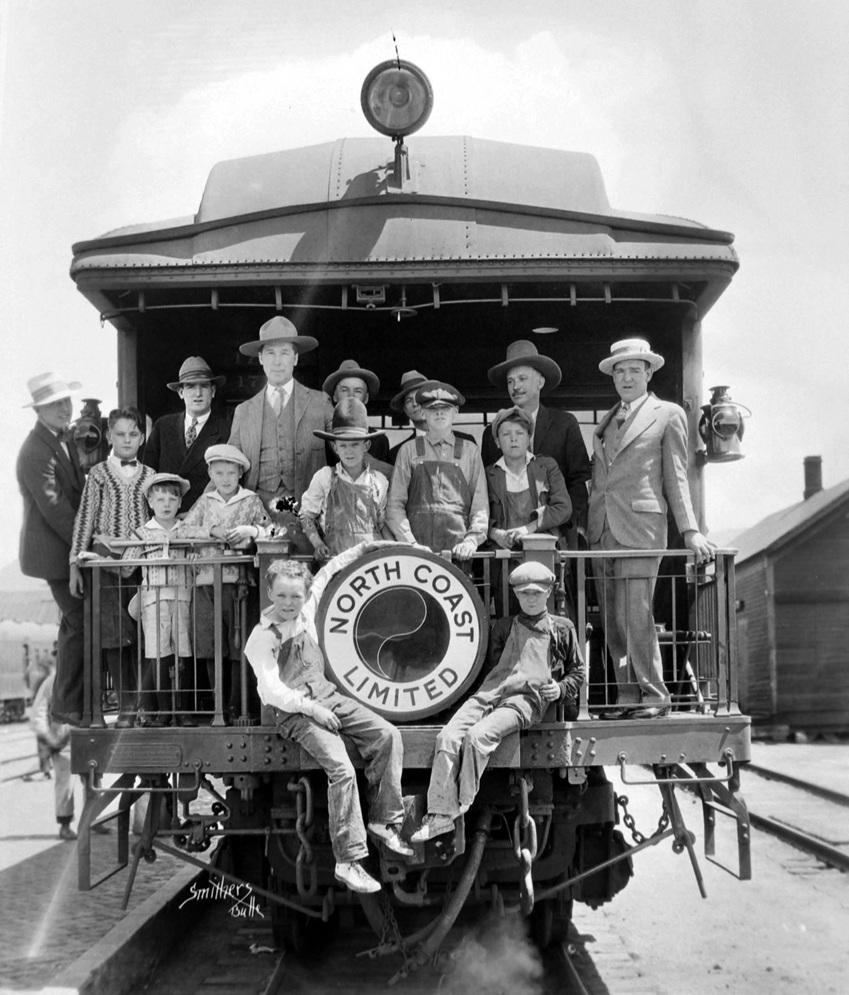
    <summary type="html"><![CDATA[<p><strong><em>Passenger train stations hosted passengers and their baggage, of course, but also express, mail, money, and even bags of laundry, all carried in the “head-end” cars just behind the locomotive. </em></strong></p><img src="https://storyofbutte.org/files/fullsize/a1fd7a55499f79b98725e839ed4b20bb.jpg" alt="The North Coast Limited" /><br/><p>The Northern Pacific-Union Pacific station on Front Street was both the busiest and longest-operated passenger depot in Butte. Because of its location on main lines to important terminals, it was where many famous people who stopped in Butte arrived and departed. Informally opened on September 10, 1906, it served passengers and the head-end business of baggage, express, and mail until 1979. The new three-building complex replaced a small wooden building long considered by the people of Butte to be inadequate, even embarrassing. </p><p>The central two-story building housed on the first floor the large central general waiting room, smaller separate women’s and men’s waiting rooms, ticket office, and telegraph office. Railroad offices occupied the second floor. The east single-story building consisted of a restaurant and kitchen, and the Northern Pacific express office. The west building housed a large baggage room, a small mail room, and the Union Pacific express office.</p><p>In 1916 sixteen daily passenger trains passed through, originated, or terminated at the station. On the twelve operated by the NP, long-distance schedules carried passengers without change of trains to and from St. Paul-Minneapolis, Chicago, Kansas City, St. Louis, Spokane, Seattle, and Tacoma. This included NP’s premier train, the North Coast Limited, operating between Chicago, St. Paul, Spokane, and Seattle. Local trains served dozens of places on runs to and from Missoula, Garrison, Logan, and Billings. For the Union Pacific the station was the northern terminal of a secondary line, over which it ran two pairs of trains between Butte and Salt Lake City.</p><p>Besides regularly scheduled trains, there were also “extra” (chartered) trains for special visitors and groups such as fraternal orders and sports fans. The first train out of the station in September 1906 was an extra train carrying about one hundred Butte men in the Fraternal Order of Elks travelling to Billings.</p><p>A famous, and controversial, passenger who visited Butte and detrained at the station was Eamon de Valera, leader of the Irish independence movement. He toured the U.S. in 1919, in the early months of the Irish war for independence. Butte’s large and vibrant Irish immigrant population made the city one of de Valera’s rare stops in the intermountain West. On July 25, he arrived in Butte as a passenger on the Oregon Short Line train from Salt Lake City. A “large percentage of Butte” awaited him at the station. As he stepped down from the train to the brick platform “he was besieged on all sides by anxious men and women struggling to grip him by the hand. For a few minutes he was caught in a swirling mass of humanity.” Many more people lined the parade route to uptown, where thousands welcomed him. </p><p>For a quarter century of Montana’s longest and fiercest sports rivalry, Butte hosted the annual intrastate collegiate football game. Between 1926 and 1950 (excluding the war years of 1942-45), the football teams of the University of Montana (then called Montana State University) and Montana State University (then called Montana State College) played each other in “the Butte game.” The teams played first in Clark Park on the Flat and later at Naranche Stadium at the High School. Special trains on the Northern Pacific brought fans from both Bozeman and Missoula, arriving in Butte with plenty of time to watch a parade and join festivities before the game. In 1937, a round-trip ticket on the special NP train from Bozeman cost $1.95 and the ride each way took about three hours. </p><p>By the 1960s, after decades of rail passenger decline, the station served just four daily trains, Northern Pacific’s North Coast Limited and Union Pacific’s Butte-Salt Lake City Butte Special. The federal entity of Amtrak took over almost all the nation’s remaining passenger trains in 1971, including two Chicago-Seattle trains across Montana: the Empire Builder on the Hi-Line, and the renamed North Coast Hiawatha through the large cities in the southern part of the state, including Butte. The last regularly scheduled passenger train serving Butte departed westbound from the station on October 7, 1979, when Amtrak ended the tri-weekly North Coast Hiawatha through the most populated part of the state. Freight trains still run by the depot.</p><p><em><strong><a href="https://storyofbutte.org/items/show/3526">For more (including 3 images) view the original article</a></strong></em></p>]]></summary>
    <published>2025-03-17T17:07:11+00:00</published>
    <updated>2026-04-17T19:58:10+00:00</updated>
    <link rel="alternate" type="text/html" href="https://storyofbutte.org/items/show/3526"/>
    <id>https://storyofbutte.org/items/show/3526</id>
    <author>
      <name>Dale Martin</name>
    </author>
  </entry>
  <entry>
    <title type="html"><![CDATA[The Railways of Butte ]]></title>
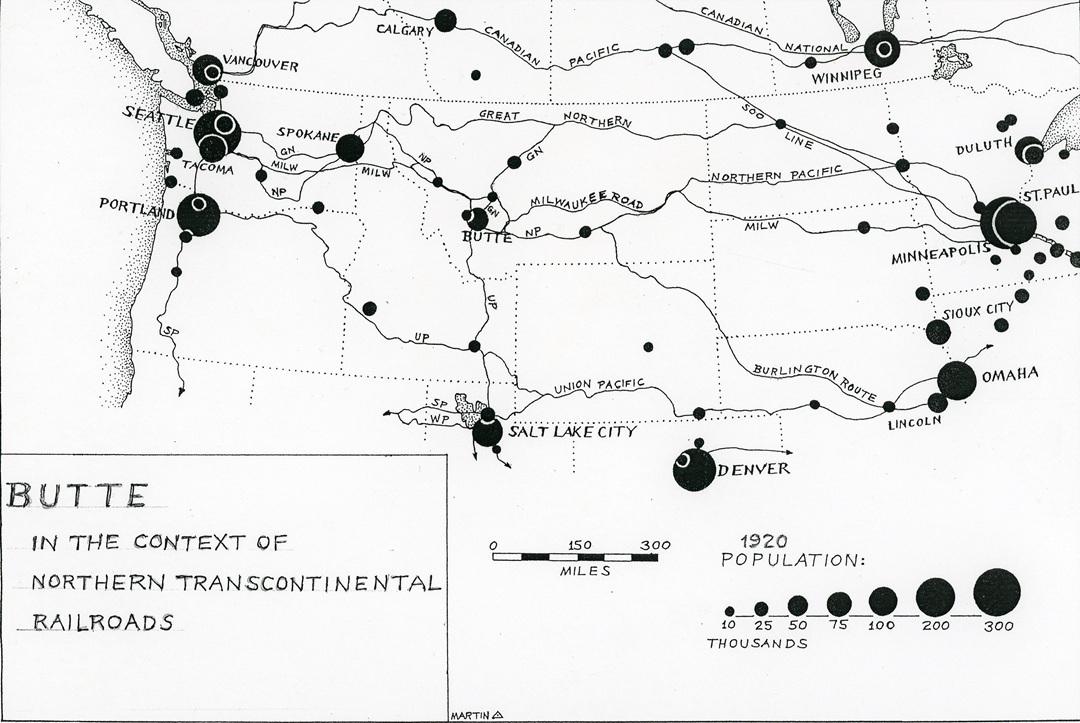
    <summary type="html"><![CDATA[<p><strong><em>For most of a century, Butte was by several measures the most important and varied railroad center in the northern Rockies. In 1911, thirty years after the Union Pacific reached Butte, four transcontinental railways—linking the Midwest and the Pacific coast—served the city.</em></strong></p><img src="https://storyofbutte.org/files/fullsize/d7ad02a49f17298183dceb2ca309c31d.jpg" alt="Map of Montana Rail Lines" /><br/><p>Two companies had through main lines (Northern Pacific, Milwaukee Road) and two had Butte at the ends of secondary lines (Union Pacific, Great Northern). The city also was the east end of a heavily trafficked short line, the Butte, Anaconda & Pacific. For urban transit, there was both an extensive street railway system and—for nearly a decade before 1900—a cable car line on Main Street. The railroad presence in Butte included passenger stations and freight houses, switchyards, locomotive terminals, and many industrial spur tracks. Railway employees worked on trains and switch crews, in stations and offices, on maintenance of right-of-way and track, and in roundhouses and repair shops. In 1916, railway work in Butte employed at least 850 people, with over 600 on the five intercity companies, more than 200 on the street railway, and about 30 Railway Mail Service employees based in Butte who worked in the mail cars in passenger trains.</p><p>The railroads carried freight for the major economic activity of Butte and Anaconda: the mining and processing of the metallic ores of copper, zinc, silver, and manganese. The density of rail lines in Butte was most evident amid the mines on the middle and upper parts of Butte Hill. In the years around 1900, three railroads together had dozens of miles of track on the Hill: the Northern Pacific, the Great Northern, and the Butte, Anaconda & Pacific. A contemporary noted, with some exaggeration, “So complete has this system of railroad development proceeded that ‘the hill’ is a perfect network of lines, running in every conceivable direction and at all manner of grades, the hill on closer inspection appearing to be terraced at every few yards by recurring tracks.” (Harry C. Freeman, A Brief History of Butte, Montana: The World’s Greatest Mining Camp, 1900, p. 96). The tracks passed close to mines and waste rock dumps, houses, businesses, schools, and churches.</p><p>The rail companies also brought to Butte the basic materials and finished goods for consumers and businesses in a city that in 1916-1917 reached a peak population of about 90,000. The concentration of rail lines in Butte made the city a regional center for wholesale businesses distributing, for example, food and medicine.</p><p>Butte’s location where railway main lines radiated in the four cardinal directions made it a destination or stopping point for passengers, some famous and most unremarked. For six decades, presidents and candidates for that office paused or stopped at Butte’s passenger stations: from perennial candidate William Jennings Bryan (August 1897) and President Theodore Roosevelt (May 1903) to candidates of both parties, Thomas E. Dewey and Harry S Truman (June 1948) and Dwight D. Eisenhower (October 1952). Trains brought the stars of drama, music, and vaudeville whose fame filled entertainment venues of uptown Butte. Wild West shows featuring “Buffalo Bill” Cody required several trains to carry the hundreds of people and horses who performed on Butte Flat three times between 1908 and 1914.</p><p><em><strong><a href="https://storyofbutte.org/items/show/3525">For more (including 3 images) view the original article</a></strong></em></p>]]></summary>
    <published>2025-03-17T16:50:49+00:00</published>
    <updated>2026-04-17T19:58:10+00:00</updated>
    <link rel="alternate" type="text/html" href="https://storyofbutte.org/items/show/3525"/>
    <id>https://storyofbutte.org/items/show/3525</id>
    <author>
      <name>Dale Martin</name>
    </author>
  </entry>
  <entry>
    <title type="html"><![CDATA[Near the Old YMCA on West Park St. ]]></title>
    <summary type="html"><![CDATA[<img src="https://storyofbutte.org/files/fullsize/f82fd75b02fd7d213a74941299a2232d.jpg" alt="[Untitled]" /><br/><p>The old YMCA on West Park Street and the apilite wall with capstones of granite. </p><p><em><strong><a href="https://storyofbutte.org/items/show/3461">For more (including 3 images) view the original article</a></strong></em></p>]]></summary>
    <published>2024-01-02T20:19:14+00:00</published>
    <updated>2026-04-17T19:58:09+00:00</updated>
    <link rel="alternate" type="text/html" href="https://storyofbutte.org/items/show/3461"/>
    <id>https://storyofbutte.org/items/show/3461</id>
    <author>
      <name>Larry Smith</name>
    </author>
  </entry>
  <entry>
    <title type="html"><![CDATA[St. Mark&#039;s Lutheran Church: 223 South Montana Street]]></title>
    <summary type="html"><![CDATA[<p><strong><em>Butte’s Lutheran community dates to 1888. As was the case with all denominations in Butte then, a burgeoning population both demanded and paid for new houses of worship. St. Mark’s, with its German and English cornerstone, reflects a northern European heritage. German immigrants were largely tradesmen, brewers, and business owners, likely able to raise funds readily.</em></strong></p><img src="https://storyofbutte.org/files/fullsize/a3eb004b88082cd434fdaa3707de007d.jpg" alt="[Untitled]" /><br/><p>This building was completed in 1908, and the windows are believed to be original to the building. The windows are not signed, but their high quality suggests they may have been manufactured by one of the primary eastern glass firms. By the same token, there are elements (such as bubbles in the glass) that may reflect local design and construction.</p><p>Of all the houses of worship in Butte, St. Mark’s best displays the art of opalescent glass, a hallmark of the Art Nouveau movement of 1880-1915. Opalescent glass is distinguished by its opaqueness, meaning that you cannot see through it, and has a milky, iridescent appearance, similar to opals. Opalescent glass can be one solid color, but is generally a mixture of two or more colors with streaks and swirls. Few manufacturers produce traditional opalescent glass today because the complex process is demanding and the required chemicals are toxic.</p><p>In the side window on the right, nearest the altar, there is an image of a sheaf of wheat. The opalescent glass of the wheat is either two panes or is painted on both sides, another approach to giving a sense of depth to the glass.</p><p>Behind the altar on the right side is the Ascension Window, dedicated to the memory of a parishioner’s son who died of influenza at age 23. About 1,200 people died in Silver Bow County during the 1918 epidemic – more than 1% of the population, with more than 3,500 cases recorded in Butte.</p><p>The four largest windows, on either side of the church, represent the Evangelists with symbols reflected in their Gospels. The backgrounds of blue sky are magnificent examples of opalescent glass. St. Mark is represented by a lion symbolizing the royal dignity of Christ. St. Luke is represented by an ox, a symbol of sacrifice. St. John is represented by an eagle, the symbol of highest inspiration. St. Matthew is represented by a man, in reference to his detailed account of the Incarnation of Christ.</p><p><em><strong><a href="https://storyofbutte.org/items/show/3451">For more (including 4 images) view the original article</a></strong></em></p>]]></summary>
    <published>2023-10-12T02:30:34+00:00</published>
    <updated>2026-04-17T19:58:09+00:00</updated>
    <link rel="alternate" type="text/html" href="https://storyofbutte.org/items/show/3451"/>
    <id>https://storyofbutte.org/items/show/3451</id>
    <author>
      <name>Marian Jensen &amp;amp; Richard Gibson</name>
    </author>
  </entry>
  <entry>
    <title type="html"><![CDATA[Congregation B&#039;nai Israel Temple: 327 West Galena]]></title>
    <summary type="html"><![CDATA[<p><strong><em>The oldest synagogue still in use in Montana, the Congregation B’nai Israel Temple was built in 1903. The Jewish community of Butte dates to 1875 when two immigrants arrived to open a fruit and cigar store and a restaurant. Butte’s first Mayor, Henry Jacobs, was one of the town’s earlier Jewish settlers.</em></strong></p><img src="https://storyofbutte.org/files/fullsize/70787fe769156073e6edf2c8e00c9234.jpg" alt="[Untitled]" /><br/><p> As the population grew, three congregations developed to serve the community. Two orthodox congregations were ultimately disbanded, and the more progressive reformed movement, which began in 1892 in Butte, eventually became the sole congregation in town.</p><p>Congregation B’nai Israel was organized in 1897, but before this structure was erected, the group worshipped in the Carpenter’s Union Hall and in the Mountain View Methodist Church. The Northern Pacific Railway provided land at the corner of Washington and Galena for the synagogue, and construction began in 1897.</p><p>This synagogue is one of few to embody the traditional Moorish architectural style. Significant restoration in 2001-2003 accompanied the structure’s centennial. The large circular window at the</p><p>front of the synagogue is original to the structure, and was dedicated to Elias and Mina Oppenheimer. Three smaller arched windows are located at the back.</p><p>As is typical of stained glass in synagogues, the windows of the B’nai Israel Temple do not feature human figures. This is to comply with the commandment to not make graven images. Portraying humans or animals in the windows would be considered idolatry.</p><p><em><strong><a href="https://storyofbutte.org/items/show/3450">For more (including 4 images) view the original article</a></strong></em></p>]]></summary>
    <published>2023-10-12T01:37:32+00:00</published>
    <updated>2026-04-17T19:58:09+00:00</updated>
    <link rel="alternate" type="text/html" href="https://storyofbutte.org/items/show/3450"/>
    <id>https://storyofbutte.org/items/show/3450</id>
    <author>
      <name>Marian Jensen &amp;amp; Richard Gibson</name>
    </author>
  </entry>
  <entry>
    <title type="html"><![CDATA[Holy Trinity Serbian Orthodox Church: 2100 Continental Drive]]></title>
    <summary type="html"><![CDATA[<p><strong><em>Butte’s Serbian community was large enough to support its first religious services in 1897. A growing congregation led to the construction of the first Holy Trinity Church at the corner of Idaho and Porphyry Streets in 1905.</em></strong></p><img src="https://storyofbutte.org/files/fullsize/322f9fdb5dc84d42bf177a3c13a49721.jpg" alt="[Untitled]" /><br/><p>Only the second Serbian Orthodox Church built in North America, the original structure was damaged by the 1959 Hebgen Lake earthquake, centered about 150 miles southeast of Butte and the strongest ever measured in the northern Rocky Mountains. Subsidence in shallow mining tunnels beneath it also took its toll on the original structure, and the current church was built as a replacement in 1965.</p><p>Most of the windows are inscribed with the names of both the donor and honoree, together in most cases with the name of the saint pictured. All manufactured in San Francisco, many are signed by the John Lucas Stained Glass Company, which is still in business. The windows are original to the church.</p><p>The prominent side windows represent the eight feast days of Jesus Christ, and the windows in the dome represent eight saints. Other saints are represented in the loft windows and semi-circular windows above the doors.</p><p>Remarkable though the stained glass windows are, expect to be awed by the magnificent Byzantine-style frescoes on the walls and ceiling. Most of this work was accomplished in 2004-2005 in connection with the church’s centennial. Fresco artists came from Belgrade, Serbia, to create the paintings.</p><p><em><strong><a href="https://storyofbutte.org/items/show/3449">For more (including 5 images) view the original article</a></strong></em></p>]]></summary>
    <published>2023-10-12T01:21:03+00:00</published>
    <updated>2026-04-17T19:58:09+00:00</updated>
    <link rel="alternate" type="text/html" href="https://storyofbutte.org/items/show/3449"/>
    <id>https://storyofbutte.org/items/show/3449</id>
    <author>
      <name>Marian Jensen &amp;amp; Richard Gibson</name>
    </author>
  </entry>
  <entry>
    <title type="html"><![CDATA[Original Mine: 1864-1940, 3900 Feet Deep]]></title>
    <summary type="html"><![CDATA[<p><strong><em>The Original Mine was the site of some of the earliest mining in Butte.</em></strong></p><img src="https://storyofbutte.org/files/fullsize/b3fa96f63cba08b68bcb5e1c39f92693.jpg" alt="Original Mine" /><br/><p>The Original Mine, a good producer of copper and silver, was the site of some of the earliest mining in Butte. Early pioneers found small pits dug by early prospectors, possibly native Americans, with elk horn near the site of the Original Mine. William Clark patented Lot #39 in 1878, launching the Original Mine, and two years later, Granville Stuart patented claims for two more lots. The shaft was driven to the 1,000-foot level by 1897 with 20 men working underground, six top men, and three hoist engineers. By 1902, the mine employed 300 men working underground, twenty top men, and three engineers. Clark sold the mine to the Anaconda Company in 1910, and it operated until 1940. The Original was re-opened in the 1950s, when it was mined for zinc and copper.</p><p>The existing structures were built in 1902. They include a brick hoist house, a compressor house, and the headframe. Today the Original headframe serves as the mainstage for the Montana Folk Festival, as well as a venue for weddings and other events.</p><p><em><strong><a href="https://storyofbutte.org/items/show/3392">For more (including 6 images) view the original article</a></strong></em></p>]]></summary>
    <published>2022-06-23T20:36:12+00:00</published>
    <updated>2026-04-17T19:58:08+00:00</updated>
    <link rel="alternate" type="text/html" href="https://storyofbutte.org/items/show/3392"/>
    <id>https://storyofbutte.org/items/show/3392</id>
    <author>
      <name>Story of Butte, Nancy Woodruff,&amp;#32;&amp;amp;&amp;#32;Paddy Dennehy</name>
    </author>
  </entry>
  <entry>
    <title type="html"><![CDATA[Stephens Block: 140-146 West Park]]></title>
    <summary type="html"><![CDATA[<img src="https://storyofbutte.org/files/fullsize/5e1706c4f7d2e59c8812814cb7cff544.jpg" alt="Stephens Block, Butte" /><br/><p>Successful Irish immigrant Frank Stephens built this prominent, Queen Anne style retail and boardinghouse block in 1891. Stephens chose the Park and Montana location because the basement was already dug. He wrote a check for $499 for the “hole in the ground” on May 4, 1889. The building’s richly ornamented corner turret, decorative cast-iron pilasters (flat columns), and soaring plate-glass windows represented the height of fashion. The thirty-two-room Stephen’s Hotel operated as a boardinghouse and apartments for decades. The upper floors remain in near original condition, with few modern improvements made over the last century. In fact, the upper two floors still have only one bath and one water closet (toilet) per floor. The main floor and basement were home to many successful businesses including Lutey’s Grocers, one of the first self-serve grocery stores in Butte. Below the sidewalks, Joseph Richards, the Butte Undertaker, operated one of Butte’s first undertaking businesses until 1908. When Frank Stephens died in 1898, he was laid in state in the hall at the top of the first flight of stairs.</p><p><em><strong><a href="https://storyofbutte.org/items/show/3028">For more (including 9 images) view the original article</a></strong></em></p>]]></summary>
    <published>2020-05-07T16:05:34+00:00</published>
    <updated>2026-04-17T19:58:07+00:00</updated>
    <link rel="alternate" type="text/html" href="https://storyofbutte.org/items/show/3028"/>
    <id>https://storyofbutte.org/items/show/3028</id>
    <author>
      <name>Montana Historical Society</name>
    </author>
  </entry>
  <entry>
    <title type="html"><![CDATA[Caplice &amp; McCune Store: 1613 North Main]]></title>
    <summary type="html"><![CDATA[<img src="https://storyofbutte.org/files/fullsize/f7113655fb50f16c0db5d86ca8bef539.jpg" alt="Caplice and McCune Store, Walkerville, MT" /><br/><p>The masonry buildings in the heart of Walkerville reflect the town’s nineteenth-century silver-mining roots. Mining investors, the Walker Brothers of Salt Lake, and future copper king Marcus Daly began developing silver mines here in 1876. Joseph Broughton, another Salt Lake investor, likely built this substantial brick general store in 1880. By 1883, John Caplice and Alfred McCune acquired the building and in 1884 emblazoned “Caplice & McCune” high on the south wall. Silver markets slumped in 1893, and by 1897, St. Lawrence Catholic Church, a branch of St. Patrick’s in Uptown Butte, temporarily held services here while building a new church nearby. It later used the building to house St. Joseph’s Parochial School. In 1905, Mount Bethel Methodist Episcopal Church acquired and remodeled the building, adding pointed arch windows in the auditorium, a central meeting room, and a rear, six-room apartment for the pastor. The congregation was always small compared to Mountain View Methodist in Uptown Butte, and for many years it shared pastors with Centerville, Silver Bow Park, Wesley Chapel, and Meaderville. Despite their limited numbers, Walkerville Methodists worshipped here until 1972.</p><p><em><strong><a href="https://storyofbutte.org/items/show/2837">For more (including 2 images) view the original article</a></strong></em></p>]]></summary>
    <published>2020-02-06T20:11:46+00:00</published>
    <updated>2026-04-17T19:58:07+00:00</updated>
    <link rel="alternate" type="text/html" href="https://storyofbutte.org/items/show/2837"/>
    <id>https://storyofbutte.org/items/show/2837</id>
    <author>
      <name>Montana Historical Society</name>
    </author>
  </entry>
  <entry>
    <title type="html"><![CDATA[Kelley Mansion: 829 West Park]]></title>
    <summary type="html"><![CDATA[<img src="https://storyofbutte.org/files/fullsize/bc47dcc470e0cc63292f1d84a4a2f535.jpg" alt="Kelley Mansion" /><br/><p>A large circular portico with surrounding Ionic columns dominates the facade of this grand residence, constructed in 1906 for Cornelius “Con” Kelley and his wife Mary for the then princely sum of $20,000. Butte architect W.A. O'Brien's design for the Neoclassical Revival home also features a wraparound porch supported by Ionic columns and topped with a decorative balustrade. Other detailing includes semi-circular and angled bay windows and repeating cornice brackets at the soffits. Con Kelley became president of the Anaconda Copper Mining Company and relocated to New York City in 1918, but in 1906 he worked for the Company as an attorney. He fought some of the Company’s most famous legal battles, including defending it against Augustus Heinze’s attempt to claim its copper as his own at the turn of the century. J. Bruce Kremer and his wife Cornelia lived here until 1933. Kremer was an attorney and chairman of the Democratic National Committee and presided over the Democratic Convention in San Francisco in 1920. Dan Kelly, ACM president of western operations, and his wife, Helen, lived in the home until the 1950s.</p><p><em><strong><a href="https://storyofbutte.org/items/show/2707">For more view the original article</a></strong></em></p>]]></summary>
    <published>2019-06-11T21:27:25+00:00</published>
    <updated>2026-04-17T19:58:07+00:00</updated>
    <link rel="alternate" type="text/html" href="https://storyofbutte.org/items/show/2707"/>
    <id>https://storyofbutte.org/items/show/2707</id>
    <author>
      <name>Montana Historical Society</name>
    </author>
  </entry>
  <entry>
    <title type="html"><![CDATA[Metals Bank Building: 8 West Park ]]></title>
    <summary type="html"><![CDATA[<img src="https://storyofbutte.org/files/fullsize/29d9ec15a181fc2e68ebdd8bade5b5e1.jpg" alt="Metals Bank Building" /><br/><p>The strength of Butte’s early financial community is well represented in this monumental steel, brick, and stone skyscraper completed in 1906. Copper king F. Augustus Heinze financed the $325,000 bank building, incorporating the newest steel-frame and curtain-wall construction techniques. Nationally renowned architect Cass Gilbert 1859-1934 drew the blueprints and Montana architects Link and Haire supervised the local work. Gilbert’s best known work is New York City’s sixty-story Woolworth Building 1913 and the U.S. Supreme Court Building in Washington, D.C. 1932-1935. One of Montana’s first skyscrapers, the Metals’ eight floors add significantly to Butte’s urban skyline. A copper-trimmed entry complements the gray stone. Above, brick walls and stone arches culminate at the sixth floor. Ornate wrought iron balconies punctuate the second and seventh floors. An open wrought-iron staircase carries this element inside, where copper-trimmed windows with African mahogany frames and a marble-walled elevator lobby reflect 1906 Butte’s wealth. A huge polished steel bank vault recalls the building’s first use.</p><p><em><strong><a href="https://storyofbutte.org/items/show/2379">For more (including 2 images) view the original article</a></strong></em></p>]]></summary>
    <published>2016-12-13T23:29:01+00:00</published>
    <updated>2026-04-17T19:58:06+00:00</updated>
    <link rel="alternate" type="text/html" href="https://storyofbutte.org/items/show/2379"/>
    <id>https://storyofbutte.org/items/show/2379</id>
    <author>
      <name>Montana Historical Society</name>
    </author>
  </entry>
  <entry>
    <title type="html"><![CDATA[Socialist Hall]]></title>
    <summary type="html"><![CDATA[<img src="https://storyofbutte.org/files/fullsize/40a4c5a4362ea6f12931e7664dd32720.jpg" alt="Socialist Hall" /><br/><p>Hands and forearms clasped in solidarity symbolize a movement of local and national significance during the first decades of the twentieth century. One of the few socialist meeting halls remaining in the United States, the building is a monument to a turbulent era of labor unrest and political action. Socialists in Montana played an active role in forcing mainstream politicians to consider labor reforms. At the turn of the twentieth century, the Anaconda Copper Mining Company dominated Montana politics, much of the economy, and nearly everything in Butte, personifying all the negative aspects of the capitalist system. Butte, known as the “Gibraltar of Unionism” with its huge working class, was thus central to the socialist movement. Members constructed this hall in 1916. It was the heart of socialist activity in Montana, housing the Socialist Party of Montana, the Butte Local, and the Butte Socialist Publishing Company. World War I hysteria prompted Montana to enact the nation’s most stringent measures to suppress radicalism and dissent. The Socialist Party suffered severely. In 1920, it deeded the building to the Bulletin Publishing Company, whose Butte Bulletin, edited by electrician and radical unionist W. F. Dunne, carried on the party’s principles by supporting the Non-Partisan League. Dunne lost the building to taxes in 1924 and the Bulletin ceased publication. Socialist Hall, with its rallying inscription “Workers of the World Unite,” is a poignant reminder of the efforts to create a “cooperative commonwealth” and the solidarity engendered by the Socialist Party of Montana.</p><p><em><strong><a href="https://storyofbutte.org/items/show/2107">For more (including 3 images) view the original article</a></strong></em></p>]]></summary>
    <published>2016-07-25T16:29:51+00:00</published>
    <updated>2026-04-17T19:58:06+00:00</updated>
    <link rel="alternate" type="text/html" href="https://storyofbutte.org/items/show/2107"/>
    <id>https://storyofbutte.org/items/show/2107</id>
    <author>
      <name>Montana National Register Sign Program</name>
    </author>
  </entry>
  <entry>
    <title type="html"><![CDATA[Matt&#039;s Place Drive-IN ]]></title>
    <summary type="html"><![CDATA[<img src="https://storyofbutte.org/files/fullsize/445eb7d2ffdfd3ca42d0f3838022f48f.jpg" alt="Matt&#039;s Place Drive-IN, streetview" /><br/><p>Entrepreneur Matt Korn opened a tiny restaurant here in 1930 featuring a drive-in window, an idea he imported from southern California. Matt’s Place was likely Montana’s first drive-in, but unlike its California counterparts, this business never advertised. Good food built its reputation and business boomed. Korn married, added upstairs living quarters, and expanded the drive-in to include curb service. In 1936, high school student Mabel Waddell, who used to visit Korn’s tiny drive-in window as a child, joined the staff of seven carhops. Korn had “Mae” embroidered on her uniform prompting Mabel to change her name. Mae continued to work at Matt’s Place, went to beauty school, graduated, and became engaged to teamster Louis Laurence. When a deal to buy her own shop fell through, Louis and Mae bought Matt’s Place in 1943. They spent their honeymoon waiting on customers. The couple couldn’t afford a new sign, so the name remained. When Louis passed away in 1962, Mae saw to it that her longtime customers didn’t miss a homemade burger or a shake. During better than half a century behind the counter, more than 28 family members have worked for Mae at the drive-in, whose menu hasn’t changed since the 1930s. Matt’s Place won national acclaim for its fabulous made-from-scratch cuisine, vintage equipment, and period furnishings. One gentleman summed it up when he signed Mae’s guest book, “Now I know it’s not the mountains and lakes that makes Montana special – it’s Matt’s Place!”</p><p><em><strong><a href="https://storyofbutte.org/items/show/2102">For more (including 4 images) view the original article</a></strong></em></p>]]></summary>
    <published>2016-07-25T16:29:51+00:00</published>
    <updated>2026-04-17T19:58:06+00:00</updated>
    <link rel="alternate" type="text/html" href="https://storyofbutte.org/items/show/2102"/>
    <id>https://storyofbutte.org/items/show/2102</id>
    <author>
      <name>Montana National Register Sign Program</name>
    </author>
  </entry>
  <entry>
    <title type="html"><![CDATA[Len Waters Music: Butte National Historic Landmark District]]></title>
    <summary type="html"><![CDATA[<img src="https://storyofbutte.org/files/fullsize/4ada821cfc301712bf2b8201d9a13b63.jpg" alt="Len Waters Music" /><br/><p>The distinctive façade of this longtime Butte business conceals a building whose varied history extends back to the early 1880s. Originally a grocery warehouse and stationery/variety store, other businesses that operated here include the Montana Music Company 1898 and the Anaconda Standard 1917-1918. It is, however, Len Waters Music that has made this vintage relic a Butte landmark. In 1913, young Len Waters went to work for Orton Brothers Music. He also organized “Len’s Plectrum Five,” a popular musical group that played at events throughout southwestern Montana and at theaters between silent movies. Thirty years later in 1943, Waters scraped together a $500 down payment and purchased Orton’s small instruments department. He soon moved the business here. For decades Waters practiced his own special business philosophy based on the idea that service should be given and not sold. In 1977, he said of the music business, “I’ve loved it, lived it, dreamed it.” Waters died in 1991 at the age of 98, and new owners continue his business under the same unique “piano” canopy.</p><p><em><strong><a href="https://storyofbutte.org/items/show/2095">For more view the original article</a></strong></em></p>]]></summary>
    <published>2016-07-25T16:29:51+00:00</published>
    <updated>2026-04-17T19:58:06+00:00</updated>
    <link rel="alternate" type="text/html" href="https://storyofbutte.org/items/show/2095"/>
    <id>https://storyofbutte.org/items/show/2095</id>
    <author>
      <name>Montana National Register Sign Program</name>
    </author>
  </entry>
  <entry>
    <title type="html"><![CDATA[Scott Block : Butte National Historic Landmark District]]></title>
    <summary type="html"><![CDATA[<img src="https://storyofbutte.org/files/fullsize/cd2d33947f0d8265889b5595d742e5c7.jpg" alt="Scott Block" /><br/><p>Single copper miners found ample accommodations at this fine boarding house, built in 1897 by the Scott family. The handsome brick building with its full-height opposing bays, transomed windows, bracketed wood cornice, and central name plate illustrates an urban solution to a mining camp problem: adequate and ample housing for single men. In 1910, boardinghouse keeper Mrs. Mary Long had thirteen lodgers, and all but one a postal clerk worked in the copper mining industry. Rented rooms were on the second and third floors. Mrs. Long had her own rooms on the ground floor, where she prepared meals and served her boarders. Extensive rehabilitation between 1991 and 1994 included a new metal roof like the original and restoration of interior transoms and rosette-trimmed woodwork. During these efforts, owners found a Prohibition Era treasure: concealed under the furnace room floor were two intact whiskey barrels.</p><p><em><strong><a href="https://storyofbutte.org/items/show/2092">For more view the original article</a></strong></em></p>]]></summary>
    <published>2016-07-25T16:29:51+00:00</published>
    <updated>2026-04-17T19:58:06+00:00</updated>
    <link rel="alternate" type="text/html" href="https://storyofbutte.org/items/show/2092"/>
    <id>https://storyofbutte.org/items/show/2092</id>
    <author>
      <name>Montana National Register Sign Program</name>
    </author>
  </entry>
  <entry>
    <title type="html"><![CDATA[Henry Jacobs House: Butte National Historic Landmark District]]></title>
    <summary type="html"><![CDATA[<img src="https://storyofbutte.org/files/fullsize/1caa98ffdd543cf23f67da522b2fa828.jpg" alt="Henry Jacobs House, Butte" /><br/><p>Henry Jacobs, Butte’s first mayor 1879-80, was a native of Baden, Germany. He immigrated to America’s South at the age of nine and to Montana in 1866, where he established the H. Jacobs and Company clothing store. He and his wife, Adele, completed this charming home circa 1879. It was one of Butte’s early all brick residences. Mr. Jacobs served as a school trustee, an officer of the I.O.O.F., and president of the Hebrew Benevolent Association.</p><p><em><strong><a href="https://storyofbutte.org/items/show/2075">For more (including 5 images) view the original article</a></strong></em></p>]]></summary>
    <published>2016-07-25T16:29:50+00:00</published>
    <updated>2026-04-17T19:58:06+00:00</updated>
    <link rel="alternate" type="text/html" href="https://storyofbutte.org/items/show/2075"/>
    <id>https://storyofbutte.org/items/show/2075</id>
    <author>
      <name>Montana National Register Sign Program</name>
    </author>
  </entry>
</feed>