<?xml version="1.0" encoding="UTF-8"?>
<feed xmlns="http://www.w3.org/2005/Atom">
  <title type="text">Story of Butte</title>
  <updated>2026-04-17T19:58:11+00:00</updated>
  <generator uri="http://framework.zend.com" version="1.12.20">Zend_Feed_Writer</generator>
  <link rel="alternate" type="text/html" href="https://storyofbutte.org/"/>
  <link rel="self" type="application/atom+xml" href="https://storyofbutte.org/items/browse?output=rss2"/>
  <id>https://storyofbutte.org/</id>
  <author>
    <name>Story of Butte</name>
    <uri>https://storyofbutte.org</uri>
  </author>
  <link rel="hub" href="https://pubsubhubbub.appspot.com/"/>
  <entry>
    <title type="html"><![CDATA[Milwaukee Road]]></title>
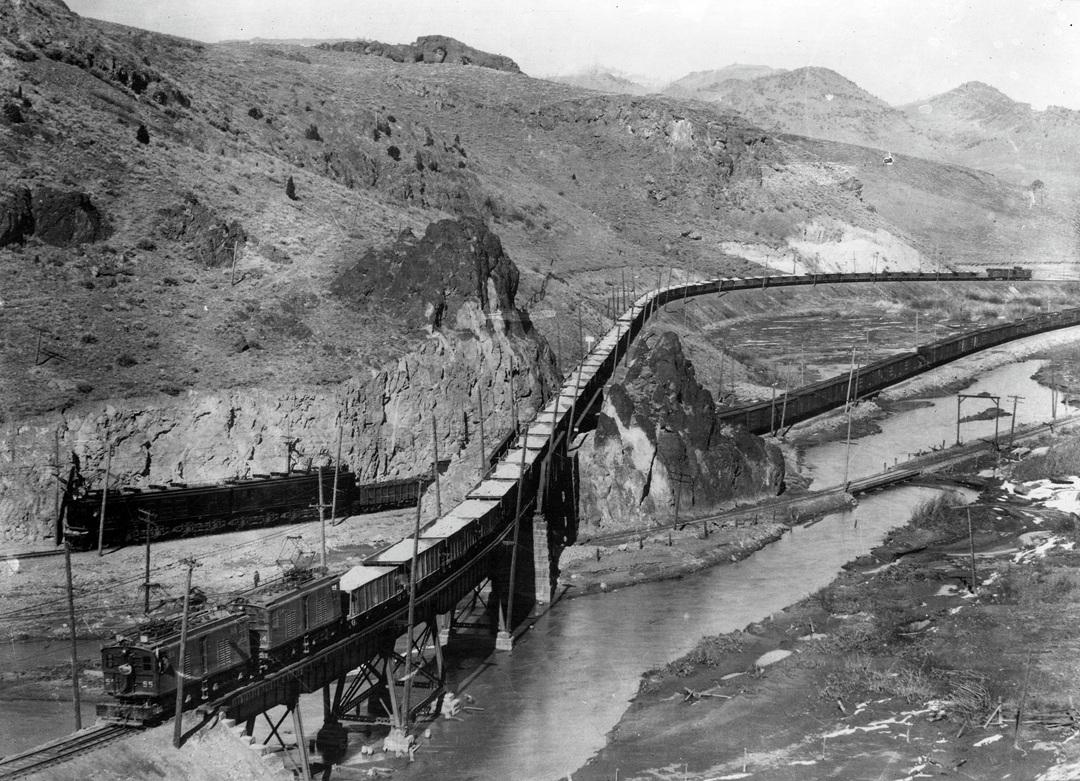
    <summary type="html"><![CDATA[<p><strong><em>One of the last transcontinental railroads, completed in 1909, the Chicago, Milwaukee & St. Paul Railway had a prominent presence in Butte, as represented by its large passenger station. From its construction and into the 1920s, the Milwaukee Road had several operational and technological links with the Butte, Anaconda & Pacific, particularly in the realm of railway electrification.</em></strong></p><img src="https://storyofbutte.org/files/fullsize/58b21efc7224f96d3436062e088017dd.jpg" alt="Trains on two electrified railroads in Silver Bow canyon." /><br/><p>In the Milwaukee Road’s earliest years in Butte, before electrification, it temporarily used BA&P tracks for eleven miles west of Butte. Both companies alternately used each other’s passenger stations. For a decade beginning in 1914, the Milwaukee Road owned 49% of the shares in the privately held stock of the BA&P.</p><p>Between 1911 and 1913 both the BA&P and Milwaukee acted to adopt electric power for main line operations. Both companies were persuaded by the General Electric Company’s sales efforts and influential corporate links with Anaconda Copper Mining Company and hydroelectric enterprises that combined in 1912 to form the Montana Power Company. Both railroads selected a system that General Electric designed and then oversaw construction. It used direct current, with the BA&P and Milwaukee respectively adopting 2400 and 3000-volt power. </p><p>The Milwaukee Road chose to electrify the part of its Chicago-Puget Sound line that crossed three mountain ranges in Montana and Idaho. By 1917, 440 miles of the Milwaukee’s transcontinental line between Harlowton, Montana and Avery, Idaho were under wires. Three years later, 210 miles in central and western Washington, crossing two mountain ranges, were also electrified. The electrification of both sections required 11,600 tons of copper: for electric wires over 650 miles of main line track as well as passing sidings, spur tracks, and switchyards; for signals and electrical machinery in twenty-two substations; and in locomotives. In the 1920s, the Milwaukee Road advertised that it operated “The World’s Longest Electrified Railroad.” Nearly two-thirds of the transcontinental line under wire—415 miles—was in Montana. For fifty years after 1917, in a rare arrangement, two intercity electric railroads—the Milwaukee and the BA&P—ran closely within sight of each other for fourteen miles, from the west edge of Butte to the west end of Silver Bow canyon.</p><p>The Milwaukee Road continued electric operations two decades after most other electrified sections of railroads outside the northeast U.S. converted to diesel-electric engines. In 1973 Milwaukee management, faced with rising costs of using equipment many decades old, decided to end electric operations over the Rocky Mountains; the last such trains ran in June 1974.</p><p>Burdened with large debts from construction of the line to Puget Sound, the Milwaukee Road for decades suffered financial weakness and went through three bankruptcies. The first, 1925-1928, resulted in a change of name, to Chicago, Milwaukee, St. Paul & Pacific Railroad. The last, in 1977, resulted three years later in the end of rail service west of Miles City, Montana. Most of the tracks were removed in the early 1980s.</p><p>Butte has the only surviving track remnant of the Milwaukee Road’s transcontinental route in the 705 miles between Miles City, Montana and St. Maries, Idaho. BNSF now operates over about 5.5 miles of this former Milwaukee Road main line track on the southwest edge of Butte, between the BNSF ex-Northern Pacific main line at the north end and the Butte Industrial Park at the south end. Ceramic fragments of dining car plates, bowls, and cups can still be found along the track, sixty years after the Milwaukee Road’s last passenger trains ran through Butte.</p><p><em><strong><a href="https://storyofbutte.org/items/show/3536">For more (including 4 images) view the original article</a></strong></em></p>]]></summary>
    <published>2025-03-18T16:20:28+00:00</published>
    <updated>2026-04-17T19:58:11+00:00</updated>
    <link rel="alternate" type="text/html" href="https://storyofbutte.org/items/show/3536"/>
    <id>https://storyofbutte.org/items/show/3536</id>
    <author>
      <name>Dale Martin</name>
    </author>
  </entry>
  <entry>
    <title type="html"><![CDATA[Anselmo Railroad Display]]></title>
    <summary type="html"><![CDATA[<p><strong><em>The pioneering role of the Butte-Anaconda area in railway electrification is best represented by an electric engine and connected booster on display at the Anselmo Mine yard. </em></strong></p><img src="https://storyofbutte.org/files/fullsize/ddc46eb4789f214292d15de5d65d7180.jpg" alt="Railroad Display at Anselmo Mine Yard" /><br/><p>The effective power of a railroad locomotive depends on both the energy developed and the number of wheels conveying power to the rails. When the BA&P electrified, it ordered booster units to be permanently coupled to three of the “boxcab” engines for slow switching service. The railway called each of the paired engine and booster a “tractor truck,” while the crews use the nickname “cow and calf.” The booster increased the wheels delivering power to the rail from eight wheels on the engine to twelve wheels. The engine and booster were built by two companies, both with manufacturing plants in Schenectady, New York. General Electric manufactured the unseen electrical components of the engines, and the American Locomotive Company supplied the visible structural body and undercarriage.</p><p>Former BA&P employees Leno Bazzanella and Kevin Shannon restored the combined unit to display condition. Also on display are an open-top hopper car for carrying ore, a wooden boxcar, and bay-window caboose. Less visible, under the tipple, is a former line car—built with an insulated platform on the roof for working on the overhead catenary—modified in the late 1980s for carrying tourists.</p><p><em><strong><a href="https://storyofbutte.org/items/show/3535">For more (including 2 images) view the original article</a></strong></em></p>]]></summary>
    <published>2025-03-18T16:07:13+00:00</published>
    <updated>2026-04-17T19:58:11+00:00</updated>
    <link rel="alternate" type="text/html" href="https://storyofbutte.org/items/show/3535"/>
    <id>https://storyofbutte.org/items/show/3535</id>
    <author>
      <name>Dale Martin</name>
    </author>
  </entry>
  <entry>
    <title type="html"><![CDATA[Rocker]]></title>
    <summary type="html"><![CDATA[<p><strong><em>The small unincorporated former railroad community of Rocker is located four miles west of uptown Butte, in a narrow part of the Silver Bow Creek valley. For over a half-century, Rocker exemplified the physical complexity of railway electrification. </em></strong></p><img src="https://storyofbutte.org/files/fullsize/2b8ce868c8f2c658ce319fbdfe5cc03e.jpg" alt="Rocker" /><br/><p>The 1920 federal census reported 271 people living in the precinct of Rocker; thirty years later it had 205 residents. Through most of the twentieth century, four railroads operated trains through Rocker on closely spaced tracks on the valley floor.</p><p>For the Butte, Anaconda & Pacific, Rocker was the busiest place between Butte and Anaconda. It was the junction of two lines to the east: the upper Butte Hill line and the lower main line through Butte’s warehouse district to a switchyard east of South Arizona Street shared with the Great Northern Railway. An array of steel cables spanned the switchyard, from which were suspended the high-voltage copper wires over all ten tracks. The switchmen in the yard worked under those wires, which included riding on loaded ore cars to assemble trains bound for Anaconda. An industrial folk tale conveys the nature of work in that environment. If a switchman riding on one car in a string of loaded hopper cars needed to be several cars away, in the direction opposite of the cars’ movement, he jumped up and grabbed the overhead wire. Below him the cars rolled by. He let go to land on the car on where he needed to be.</p><p>The BA&P’s properties at Rocker included a depot with telegraph office, a three-stall engine house, a base with a bunkhouse for maintenance-of-way and track, a yard office that oversaw switching operations, a switchyard, a spur track to Anaconda’s timber framing mill, and scale house and scale for weighing loaded freight cars. In the early twentieth century, when many people lived within walking distance of their work, those who worked on trains, in the switchyard, in offices, and on track crews lived in houses north of the BA&P tracks. Beginning in the 1960s, changes in mining and ore milling resulted in diminished importance and variety of railway functions at Rocker. Currently, the surviving structures—close to the public parking lot—are the station, a badly damaged shed for track maintenance equipment, and the car scale and scale house. Farther west is the yard office. The switchyard is used to store freight cars.</p><p><em><strong><a href="https://storyofbutte.org/items/show/3534">For more (including 2 images) view the original article</a></strong></em></p>]]></summary>
    <published>2025-03-17T21:30:42+00:00</published>
    <updated>2026-04-17T19:58:11+00:00</updated>
    <link rel="alternate" type="text/html" href="https://storyofbutte.org/items/show/3534"/>
    <id>https://storyofbutte.org/items/show/3534</id>
    <author>
      <name>Dale Martin</name>
    </author>
  </entry>
  <entry>
    <title type="html"><![CDATA[Butte, Anaconda &amp; Pacific Railway ]]></title>
    <summary type="html"><![CDATA[<p><strong><em>The Anaconda Mining Company, with assistance from the Great Northern Railway, built the Butte, Anaconda & Pacific Railway in 1893. Twenty years after BA&P’s original construction, it decided for reasons of operational economy to switch from steam to electric power. </em></strong></p><img src="https://storyofbutte.org/files/fullsize/5eb6453b667e11034e3225bcb5c7f3f8.jpg" alt="BA&amp;P Station" /><br/><p>The BA&P provided an alternative to the poor service on the first railroad between Butte and Anaconda, the Montana Union Railroad, jointly owned by the Union Pacific and Northern Pacific. From its completion, the primary purpose of the BA&P was to carry metallic ores and mill concentrates from the many mines on Butte Hill to the smelter in Anaconda, which after 1902 was the Washoe Reduction Works on the hill east of town. </p><p>The railway commissioned the General Electric Company to design and oversee installation of the 2400-volt direct-current system in 1913.  The year after electrification BA&P moved cars and trains from the mines to the smelter as follows. Switch crews at three places put together or divided trains, with westbound loaded cars from Butte to Anaconda, and empties returned eastbound. Crews on locomotives working on Butte Hill took loaded open-top hopper cars from spur tracks at each mine to the Butte Hill Yard, just northeast of the Steward Mine. Here switch crews created trains of thirty cars, which went west 4.5 miles downhill across Butte Hill and past the School of Mines to the small railroad community of Rocker. There switch crews assembled sixty-car trains for the twenty-mile main line trip through Silver Bow canyon to East Anaconda. At the East Anaconda switchyard, crews broke the long main line into twenty car trains for the steep twisting seven-mile climb to the concentrator on the upper part of smelter hill. After being emptied, the cars reversed the procedure—in longer, lighter trains—back to the mines on Butte Hill.</p><p>The BA&P carried more than ores and mill concentrates. Trains also hauled the materials and supplies needed for mining, milling, and smelting, including coal, coke, lumber, heavy mine timbers, and chemicals. Eastward from Anaconda the railway carried the products of smelting, most of which required final processing at the company’s refinery in Great Falls, and other commodities destined for customers outside the Anaconda company, such as fertilizer and sulfuric acid. The railway—a “common carrier” with government mandated public service obligations—also hauled the general freight needed by the residents and businesses of Anaconda, a city with 11,668 residents reported in the 1920 census. Into the early 1920s, four daily passenger trains each way carried people, express, mail, and newspapers. By 1930 the BA&P owned all the tracks on Butte Hill, after the Northern Pacific and Great Northern either dismantled their tracks or sold some sections of line to the BA&P. For its first three decades, the BA&P was the primary transportation to Gregson Hot Springs. </p><p>The BA&P ended electric operations in 1967, after the Weed concentrator at Butte’s Berkeley Pit greatly reduced freight traffic to Anaconda. This ended the high frequency of trains that made electrification economical, and so diesel-electric power became more appropriate for a single train each way per day. The railway, with changes in ownership since 1985 (and a different name, 1985-2007: Rarus Railway), continues to carry copper concentrates from the Montana Resources concentrator to connecting rail lines for delivery to distant smelters. The BA&P is currently owned by the Patriot Rail group of railway short lines, which in turn is part of large investment companies in Australia and Japan.</p><p><em><strong><a href="https://storyofbutte.org/items/show/3533">For more (including 4 images) view the original article</a></strong></em></p>]]></summary>
    <published>2025-03-17T21:25:07+00:00</published>
    <updated>2026-04-17T19:58:10+00:00</updated>
    <link rel="alternate" type="text/html" href="https://storyofbutte.org/items/show/3533"/>
    <id>https://storyofbutte.org/items/show/3533</id>
    <author>
      <name>Dale Martin</name>
    </author>
  </entry>
  <entry>
    <title type="html"><![CDATA[Steam Electrification ]]></title>
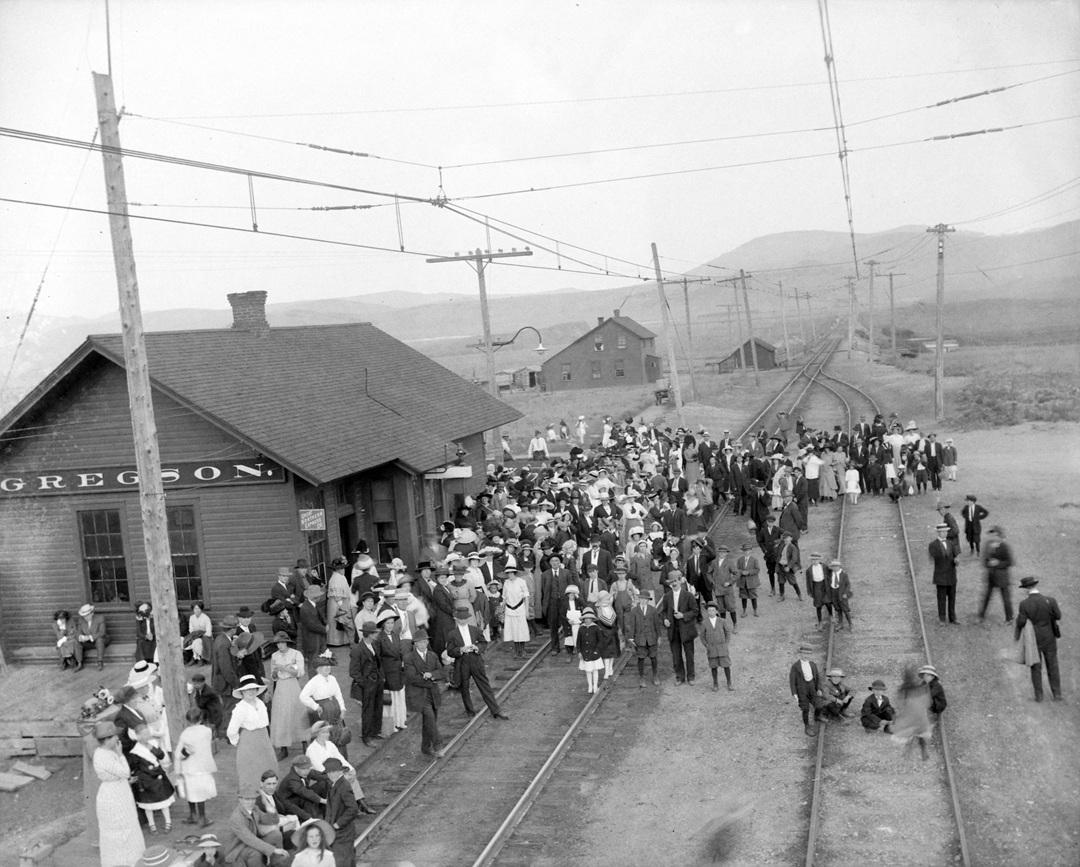
    <summary type="html"><![CDATA[<p><strong><em>At the end of the nineteenth century a few steam railroads converted some lines to electric operation. Initially this was to eliminate locomotive smoke in long tunnels and later to reduce smoke in cities.</em></strong></p><img src="https://storyofbutte.org/files/fullsize/bfc0cf4fc6b2857a2a130f4f55d92b11.jpg" alt="Gregson Station" /><br/><p>In the early 1910s, a few steam railroads with substantial freight traffic on mountain grades adopted electric traction for the primary reason of its greater efficiency. On busy rail lines, the lower cost of electric operation offered to more than compensate for the initial high cost of installing and then maintaining the complex network of poles, overhead wires, and substations. Three steam railroads pioneered electric traction across the full range of railway functions—heavy freight trains, switching, and passenger trains. Two were in Europe, one carrying iron ore in northern Sweden and Norway, and another hauling general freight north of Genoa, Italy. The third was in Montana: the Butte, Anaconda & Pacific Railway.</p><p><em><strong><a href="https://storyofbutte.org/items/show/3532">For more view the original article</a></strong></em></p>]]></summary>
    <published>2025-03-17T21:15:22+00:00</published>
    <updated>2026-04-17T19:58:10+00:00</updated>
    <link rel="alternate" type="text/html" href="https://storyofbutte.org/items/show/3532"/>
    <id>https://storyofbutte.org/items/show/3532</id>
    <author>
      <name>Dale Martin</name>
    </author>
  </entry>
  <entry>
    <title type="html"><![CDATA[Butte Street Railway ]]></title>
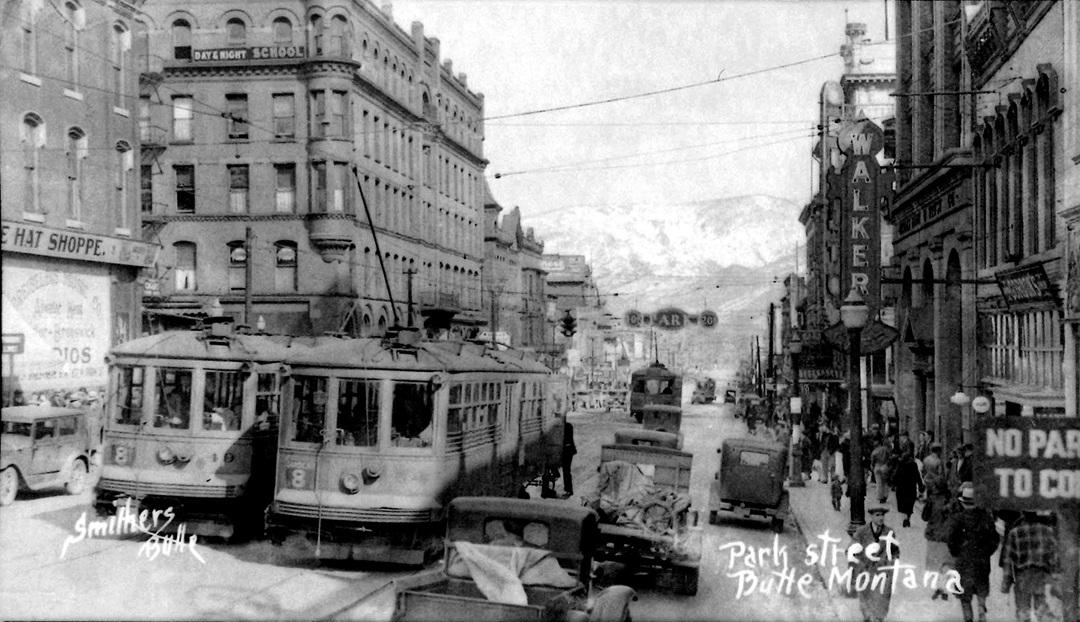
    <summary type="html"><![CDATA[<p><strong><em>The first electric railways appeared in the 1880s, built specifically for passenger service on urban street railways. Butte’s street railway system began operation in 1886, briefly with horses and then small steam engines pulling cars.</em></strong></p><img src="https://storyofbutte.org/files/fullsize/ae3e6dbf473ce8b576e8d22435154e37.jpg" alt="Streetcars" /><br/><p> In 1890 electric streetcar service began and then ran for nearly a half century. Based at the carbarn and repair shop just east of Front Street, the system grew to thirty-five miles of track that reached Walkerville in the north, Columbia Gardens in the east, and the Country Club to the south. On a couple of routes, short electric trains carried ore from several mines to concentrating mills. The 1920s and 1930s saw passenger traffic decline. The year 1936 started with major track improvements uptown, seemingly assuring a busy future ahead. However, the owner—Anaconda Copper Mining Company—in an “unexpected” move, sold the system. The purchaser was a nationwide company, National City Lines, which operated urban transit motor buses. As it had done in other cities, the new owner quickly replaced the streetcars with new buses. With the approval of the Montana Public Service Commission, the last streetcars ran on September 22, 1937.</p><p><em><strong><a href="https://storyofbutte.org/items/show/3531">For more (including 4 images) view the original article</a></strong></em></p>]]></summary>
    <published>2025-03-17T21:12:37+00:00</published>
    <updated>2026-04-17T19:58:10+00:00</updated>
    <link rel="alternate" type="text/html" href="https://storyofbutte.org/items/show/3531"/>
    <id>https://storyofbutte.org/items/show/3531</id>
    <author>
      <name>Dale Martin</name>
    </author>
  </entry>
  <entry>
    <title type="html"><![CDATA[Power for Trains ]]></title>
    <summary type="html"><![CDATA[<p><strong><em>Steam locomotives pulled trains from the beginning of railroads in the 1820s for over a century into the 1950s. Northern Pacific locomotive No. 25 was built to haul main line freight trains at low speeds. </em></strong></p><img src="https://storyofbutte.org/files/fullsize/af4db914fa65c2ed3fba65de21788537.jpg" alt="Northern Pacific Steam Locomotive Number 25" /><br/><p>The Schenectady Locomotive Works, near Albany, New York, built the engine in 1899. It is a “Consolidation” type, based on its wheel arrangement, a 2-8-0: a two-wheel pilot truck, eight drive wheels, and no trailing truck. For much of its sixty-year working life it pulled freight trains on the NP out of Butte, often eastward over Homestake Pass. It could also work as a “helper” assisting freight trains up the steep grades on both sides of the pass. During the 1950s, as diesel-electric power replaced steam engines, the NP donated a few of the latter to cities with important NP functions. </p><p>The roundhouse was an essential building in the era of steam locomotives. At these semi-circular buildings, located around a turntable in a circular pit, workers inspected, cleaned, did regular maintenance, and made light repairs on engines between runs, which before the 1920s were 100 to 150 miles long. The Great Northern roundhouse crew included machinists, boilermakers, blacksmiths, helpers, and engine wipers. Hostlers shuttled engines between the roundhouse and the passenger station or freight yard. In 1916 the GN employed about thirty workers at its Butte roundhouse. </p><p><em><strong><a href="https://storyofbutte.org/items/show/3530">For more (including 2 images) view the original article</a></strong></em></p>]]></summary>
    <published>2025-03-17T17:53:25+00:00</published>
    <updated>2026-04-17T19:58:10+00:00</updated>
    <link rel="alternate" type="text/html" href="https://storyofbutte.org/items/show/3530"/>
    <id>https://storyofbutte.org/items/show/3530</id>
    <author>
      <name>Dale Martin</name>
    </author>
  </entry>
  <entry>
    <title type="html"><![CDATA[Northern Pacific Freight House]]></title>
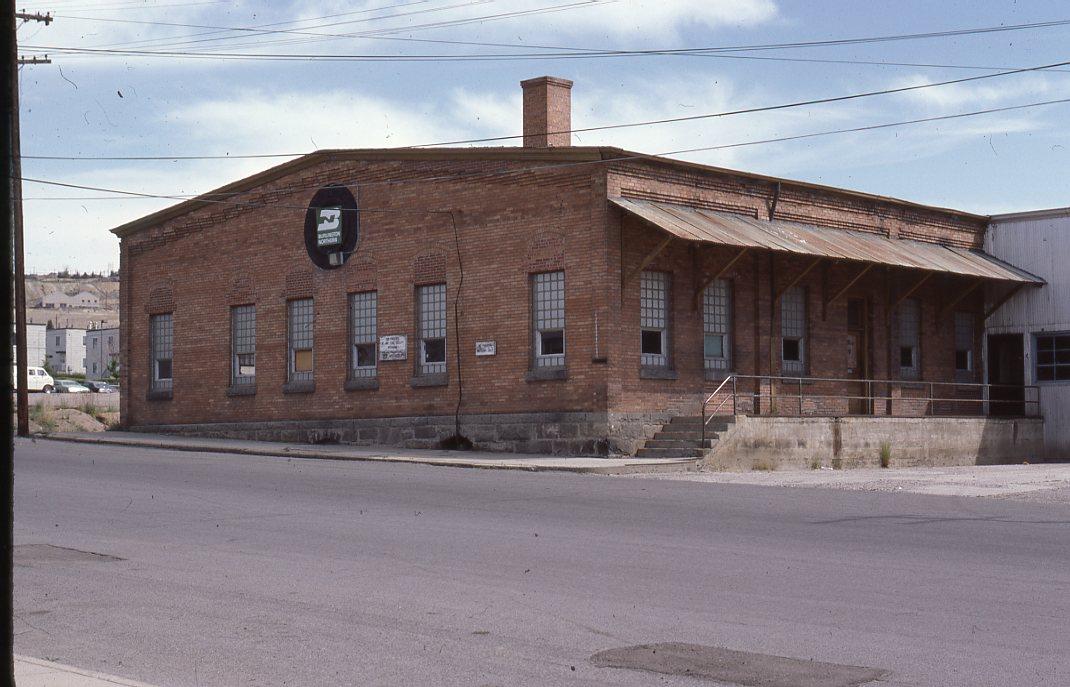
    <summary type="html"><![CDATA[<p><strong><em>In cities like Butte, most railroads had separate buildings for passengers and freight.  This Northern Pacific freight house had two tracks on the south side and wagon/motor truck loading on the north side.</em></strong></p><img src="https://storyofbutte.org/files/fullsize/89ade5aaaa56c581424bf54427e1217d.jpg" alt="Northern Pacific Freight House" /><br/><p>Since the beginning of railways, most freight moved in carload lots. This included metallic ores, coal, lumber, wheat, flour, fresh produce, livestock, wool, manufactured goods, and other commodities destined for processing plants, wholesale warehouses, or retail businesses. The cars were loaded and unloaded on spur tracks at each end of the cars’ journeys. However, some freight did not completely fill carload space, and thus a single boxcar could hold many separate freight shipments. This was called “less-than-carload" freight, abbreviated “L.C.L.” In large cities L.C.L. was handled in railroad “freight houses” with large warehouse space and an office at one end. Inside, workers with carts and hand trucks moved freight in both directions between wagons or motor trucks on one side of the building and rail boxcars on the other side. </p><p><em><strong><a href="https://storyofbutte.org/items/show/3529">For more view the original article</a></strong></em></p>]]></summary>
    <published>2025-03-17T17:41:55+00:00</published>
    <updated>2026-04-17T19:58:10+00:00</updated>
    <link rel="alternate" type="text/html" href="https://storyofbutte.org/items/show/3529"/>
    <id>https://storyofbutte.org/items/show/3529</id>
    <author>
      <name>Dale Martin</name>
    </author>
  </entry>
  <entry>
    <title type="html"><![CDATA[Milwaukee Road Passenger Station]]></title>
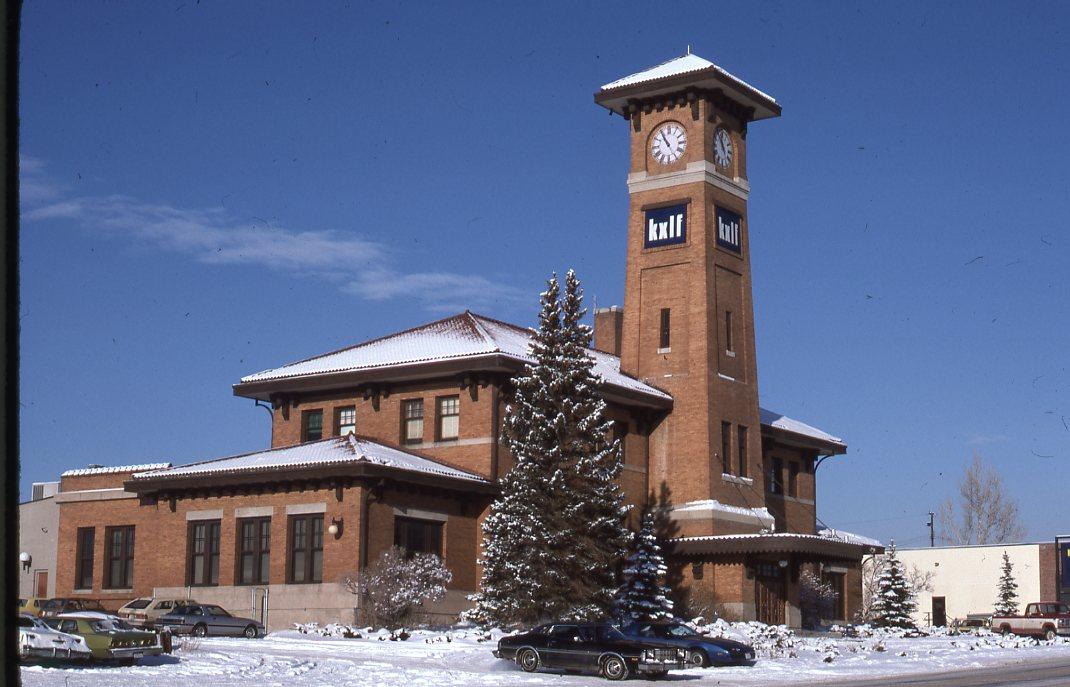
    <summary type="html"><![CDATA[<p><strong><em>The Milwaukee Road passenger station, featuring a clock tower, was and still is the most visually striking former rail station in Butte.</em></strong></p><img src="https://storyofbutte.org/files/fullsize/d62f06782f48c743c45dceae521138ec.jpg" alt="Milwaukee Road Station, Front" /><br/><p>For eight years after beginning passenger service through Butte in 1909, the Chicago, Milwaukee & St. Paul Railway (popularly known through most of the twentieth century as the Milwaukee Road) used the BA&P station for its passenger trains. On February 1, 1917, the Milwaukee Road opened to the public its own large station on South Montana Street, which it soon shared with the BA&P. The upper story housed the railroad’s offices, and in 2024 the Milwaukee’s emblems and lettering on doors remained evidence of railroad administrative functions over seventy years earlier. </p><p>The building was a stub station: trains had to back into the station from the Y-track to the west. By the early 1920s, the station hosted up to twelve trains per day, four Chicago-Seattle-Tacoma schedules of the Milwaukee Road and eight of the BA&P on the Butte-Anaconda run. By 1957 diminished passenger service—just one Milwaukee Road train a day in each direction—and the inconvenience of backing trains into the station led the Milwaukee Road to sell the building. It moved passenger service to a small station (still standing) on the main line south of Silver Bow Creek, on Jossette Avenue. Milwaukee passenger service through Butte ended on January 31, 1964.</p><p><em><strong><a href="https://storyofbutte.org/items/show/3528">For more (including 2 images) view the original article</a></strong></em></p>]]></summary>
    <published>2025-03-17T17:32:41+00:00</published>
    <updated>2026-04-17T19:58:10+00:00</updated>
    <link rel="alternate" type="text/html" href="https://storyofbutte.org/items/show/3528"/>
    <id>https://storyofbutte.org/items/show/3528</id>
    <author>
      <name>Dale Martin</name>
    </author>
  </entry>
  <entry>
    <title type="html"><![CDATA[Great Northern Passenger Station]]></title>
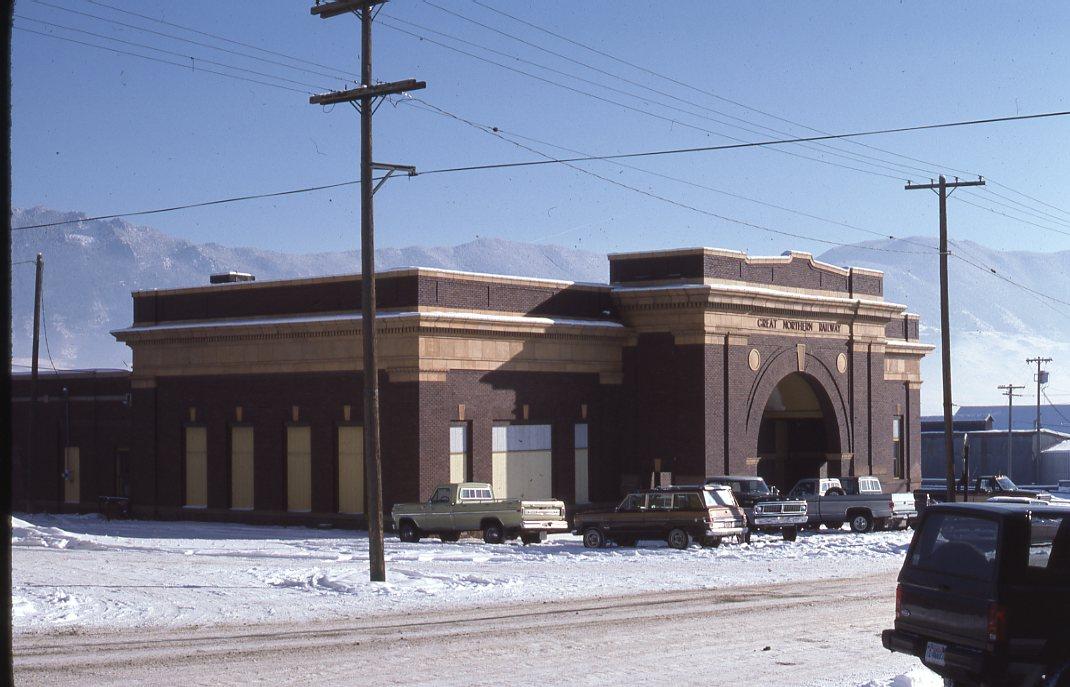
    <summary type="html"><![CDATA[<p><strong><em>The St. Paul, Minneapolis, & Manitoba Railway, renamed the Great Northern Railway in 1890, reached Butte from the northeast in 1888. </em></strong></p><img src="https://storyofbutte.org/files/fullsize/e96e25cbe76e8d27142b09d52c286bc4.jpg" alt="Great Northern Station, Front" /><br/><p>It first used a couple small passenger stations in Butte, including that of the Butte, Anaconda & Pacific. On February 1, 1914, the Great Northern formally opened the brick and concrete depot on South Arizona Street. This station served the railway’s passenger trains that connected Havre on the transcontinental line to Great Falls, Helena, and Butte. At the end of a secondary main line, the depot saw less traffic than the Northern Pacific-Union Pacific depot. In the busy 1910s, four trains per day originated or terminated at the depot. Beyond linking Butte with Great Falls, one pair of trains—the Judith Special—reached further southeast from Great Falls to Lewistown.</p><p>The decline of rail passenger service in subsequent decades reduced traffic to a single pair of trains. Great Northern’s last scheduled passenger train service was a single self-propelled rail car, nicknamed the “galloping goose.” Service to Butte ended on September 6, 1961.</p><p>Just to the south and east of the Great Northern passenger station is the switchyard that for decades was jointly operated by the Great Northern and the Butte, Anaconda & Pacific. During the decades that the BA&P used electric power, two of the yard tracks had the necessary wires overhead. At this yard, the BA&P turned over to the Great Northern cars loaded at the Anaconda smelter with copper and zinc that required finishing at the refinery at Black Eagle, across the Missouri River from Great Falls. Much of the traffic consisted of copper anodes, large cast slabs with “ears” from which the anodes were suspended on frames in specialized flat cars. The suspended anodes clacked against each other as the trains moved. This switchyard is still active, with trains carrying copper concentrates westward from Montana Resources plant on the way to the connecting railroads. </p><p><em><strong><a href="https://storyofbutte.org/items/show/3527">For more (including 2 images) view the original article</a></strong></em></p>]]></summary>
    <published>2025-03-17T17:22:22+00:00</published>
    <updated>2026-04-17T19:58:10+00:00</updated>
    <link rel="alternate" type="text/html" href="https://storyofbutte.org/items/show/3527"/>
    <id>https://storyofbutte.org/items/show/3527</id>
    <author>
      <name>Dale Martin</name>
    </author>
  </entry>
  <entry>
    <title type="html"><![CDATA[Northern Pacific-Union Pacific Passenger Station]]></title>
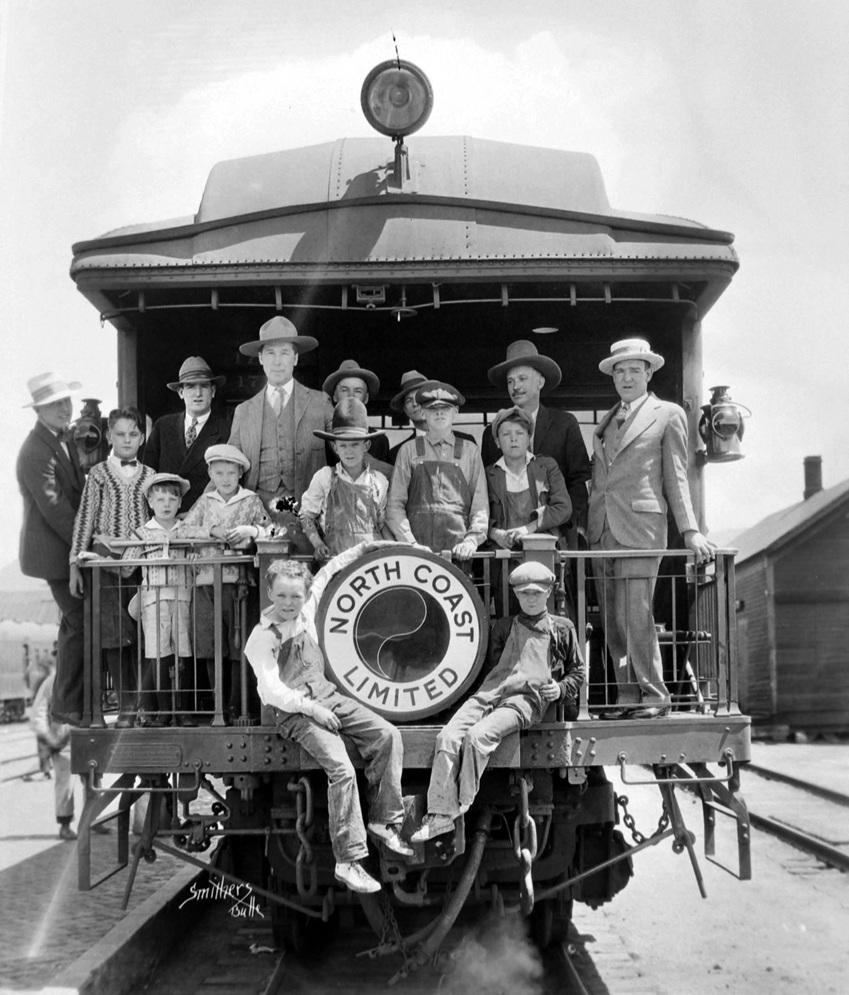
    <summary type="html"><![CDATA[<p><strong><em>Passenger train stations hosted passengers and their baggage, of course, but also express, mail, money, and even bags of laundry, all carried in the “head-end” cars just behind the locomotive. </em></strong></p><img src="https://storyofbutte.org/files/fullsize/a1fd7a55499f79b98725e839ed4b20bb.jpg" alt="The North Coast Limited" /><br/><p>The Northern Pacific-Union Pacific station on Front Street was both the busiest and longest-operated passenger depot in Butte. Because of its location on main lines to important terminals, it was where many famous people who stopped in Butte arrived and departed. Informally opened on September 10, 1906, it served passengers and the head-end business of baggage, express, and mail until 1979. The new three-building complex replaced a small wooden building long considered by the people of Butte to be inadequate, even embarrassing. </p><p>The central two-story building housed on the first floor the large central general waiting room, smaller separate women’s and men’s waiting rooms, ticket office, and telegraph office. Railroad offices occupied the second floor. The east single-story building consisted of a restaurant and kitchen, and the Northern Pacific express office. The west building housed a large baggage room, a small mail room, and the Union Pacific express office.</p><p>In 1916 sixteen daily passenger trains passed through, originated, or terminated at the station. On the twelve operated by the NP, long-distance schedules carried passengers without change of trains to and from St. Paul-Minneapolis, Chicago, Kansas City, St. Louis, Spokane, Seattle, and Tacoma. This included NP’s premier train, the North Coast Limited, operating between Chicago, St. Paul, Spokane, and Seattle. Local trains served dozens of places on runs to and from Missoula, Garrison, Logan, and Billings. For the Union Pacific the station was the northern terminal of a secondary line, over which it ran two pairs of trains between Butte and Salt Lake City.</p><p>Besides regularly scheduled trains, there were also “extra” (chartered) trains for special visitors and groups such as fraternal orders and sports fans. The first train out of the station in September 1906 was an extra train carrying about one hundred Butte men in the Fraternal Order of Elks travelling to Billings.</p><p>A famous, and controversial, passenger who visited Butte and detrained at the station was Eamon de Valera, leader of the Irish independence movement. He toured the U.S. in 1919, in the early months of the Irish war for independence. Butte’s large and vibrant Irish immigrant population made the city one of de Valera’s rare stops in the intermountain West. On July 25, he arrived in Butte as a passenger on the Oregon Short Line train from Salt Lake City. A “large percentage of Butte” awaited him at the station. As he stepped down from the train to the brick platform “he was besieged on all sides by anxious men and women struggling to grip him by the hand. For a few minutes he was caught in a swirling mass of humanity.” Many more people lined the parade route to uptown, where thousands welcomed him. </p><p>For a quarter century of Montana’s longest and fiercest sports rivalry, Butte hosted the annual intrastate collegiate football game. Between 1926 and 1950 (excluding the war years of 1942-45), the football teams of the University of Montana (then called Montana State University) and Montana State University (then called Montana State College) played each other in “the Butte game.” The teams played first in Clark Park on the Flat and later at Naranche Stadium at the High School. Special trains on the Northern Pacific brought fans from both Bozeman and Missoula, arriving in Butte with plenty of time to watch a parade and join festivities before the game. In 1937, a round-trip ticket on the special NP train from Bozeman cost $1.95 and the ride each way took about three hours. </p><p>By the 1960s, after decades of rail passenger decline, the station served just four daily trains, Northern Pacific’s North Coast Limited and Union Pacific’s Butte-Salt Lake City Butte Special. The federal entity of Amtrak took over almost all the nation’s remaining passenger trains in 1971, including two Chicago-Seattle trains across Montana: the Empire Builder on the Hi-Line, and the renamed North Coast Hiawatha through the large cities in the southern part of the state, including Butte. The last regularly scheduled passenger train serving Butte departed westbound from the station on October 7, 1979, when Amtrak ended the tri-weekly North Coast Hiawatha through the most populated part of the state. Freight trains still run by the depot.</p><p><em><strong><a href="https://storyofbutte.org/items/show/3526">For more (including 3 images) view the original article</a></strong></em></p>]]></summary>
    <published>2025-03-17T17:07:11+00:00</published>
    <updated>2026-04-17T19:58:10+00:00</updated>
    <link rel="alternate" type="text/html" href="https://storyofbutte.org/items/show/3526"/>
    <id>https://storyofbutte.org/items/show/3526</id>
    <author>
      <name>Dale Martin</name>
    </author>
  </entry>
  <entry>
    <title type="html"><![CDATA[The Railways of Butte ]]></title>
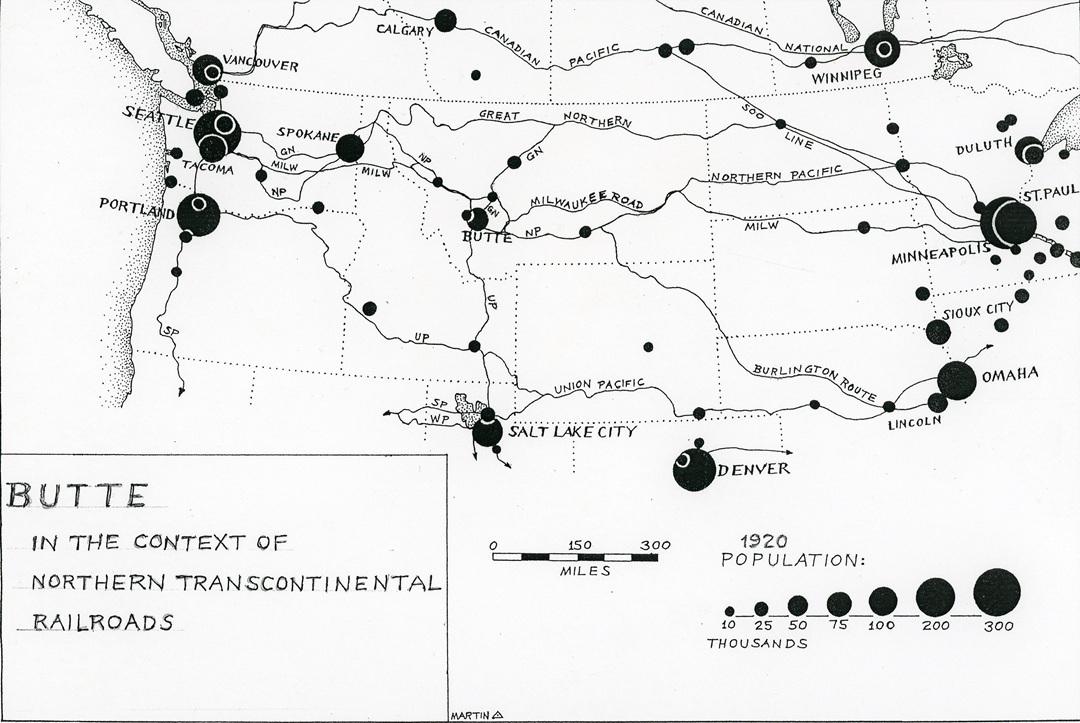
    <summary type="html"><![CDATA[<p><strong><em>For most of a century, Butte was by several measures the most important and varied railroad center in the northern Rockies. In 1911, thirty years after the Union Pacific reached Butte, four transcontinental railways—linking the Midwest and the Pacific coast—served the city.</em></strong></p><img src="https://storyofbutte.org/files/fullsize/d7ad02a49f17298183dceb2ca309c31d.jpg" alt="Map of Montana Rail Lines" /><br/><p>Two companies had through main lines (Northern Pacific, Milwaukee Road) and two had Butte at the ends of secondary lines (Union Pacific, Great Northern). The city also was the east end of a heavily trafficked short line, the Butte, Anaconda & Pacific. For urban transit, there was both an extensive street railway system and—for nearly a decade before 1900—a cable car line on Main Street. The railroad presence in Butte included passenger stations and freight houses, switchyards, locomotive terminals, and many industrial spur tracks. Railway employees worked on trains and switch crews, in stations and offices, on maintenance of right-of-way and track, and in roundhouses and repair shops. In 1916, railway work in Butte employed at least 850 people, with over 600 on the five intercity companies, more than 200 on the street railway, and about 30 Railway Mail Service employees based in Butte who worked in the mail cars in passenger trains.</p><p>The railroads carried freight for the major economic activity of Butte and Anaconda: the mining and processing of the metallic ores of copper, zinc, silver, and manganese. The density of rail lines in Butte was most evident amid the mines on the middle and upper parts of Butte Hill. In the years around 1900, three railroads together had dozens of miles of track on the Hill: the Northern Pacific, the Great Northern, and the Butte, Anaconda & Pacific. A contemporary noted, with some exaggeration, “So complete has this system of railroad development proceeded that ‘the hill’ is a perfect network of lines, running in every conceivable direction and at all manner of grades, the hill on closer inspection appearing to be terraced at every few yards by recurring tracks.” (Harry C. Freeman, A Brief History of Butte, Montana: The World’s Greatest Mining Camp, 1900, p. 96). The tracks passed close to mines and waste rock dumps, houses, businesses, schools, and churches.</p><p>The rail companies also brought to Butte the basic materials and finished goods for consumers and businesses in a city that in 1916-1917 reached a peak population of about 90,000. The concentration of rail lines in Butte made the city a regional center for wholesale businesses distributing, for example, food and medicine.</p><p>Butte’s location where railway main lines radiated in the four cardinal directions made it a destination or stopping point for passengers, some famous and most unremarked. For six decades, presidents and candidates for that office paused or stopped at Butte’s passenger stations: from perennial candidate William Jennings Bryan (August 1897) and President Theodore Roosevelt (May 1903) to candidates of both parties, Thomas E. Dewey and Harry S Truman (June 1948) and Dwight D. Eisenhower (October 1952). Trains brought the stars of drama, music, and vaudeville whose fame filled entertainment venues of uptown Butte. Wild West shows featuring “Buffalo Bill” Cody required several trains to carry the hundreds of people and horses who performed on Butte Flat three times between 1908 and 1914.</p><p><em><strong><a href="https://storyofbutte.org/items/show/3525">For more (including 3 images) view the original article</a></strong></em></p>]]></summary>
    <published>2025-03-17T16:50:49+00:00</published>
    <updated>2026-04-17T19:58:10+00:00</updated>
    <link rel="alternate" type="text/html" href="https://storyofbutte.org/items/show/3525"/>
    <id>https://storyofbutte.org/items/show/3525</id>
    <author>
      <name>Dale Martin</name>
    </author>
  </entry>
  <entry>
    <title type="html"><![CDATA[Butte Northern Pacific Station: Butte&#039;s First Grand Depot]]></title>
    <summary type="html"><![CDATA[<p><strong><em>Sixteen passenger trains a day once stopped here.</em></strong></p><img src="https://storyofbutte.org/files/fullsize/c108a53f5c4e44c1c21f6fba4c6ea791.jpg" alt="Northern Pacific Station, Butte, MT" /><br/><p>The first railroad to reach Montana was the Union Pacific (UP), which in 1881 established a terminal one mile south of Uptown. After the Northern Pacific (NP) reached Butte in 1890, it shared the UP’s wooden passenger depot. As Butte grew from town to metropolis, its businessmen lobbied for construction of a grand, union station. The Great Northern (which arrived in Butte in the late 1880s) refused, so in 1906, the NP replaced the 1881 depot with these three hipped-roof buildings. The center structure originally boasted a covered overhang shading the platform. It housed a three-hundred-person general waiting room; men’s smoking and ladies’ private rooms; and ticket and telegraph offices. A stairway led upstairs to a gallery, designed as a public “promenade and lounging place,” as well as to the railroad’s administrative offices. The western building housed the baggage and freight offices; the eastern building housed the express offices and a restaurant. By 1916, twelve NP and four UP passenger trains stopped daily, in addition to “specials,” like the UP’s summer Sunday fishing train. The last passenger train left the station in 1979.</p><p><em><strong><a href="https://storyofbutte.org/items/show/3386">For more (including 3 images) view the original article</a></strong></em></p>]]></summary>
    <published>2021-11-03T21:10:36+00:00</published>
    <updated>2026-04-17T19:58:08+00:00</updated>
    <link rel="alternate" type="text/html" href="https://storyofbutte.org/items/show/3386"/>
    <id>https://storyofbutte.org/items/show/3386</id>
    <author>
      <name>Montana Historical Society</name>
    </author>
  </entry>
</feed>