Tuttle Block

Shelley Tuttle was born in Michigan in 1852 and arrived in Butte in 1877. He worked for the Alice Mining Company for two years. Tuttle then started working as a contractor, building the concentrator at the Montana smelter (original name of the Boston & Montana’s upper works) in Meaderville and the hoisting works of at the Moulton mine in Walkerville.
He and a partner purchased the Lexington Foundry in Butte in 1882. It was located on East Park, just east of Arizona Street. At some point along the way, Tuttle and Marcus Daly became close associates, perhaps through their shared passion for racehorses. In September 1889, crews began excavating foundations at the southeast corner of the Anaconda townsite for a new foundry complex, built by Tuttle with backing from Daly. In early 1890, as portions of the foundry were completed and as a machine shop and boiler works were being added, Tuttle and Daly, along with Dennis F. Hallahan, incorporated with Tuttle Manufacturing and Supply Company. The new company purchased the Anaconda Commercial Company and made plans to open a branch store in Missoula. It also bought the Butte Trading Company, which had been incorporated in 1888 by Daly, Haggin, and other central figures in the Anaconda enterprise to sell mining supplies.
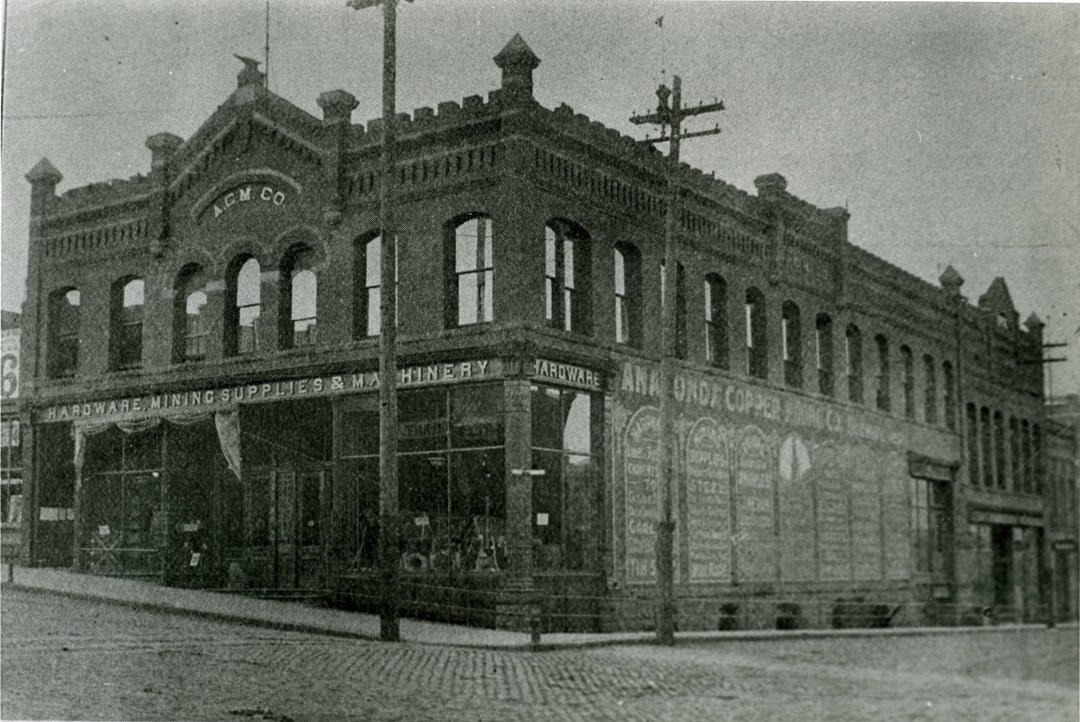
Tuttle built the Tuttle Block, on the northeast corner of Quartz and Main, in 1892. The two-story brick building housed a storefront for the Tuttle Manufacturing and Supply Company on the first floor and offices to rent on the second floor. The store sold a wide range of supplies for mining, from hoisting engines and wire rope to batteries and lubricating oils. It was also an agent for other companies that made such equipment as rock drills and pumps. One of the early renters of an office on the second floor was Dr. J.A. Tremblay. In 1893, the Anaconda Mining Company, which had been holding stockholders’ meetings across the street in the Chambers Block, began holding those meetings on the second floor of the Tuttle Block. The company reorganized to form a new corporation, the Anaconda Copper Mining Company, in 1895. The principals of the Anaconda Mining Company began laying the groundwork for that transaction during meetings in the Tuttle Block in 1894, and they met there in 1895 when they agreed to transfer all of Anaconda Mining’s property to the new Anaconda Copper Mining Company.
In 1896, Tuttle sold his share of the Tuttle Manufacturing and Supply Company, and two new Daly associates joined the board of trustees. The trustees then agreed to sell the company to the Anaconda Copper Mining Company. ACM then changed the name of its stores in Butte, Anaconda, and Missoula to the Hardware Department of ACM, and its foundry and manufacturing plant in Anaconda became the Foundry Department of ACM.
ACM acquired the Tuttle Block in 1911, shortly after ownership and operations of all the Amalgamated subsidiaries were consolidated into the hands of ACM. ACM intended to add a third floor and to use the two upper floors as the general offices of the company, functions that had been housed in Anaconda. By 1911, Silver Bow County had been renting a large room on the second floor to use as a courtroom and some of smaller rooms as a jury room and sleeping rooms for jurors. Because of ACM’s plans, the county court had to move. The Anaconda Company continued to use the Tuttle Block as its general office until ARCO ceased mining in Butte.
Images