Hennessy Building
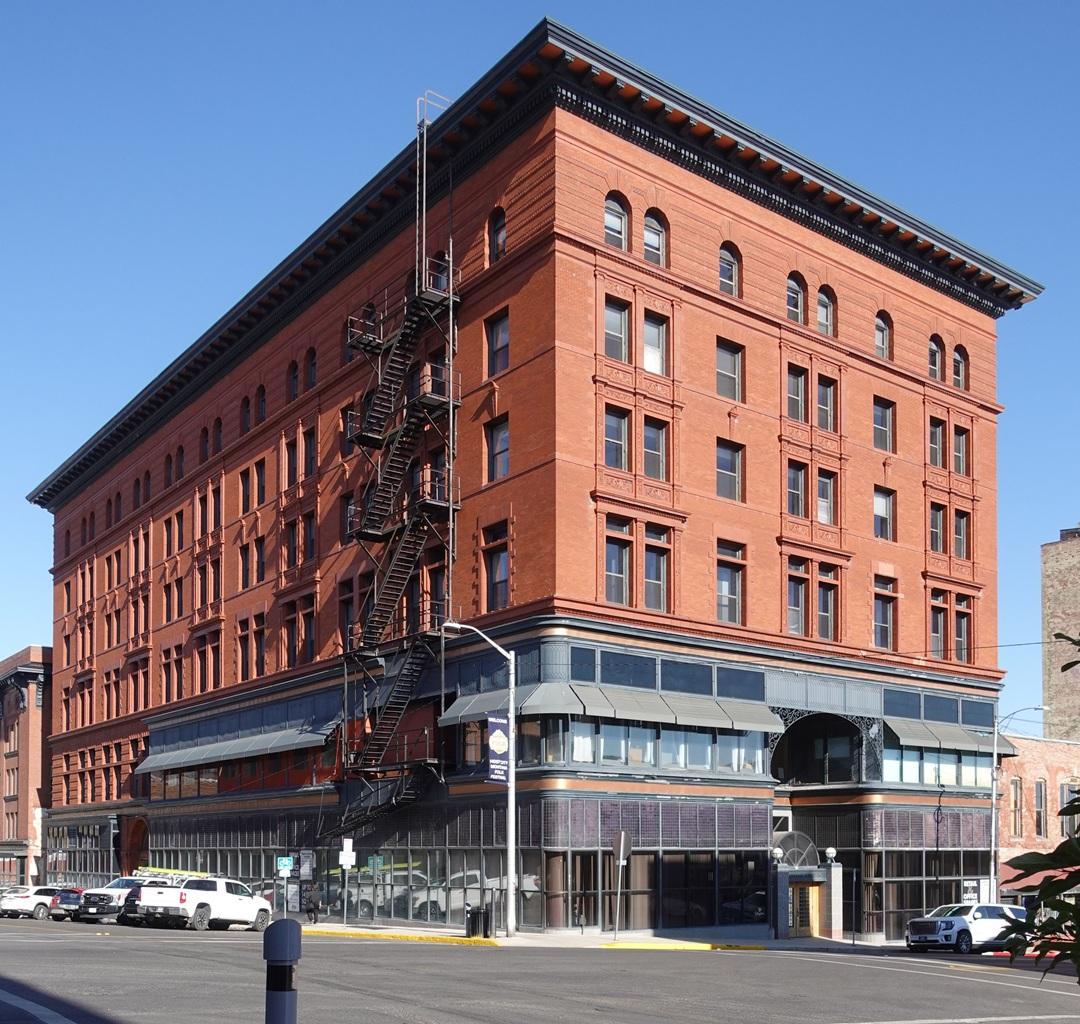
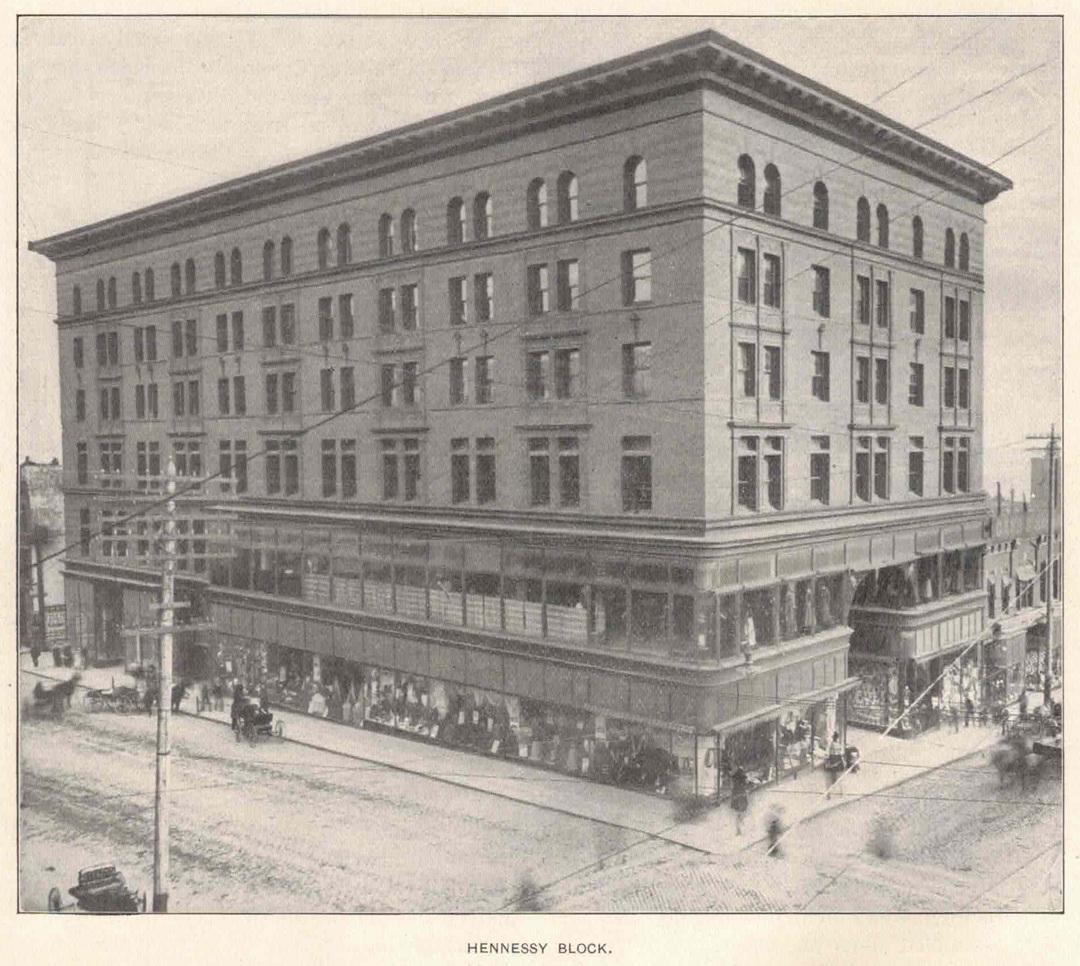
The Hennessy Building gets its name from Daniel J. Hennessy, a close associate of Marcus Daly. Hennessy was born in New Brunswick, Canada, in 1854 and, while still a teenager, went to work in a local dry goods store.
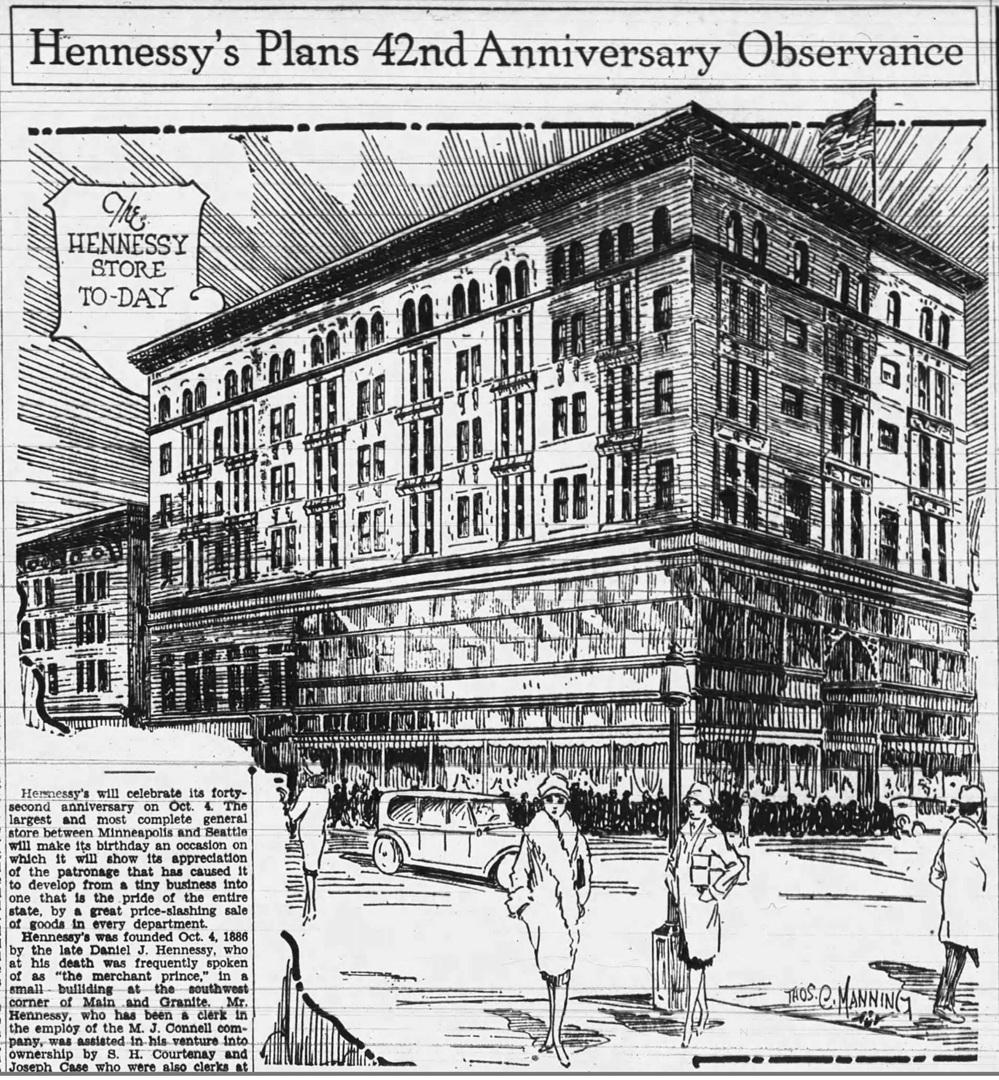
He left New Brunswick in 1879 and started making his way west. When he arrived in Butte, he went to work for the Butte branch of E.L. Bonner and Company, the Missoula-based mercantile store. In the late 1880s, as the Clark-Daly feud got underway, Daly grew angry with the owners of the Bonner company, so he financed Hennessy to open the Hennessy Mercantile Company in 1886. That relationship continued when the company decided to build a new store at the southeast corner of Granite and Main in Uptown Butte. The building was owned by ACM and leased to Hennessy’s company for the new mercantile.
Excavation of the foundations began in September 1897, and construction was to continue that fall under the superintendence of Frank Jones, chief carpenter for the Anaconda company in Anaconda. The Anaconda firm of Smith and Black was the architect. Construction halted in November, however, for unknown reasons. Speculation included that the owners were still trying to buy the building to the south along Main Street, so the new building could be larger, and that the project was having trouble getting the order for structural steel filled in Chicago.
Hennessy announced in March 1898 that construction of the new building would resume, now under supervision of a new architect, Frederick Kees of Minneapolis. Kees had designed several prominent buildings in Minneapolis, including the City Hall and the Masonic Temple. The Gillette-Herzog Manufacturing Company, a steel fabricator that built bridges in Minnesota and across the northern tier of states, including Montana, would be the contractor. The firm also built steel headframes, including those at the Diamond, Steward, and High Ore mines. Steel for the structure of the Hennessy Building filled thirty railroad cars, which arrived from Minneapolis in April 1898. Erecting the steel led to a minor bit of labor unrest, when Gillette-Herzog brought union iron workers from the east to work on the project, and Butte unions objected. The issue was resolved when the contractor agreed to hire Butte men to work on the ground, and the local unions agreed to allow skilled iron workers from the east to work above the ground. Another labor issue arose in Fall 1898, when the Plasterers Union had a complaint against the contractor. The superintendent of construction for the Hennessy Building issued an ultimatum from ACM (not the Hennessy Mercantile Company) that the men return to work.
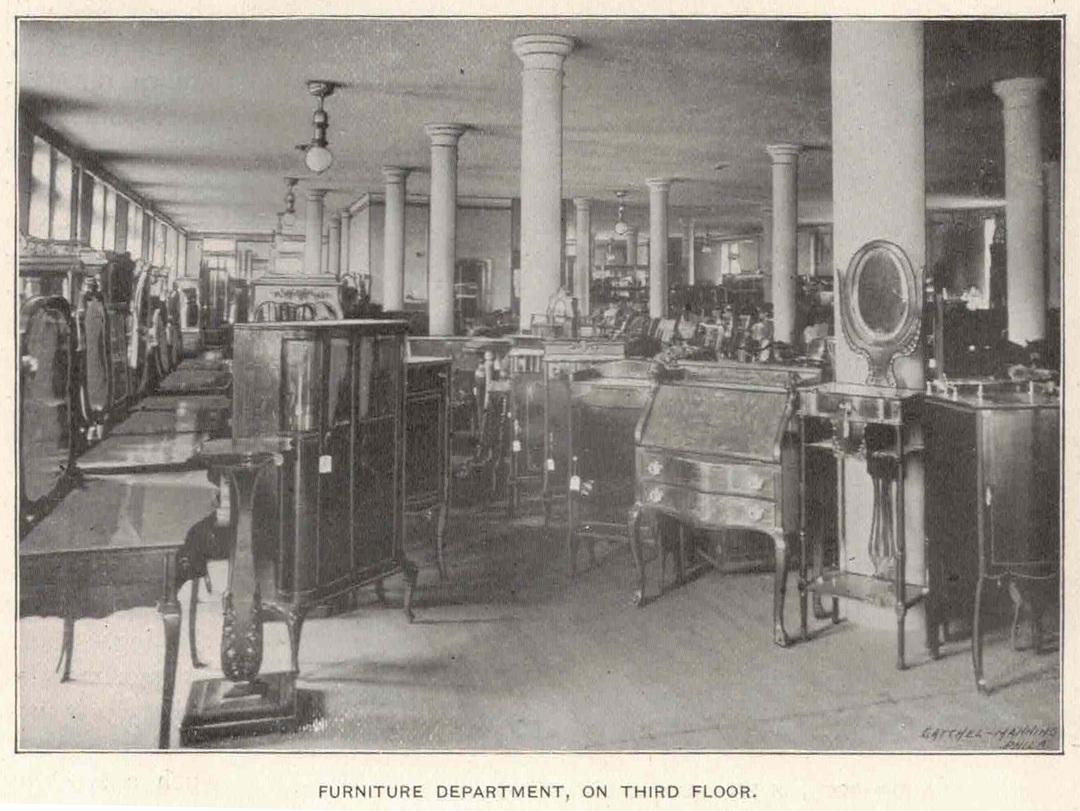
The Hennessey Mercantile Company opened its new store on November 21, 1898. A newspaper article in early December 1898 praised the new building’s architecture and lauded the colossal nature of the store itself, which occupied the basement and the first three floors. Regarding the upper three floors, the article merely stated that they would be rented for offices. Newspapers in subsequent years featured advertisements for doctors, dentists, lawyers, insurance agents, and other professionals who had offices in the Hennessy Building.
When Amalgamated Copper started consolidating Butte’s mining industry in 1899 by acquiring ACM and other mining companies, it also acquired a large interest in the Hennessy Mercantile Company. Nevertheless, little was written in newspapers about the corporate affiliations of occupants of the top floor of the Hennessy Building. Among those occupants were engineer John Gillie and attorney William Scallon (soon to be president of ACM), who moved his office from the Tuttle Block to the sixth floor of the Hennessy Building when it was completed. . When attorney A.J. Shores moved to Butte to work for ACM in 1900, he established his office on the top floor. In the early years of the twentieth century, as the feud between F. Augustus Heinze and Amalgamated entered full bloom, Heinze sympathizers often used having an office in the Hennessy Building as a tarnish against those charged with being affiliated with Amalgamated.
D.J. Hennessy purchased Amalgamated’s interest in his business in 1904 but Amalgamated continued to own the building. In 1906, Hennessy built (and owned) the Hennessy Annex immediately east of the Hennessy Building. It was designed by architect W.A. O’Brien. Hennessy also built his mansion at the corner of Park and Excelsior in 1906. He died in January 1908. The Hennessy store continued to be a commercial fixture in Uptown Butte into the 1980s. When ARCO closed mining operations in Butte in 1982, Montana Power occupied the building.
Images