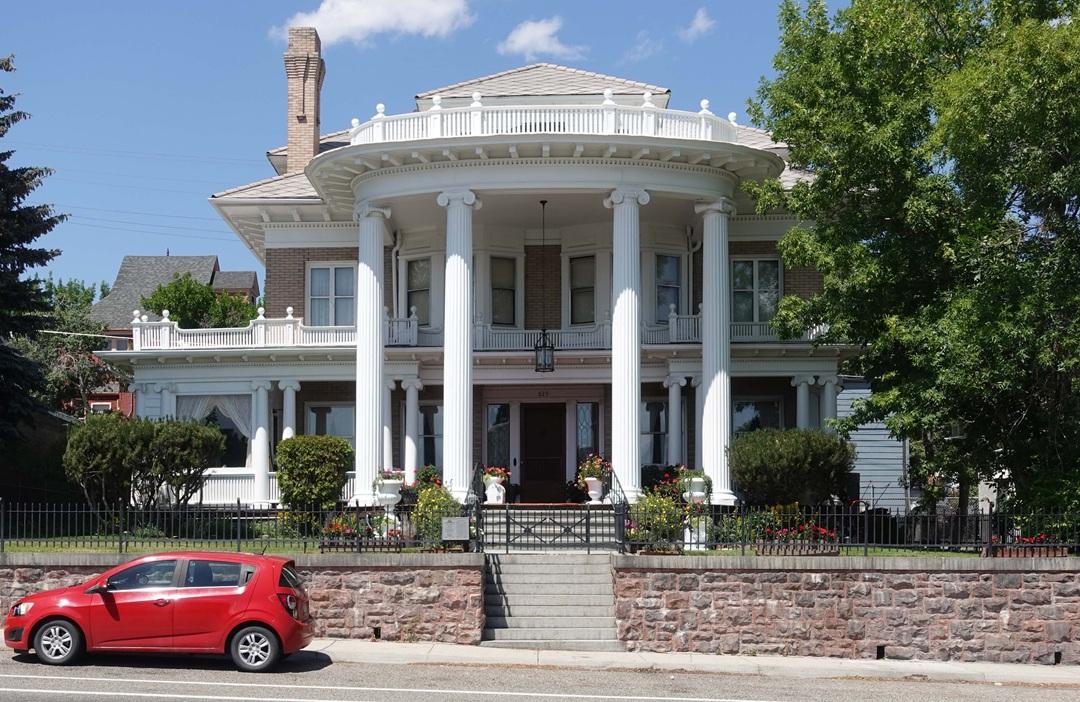
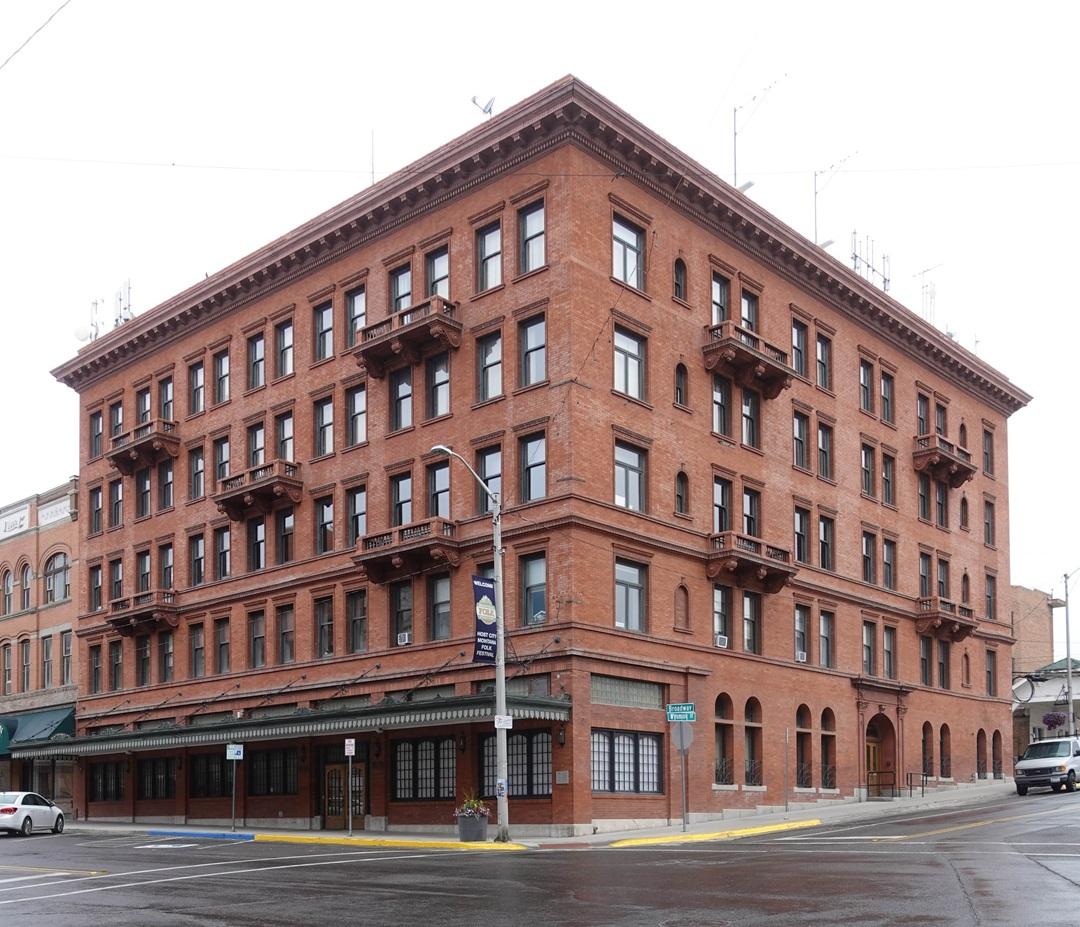
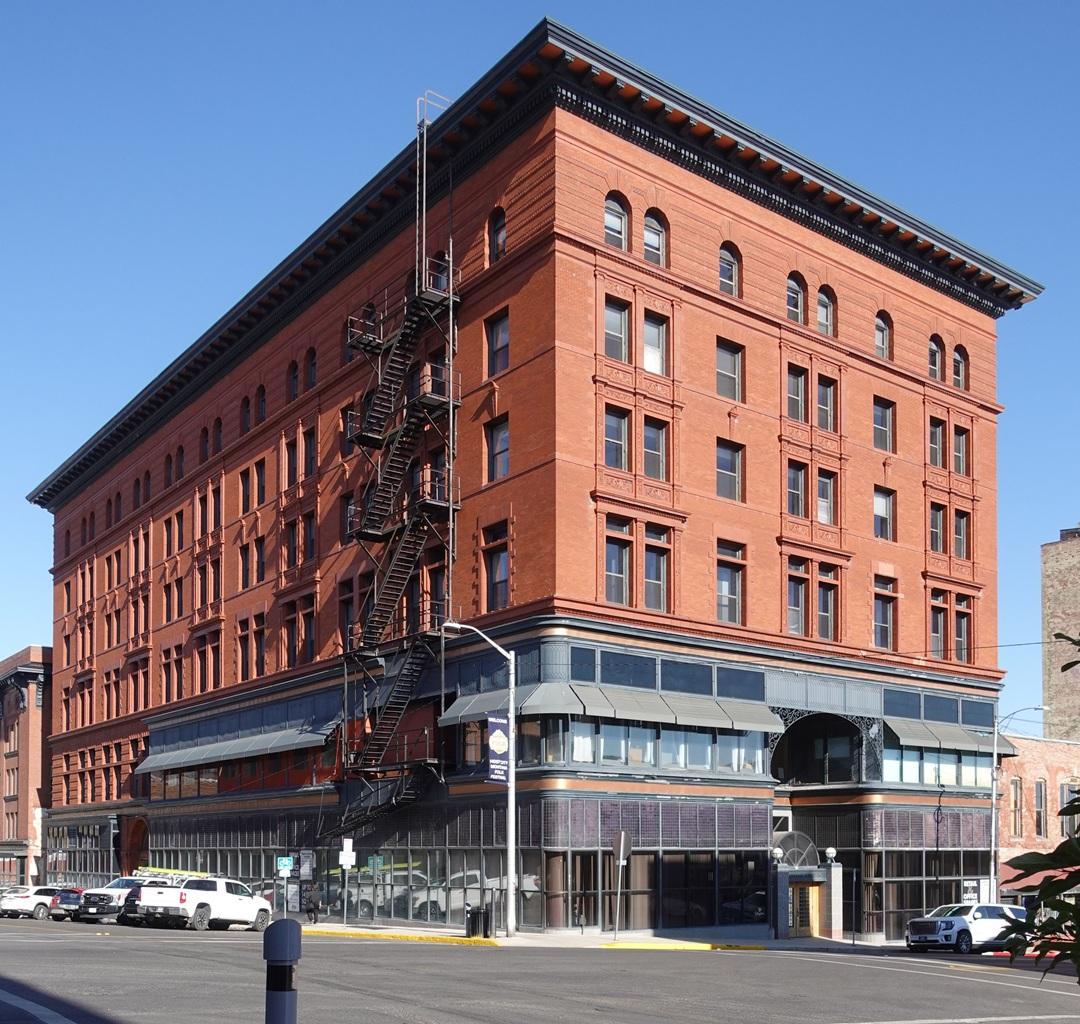
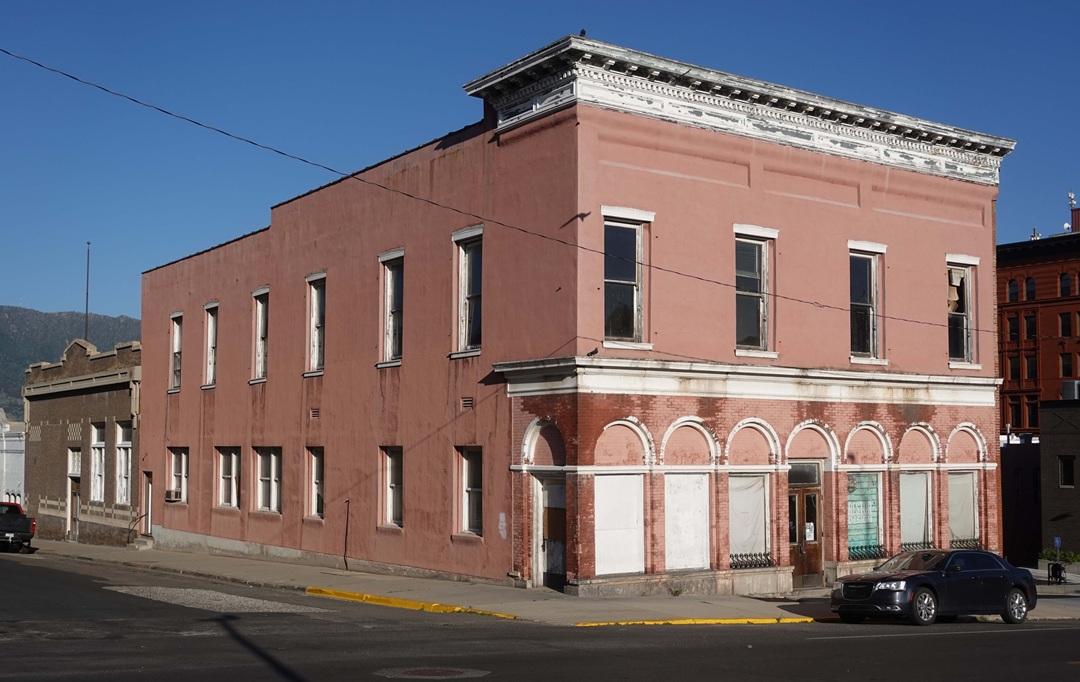
<?xml version="1.0" encoding="UTF-8"?>
<feed xmlns="http://www.w3.org/2005/Atom">
  <title type="text">Story of Butte</title>
  <updated>2026-08-10T18:23:46+00:00</updated>
  <generator uri="http://framework.zend.com" version="1.12.20">Zend_Feed_Writer</generator>
  <link rel="alternate" type="text/html" href="https://storyofbutte.org/"/>
  <link rel="self" type="application/atom+xml" href="https://storyofbutte.org/items/browse?output=rss2"/>
  <id>https://storyofbutte.org/</id>
  <author>
    <name>Story of Butte</name>
    <uri>https://storyofbutte.org</uri>
  </author>
  <link rel="hub" href="https://pubsubhubbub.appspot.com/"/>
  <entry>
    <title type="html"><![CDATA[Ammonium Nitrate Fuel Oil Plant]]></title>
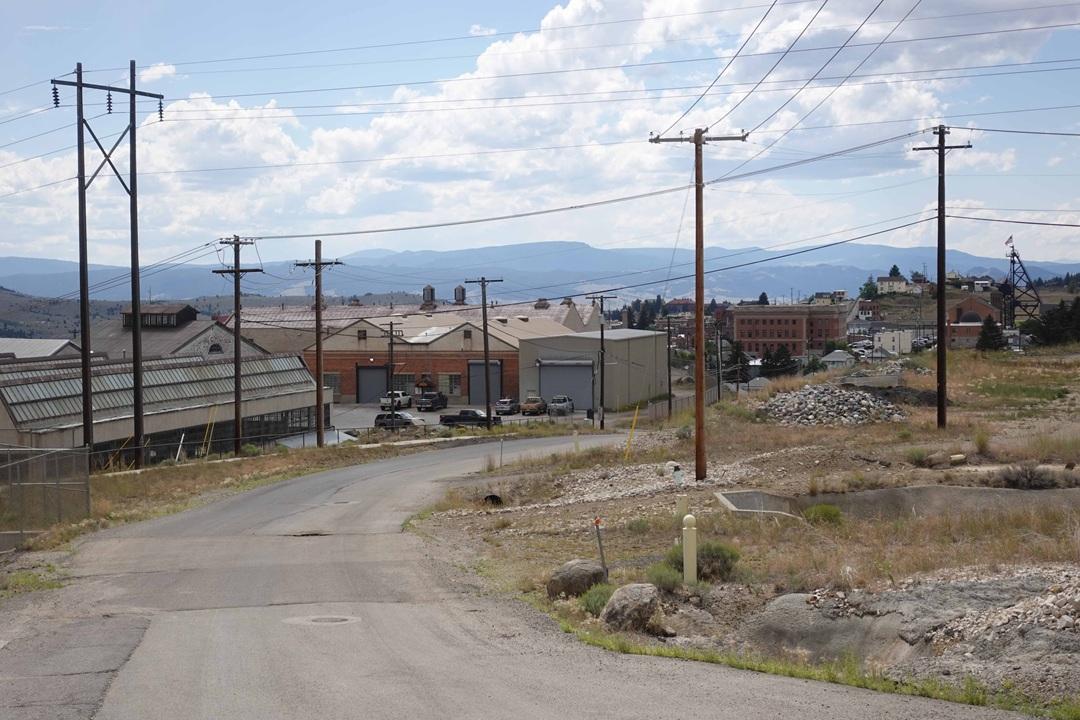
    <summary type="html"><![CDATA[<p><strong><em>When the Anaconda Company began developing the Berkeley Pit in 1955, it quickly realized that a new type of explosive was required to break up the large volume of rock that had to be moved‒greater than 200 million tons between 1955 and 1963. The blasting agent ammonium nitrate-fuel oil (ANFO) quickly supplanted dynamite as the explosive of choice, not only in the Pit (beginning in about 1958) but also at Butte’s underground mines (beginning about 1961). </em></strong></p><img src="https://storyofbutte.org/files/fullsize/c9e6887614f20b6f714b68ae5fdcc5ef.jpg" alt="ANFO plant, view to the southeast " /><br/><p>During the late 1950s, industry wide the use of ANFO reduced the cost of explosives used in mining 50-60%. By 1975, 90% of all pit blasting in the United States was accomplished with ANFO-based blasting agents.</p><p>Anaconda Company was a regular innovator in customizing mine-related equipment and techniques at the time. Its early use of ANFO and the equipment it developed for its mixing and placement can be attributed in part to the scale of the company’s combined underground and open-pit mining operations.</p><p>The company chose a site for the delivery and mixing of ammonium nitrate and diesel oil at some distance from both the Berkeley Pit and its then-active underground mines—the former Speculator mineyard. There, the Butte, Anaconda & Pacific Railway delivered bulk fertilizer-grade ammonium nitrate prills (pellets), trucks delivered No. 2 diesel, and the work of making ANFO commenced. The bulk ammonium nitrate was dumped into an underground chute at the edge of the railroad track, then conveyed by elevator to a pair of tall storage bins.  Two large fuel tanks on high ground at the south end of the plant contained diesel that was allowed to flow through two 2-inch pipes encased in a wood box that led to the lower level of the plant.</p><p>If destined for use in the Pit, the bulk ammonium nitrate was loaded by gravity from the bottom of the storage bins into the bed of a truck that was outfitted with a large, covered bin and a separate 10,000-pound diesel tank. The truck immediately headed to the Pit where the two ingredients were mixed just prior to filling the drill holes.</p><p>If the ANFO was to be used underground, the materials were mixed together using a converted cement mixer barrel in the mixing shed—a large metal building at the ANFO plant. Workers then bagged the ANFO in 25- and 50-pound polyethylene or coated Kraft paper bags and immediately loaded them on a truck to be delivered to a mine, where it was briefly stored underground in storage magazines. The practice of using ANFO as a blasting agent underground ended at an unknown date prior to 1974 when Butte’s last underground mine closed.</p><p>The ANFO plant continued operations at the Berkeley Pit until the Anaconda Company, then owned by the Atlantic Richfield Company, permanently closed its mining operations on the Butte Hill in 1982. When the ANFO plant was abandoned, many of its working structures were left in place. Today, those structures that remain include the far end of the BA&P railroad track that led to the plant on the upper level; the chute, gates, and gate control shed that regulated the flow of ammonium nitrate to the storage bins on the middle level; and on the lower level the base of storage bins structure. Between the upper and middle level, a wood staircase for worker access continues to stand, in a deteriorated condition. Salvagers removed the mixing shed and its equipment decades ago.</p><p><em><strong><a href="https://storyofbutte.org/items/show/3598">For more (including 8 images) view the original article</a></strong></em></p>]]></summary>
    <published>2026-07-27T17:06:03+00:00</published>
    <updated>2026-07-29T16:06:02+00:00</updated>
    <link rel="alternate" type="text/html" href="https://storyofbutte.org/items/show/3598"/>
    <id>https://storyofbutte.org/items/show/3598</id>
    <author>
      <name>Mitzi Rossillon </name>
    </author>
  </entry>
  <entry>
    <title type="html"><![CDATA[Delphine Demordaunt Residence: Foursquare Cottage]]></title>
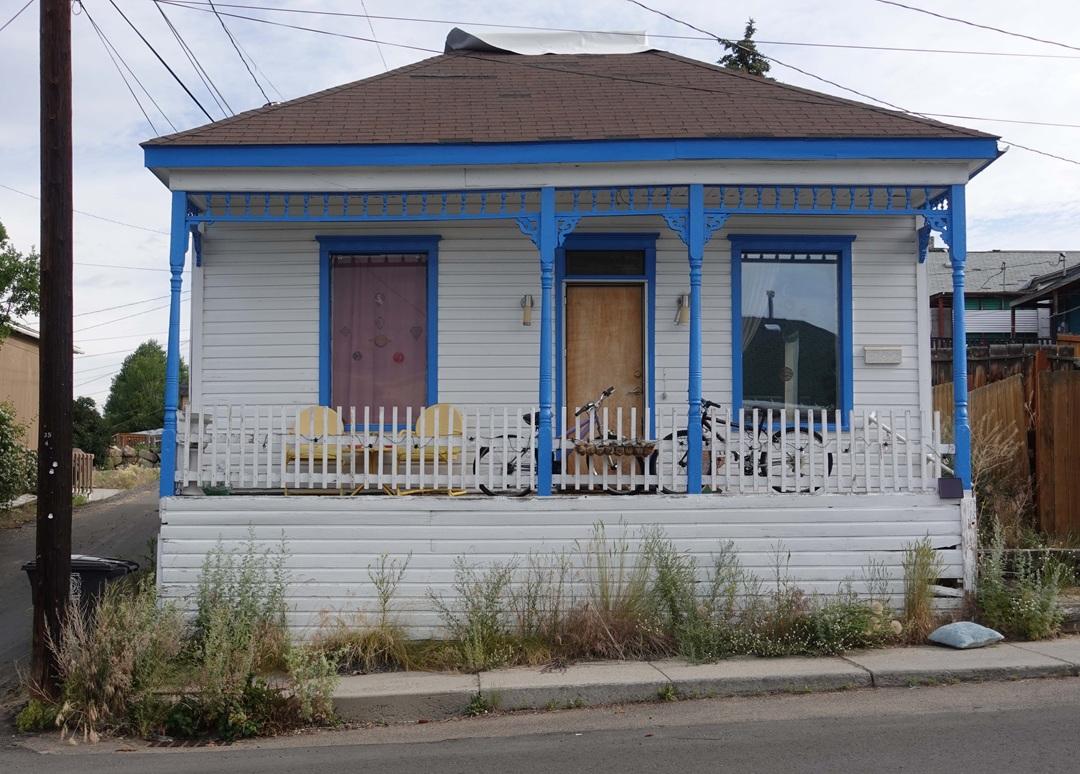
    <summary type="html"><![CDATA[<p><strong><em>This hipped-roof cottage was occupied by the same family for 56 years.</em></strong></p><img src="https://storyofbutte.org/files/fullsize/1641e5bd34629e9780995e8bcb1cbdeb.jpg" alt="[Untitled]" /><br/><p>Delphine DeMordaunt arrived in Montana in 1877 with her bartender husband Julius, a charming and well-read Civil War veteran, who subscribed to forty-five newspapers a week. After Julius died in 1902, Delphine applied for a war widow’s pension; that, with the money she earned as a dressmaker at Hennessy’s Department Store, allowed her to purchase this house on contract from the Daniel J. Hennessy estate in 1908. Five-room, hipped-roof cottages with daylight basements and full-length front porches are one of Butte’s most common housing forms. Inexpensive and quick to build, these foursquare homes resemble company housing in southern mill towns and other communities with large working-class populations. Constructed between 1900 and 1908, this brick-veneered hipped-roof cottage looks much as it did when Delphine moved here with her eighty-two-year-old mother. By 1920, her grandson Paul managed a theater, helping to support Delphine and her daughter-in-law Theresa. After Delphine’s death in 1924 at age seventy-one, Theresa—also a seamstress—continued in residence. She remained here until shortly before her death at age eighty-seven in 1964. </p><p><em><strong><a href="https://storyofbutte.org/items/show/3574">For more view the original article</a></strong></em></p>]]></summary>
    <published>2025-12-04T00:25:09+00:00</published>
    <updated>2026-08-10T18:23:46+00:00</updated>
    <link rel="alternate" type="text/html" href="https://storyofbutte.org/items/show/3574"/>
    <id>https://storyofbutte.org/items/show/3574</id>
    <author>
      <name>Story of Butte</name>
    </author>
  </entry>
  <entry>
    <title type="html"><![CDATA[McGlone Heights]]></title>
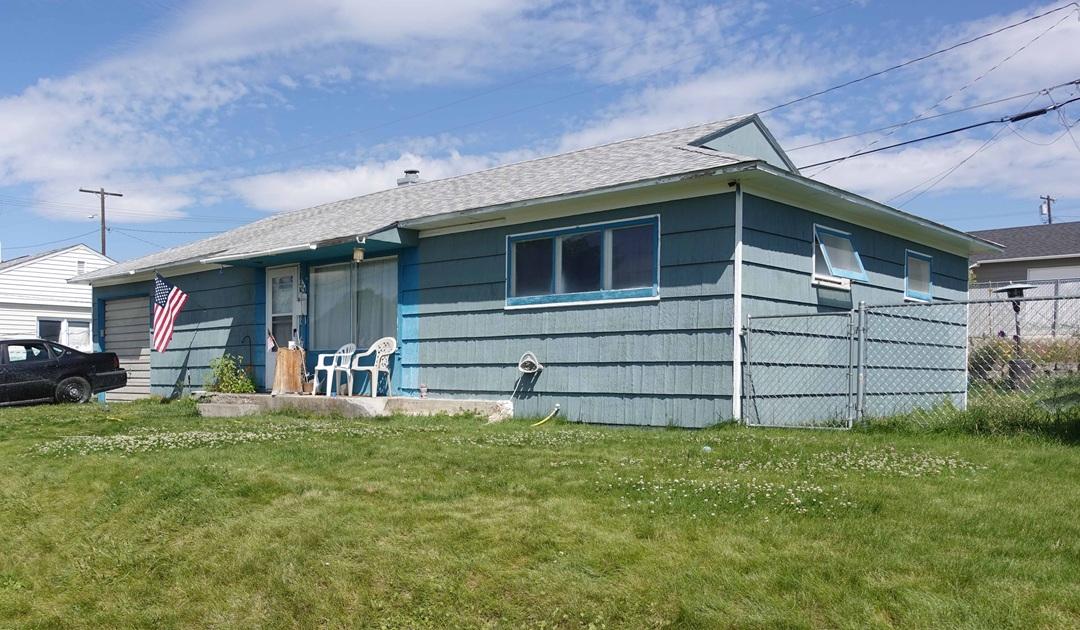
    <summary type="html"><![CDATA[<p><strong><em>As ACM embarked on the Greater Butte Project in 1947, which led to sinking the Kelley shaft and developing a block-cave operation to extract greater volumes of low-grade ore from underground workings, the company also began real estate developments in Butte to enhance the housing available for miners and their families. </em></strong></p><img src="https://storyofbutte.org/files/fullsize/4c885865b752e02e806fe0e79cc536f7.jpg" alt="McGlone Heights, 825 14th Street" /><br/><p>The work was undertaken by Kenwood Realty Company, an ACM subsidiary with offices in the Tuttle Block, in cooperation with the Butte Development Association (BDA). The first projects were the construction of dozens of houses on the Flat in the Grand Avenue Addition and the Development Addition.</p><p>Construction of the 125 houses in McGlone Heights, in the northwest part of Butte, north of Lexington Street and along both sides of North Excelsior, employed partially prefabricated structures made by Farwest Homes, which had a factory at Chehalis, WA, south of Olympia. Farwest Homes was a company started by Willard A. Wollander, a native of Minnesota. He had attended college, but he had no formal training in architecture. In 1940, at age 34, Wollander and his family moved to Olympia, where he started a lumber yard and building-supply business. He soon started contracting and marketing house designs. He moved to Tacoma in 1948 to expand his business. About the same time, he started a business making prefabricated houses, establishing a factory in Chehalis and selling his structures along the Pacific Coast and as far east as Ohio. Contractors working on houses in McGlone Heights were able to place three foundations each day and complete several houses each week. The houses in the Development Addition were also prefabricated by Farwest Homes. Kenwood Realty sold many of the houses as soon as they were completed, and it retained others as rental property.</p><p>McGlone Heights was named for Edward S. McGlone in August 1952 at a dinner given in his honor on the occasion of his being named executive vice president of ACM. Born in Nebraska in 1899, McGlone graduated from the Colorado School of Mines in 1923, after which he moved to Butte to work for the Davis-Daly Mining Company. When ACM bought that company in 1924, he went to work as a mucker in the Tramway mine, progressing to sampler, shift boss, and foreman. From there, he moved up to general superintendent of mines, vice president of western operations in 1946, and executive vice president in 1952. During his time in charge of ACM’s western operations, he oversaw the launching of the Greater Butte Project and the conversion of the Thornton Hotel into the ACM Employees Club. He retired from ACM in 1968 and moved to Florida. McGlone, who died in 1973, was inducted into the Colorado Sports Hall of Fame posthumously in 1977; he was said to have been the “greatest football player ever to represent the Colorado School of Mines.”</p><p><em><strong><a href="https://storyofbutte.org/items/show/3573">For more (including 8 images) view the original article</a></strong></em></p>]]></summary>
    <published>2025-11-18T18:04:10+00:00</published>
    <updated>2026-04-17T19:58:11+00:00</updated>
    <link rel="alternate" type="text/html" href="https://storyofbutte.org/items/show/3573"/>
    <id>https://storyofbutte.org/items/show/3573</id>
    <author>
      <name>Fred Quivik</name>
    </author>
  </entry>
  <entry>
    <title type="html"><![CDATA[Labor Unrest and the Anaconda Road]]></title>
    <summary type="html"><![CDATA[<p><strong><em>Butte’s first miners’ union was organized in 1878, when miners at the Alice and Lexington mines went on strike. The Alice Gold & Silver Mining Company and A.J. Davis acceded to the miners’ demands, and the Butte Workingmen’s Union formed.</em></strong></p><img src="https://storyofbutte.org/files/fullsize/8f1942310cae5df3d6ae1d76551a4fc7.jpg" alt="Anaconda Road in Vicinity of the Anaconda Road Massacre" /><br/><p>The union movement grew, in part because the mining industry in Butte was rapidly growing at the time, with many new companies launching operations. Being in a remote part of the United States, far from population centers, Butte faced labor shortages, so the mining companies had to compete to find workers, putting labor unions in a strong bargaining position. The Butte Workingmen’s Union changed its name to the Butte’s Miners’ Union (BMU) in 1885 and helped to form local unions to represent other trades in the mining industry as well as trades working in the broader Butte economy. In 1886, the BMU assembled those other local unions into the Silver Bow Trades and Labor Assembly. The BMU hosted delegates from fifteen other mining districts in 1893 to form the Western Federation of Miners, with the BMU emerging as Local No. 1. At the turn of the twentieth century, unions in Butte represented such trades as brewers, beer wagon drivers, horseshoers, musicians, stagehands, and theater ushers, as well as miners, mill and smelter workers, and hoisting engineers. Butte was known as the “Gibraltar of Unionism.” </p><p>That setting for the union movement remained until 1910, when all the major mining companies in Butte were consolidated in the hands of the Anaconda Copper Mining Company, and suddenly that one company no longer had to compete with its peers for scarce labor. In 1910, ACM announced that it would no longer recognize the BMU as bargaining agent for the miners. Thenceforth, men seeking employment in the mines would have to obtain a “rustling card” from ACM, which would research the background of each applicant. The company refused to issue rustling cards to men it deemed troublemakers or union agitators. Union membership was no longer an avenue for employment in the mines. This ushered in a period of labor unrest in Butte, with miners trying to regain recognition of their union and with dissention growing in the union itself between conservative and radical members. Discord within the union led to the dynamiting of the Miners Union Hall in 1914. By then, war had broken out in Europe, and global demand for copper increased. ACM sought to increase production to meet that demand, but continuing labor unrest thwarted the company’s efforts. When the United States entered the war in April 1917, instituting conscription to draft soldiers, many miners in Butte resisted. The situation was compounded in June 1917, when a fire in the Granite Mountain mine killed 165 miners working underground. Frank Little, an organizer for the Industrial Workers of the World (IWW), arrived in Butte to try leveraging the Granite Mountain disaster to organize miners into a new industrial union. One night in August, masked men broke into his rooming house, tied him to the bumper of a car, and dragged him to a railroad trestle on the southwest edge of town, where they lynched him. No one was ever indicted for <a href="https://storyofbutte.org/tours/show/100" target="_blank" rel="noreferrer noopener">Little’s murder</a>, but many in Butte believed he had been killed by ACM agents. </p><p>Labor unrest in Butte continued through the end of the decade, as the First World War ended and demand for copper declined. The IWW organized a strike against ACM in 1919 and another in April 1920. During the latter strike, the IWW established pickets near the Never Sweat mine where railroad tracks crossed Anaconda Road, which was the major street up Dublin Gulch that many miners used to walk to and from their shifts at ACM mines further up the Butte hill. Violence erupted on Anaconda Road on April 21. Earlier in the day, armed company guards, under the command of Roy Alley, assaulted some of the picketers, but the picketers refused to leave. Later in the day, after the sheriff had tried to convince the picketers to leave Anaconda Road, the gunmen under Alley’s command started firing on the pickets, who had turned to run. Sixteen men were wounded, all of them shot in the back, and one man, Thomas Manning, later died of his wounds in the hospital. Although Alley had claimed that the first shot had come from a boarding house along Anaconda Road, police officers and detectives who were on the scene later testified that all the gunfire had come from the company gunmen. </p><p>Miners in Butte remained unrepresented by a union until 1934 when, under protection of New Deal legislation intended to protect union-organizer efforts, the Butte Miners Union was once able to gain recognition by ACM as a local of the International Union of Mine, Mill, and Smelter Workers.</p><p><em><strong><a href="https://storyofbutte.org/items/show/3572">For more (including 5 images) view the original article</a></strong></em></p>]]></summary>
    <published>2025-11-18T17:45:21+00:00</published>
    <updated>2026-04-17T19:58:11+00:00</updated>
    <link rel="alternate" type="text/html" href="https://storyofbutte.org/items/show/3572"/>
    <id>https://storyofbutte.org/items/show/3572</id>
    <author>
      <name>Fred Quivik</name>
    </author>
  </entry>
  <entry>
    <title type="html"><![CDATA[Miners&#039; Cottages]]></title>
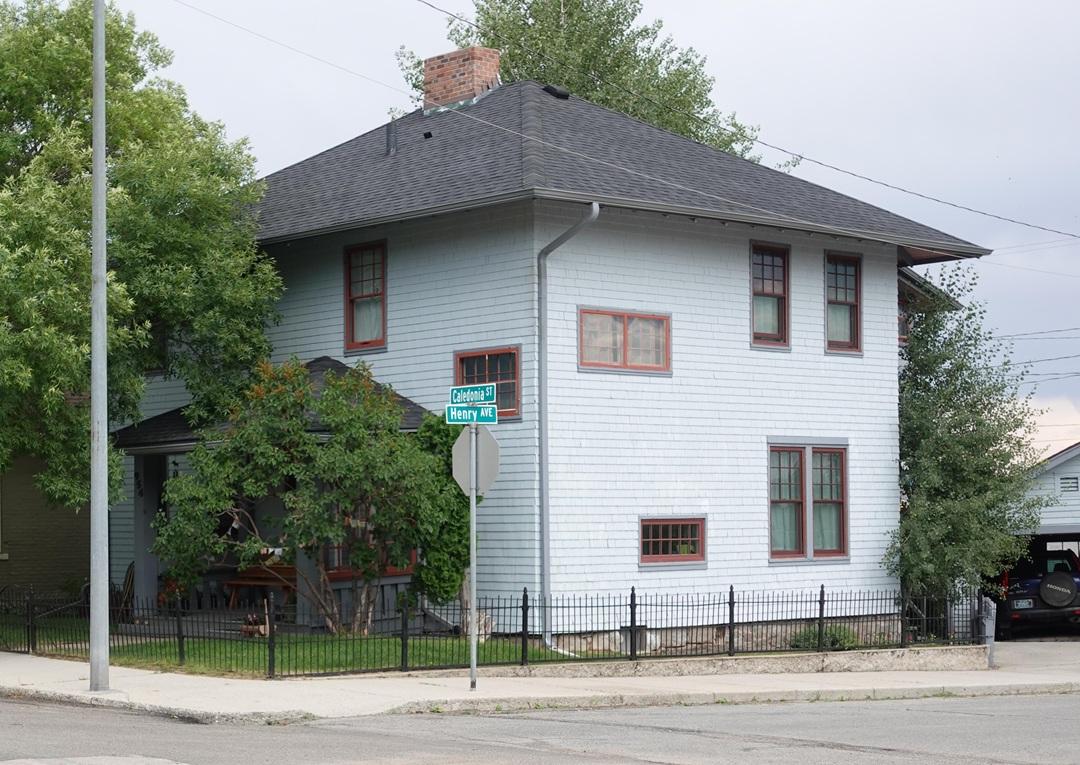
    <summary type="html"><![CDATA[<p><strong><em>The Anaconda Company was by far the largest employer in Butte, especially after the consolidation of the Amalgamated companies into ACM in 1910.</em></strong></p><img src="https://storyofbutte.org/files/fullsize/d24d4e34fb72a0d23957b7c05e1eaa8c.jpg" alt="Miner’s Cottage at 605 W. Caledonia" /><br/><p>Most of those ACM employees in Butte worked in the mines. There are several miners’ neighborhoods in Butte that are largely extant. Excellent examples are the houses on the 500 block of Franklin, the 600 block of Caledonia, and the 400 block of Virginia. Most of these houses were built before 1900, and the rest were built shortly thereafter. The predominant housing type is the hipped-roof miner’s cottage, a simple four-square, wood-frame structure with a front porch.</p><p>According to the U.S. Census of Butte for 1920, heads of households on the 500 block of Franklin included eleven miners, a few hoisting engineers, a pumpman, a boiler maker, a diamond drill setter, a steam fitter, a laborer, and a mine boss. These individuals worked at such mines as the Nettie, High Ore, Elm Orlu, Original, Badger State, Bell, and Leonard. Jobs of other heads of households included a bookkeeper, a housekeeper, a yard master for a railroad, a seamstress, a carpet layer, a cigar store salesman, and a commercial traveler. Many of the families were Irish. Scotland, England, Germany, Austria, and Canada were also represented, as well as families from Ohio, Iowa, and Pennsylvania. The families at 520, 522, and 530 Franklin were from Finland. Occupations of families living along Caledonia were similar. One household headed by Margaret Buchanan, a Canadian, included her three adult sons, all of whom were miners, with one working at the Colusa and one at the Never Sweat.</p><p>Residents living along the 300 and 400 blocks of Virginia were much more likely to be miners. Of thirty-five households along those two blocks, twenty-one included miners. Some were heads of households, and some were living with their mothers who were the head-of-household. Men living in these two blocks of Virginia worked at mines like the Black Rock, Original, Anaconda, Mountain View, Speculator, High Ore, and Steward. Thirteen heads of households were women, including some widows. Some of the women worked outside the home at jobs like nurse, housekeeper, dressmaker, washer woman, and milliner. In addition to being miners, these children had jobs such as a wrapper in a laundry, teamster, clerk, and timekeeper. Other men who were heads of households worked as janitor, bartender, carpenter in the mines, and blacksmith. At least nineteen of the households were Irish, six were English, and two Austrian.</p><p><em><strong><a href="https://storyofbutte.org/items/show/3571">For more (including 4 images) view the original article</a></strong></em></p>]]></summary>
    <published>2025-11-18T17:25:05+00:00</published>
    <updated>2026-04-17T19:58:11+00:00</updated>
    <link rel="alternate" type="text/html" href="https://storyofbutte.org/items/show/3571"/>
    <id>https://storyofbutte.org/items/show/3571</id>
    <author>
      <name>Fred Quivik</name>
    </author>
  </entry>
  <entry>
    <title type="html"><![CDATA[Hotel-Apartments Rented by Top ACM Officials]]></title>
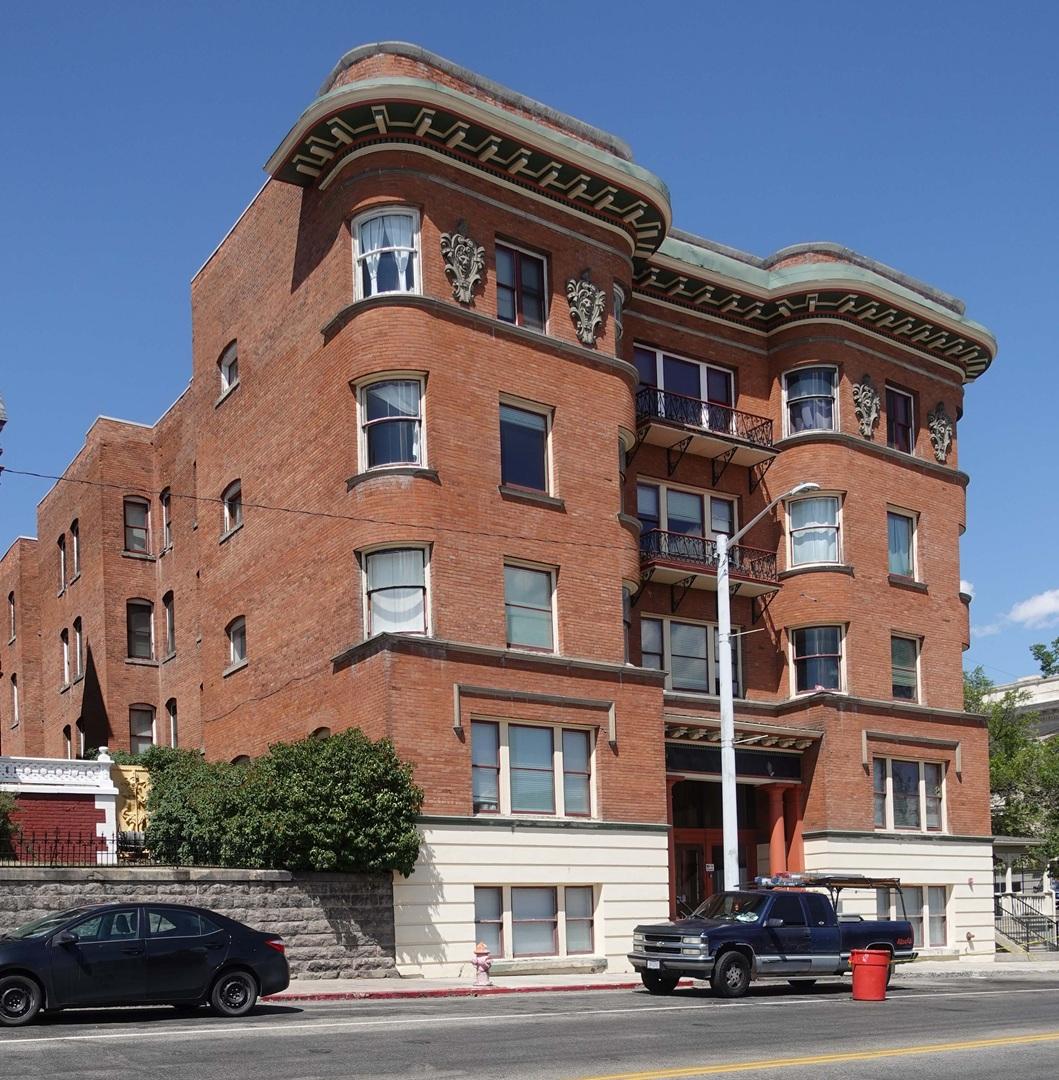
    <summary type="html"><![CDATA[<p><strong><em>Many of the men who worked in high-level positions for ACM lived in hotels, at least for the first few years they were in Butte. Some of those individuals eventually built houses, while others continued to rent rooms during their entire time in Butte. </em></strong></p><img src="https://storyofbutte.org/files/fullsize/ece372146693b9e0ec251a21dce594b5.jpg" alt="Leonard Hotel, 205 W. Granite" /><br/><p>One of the fancy accommodations that housed prominent ACM officials was the Leonard Hotel. Designed by architect W.A. O’Brien, when it opened in 1906, it was touted as one of the most fashionable places to live in Butte. Accommodations ranged from single rooms to suites. There was a spacious lobby, and a café in the basement. Among the prominent ACM officials who lived in the Leonard were geologist Reno Sales, who lived there for three years before building his house at 954 Caledonia, and attorney William Scallon, who served as president of ACM from 1900, when Marcus Daly died, until 1904, when he resigned and returned to being an ACM attorney. He moved into the Leonard when it opened in 1906, and Sales moved to the Leonard a year later. </p><p>The Lenox Hotel and the Beresford Block were both popular abodes for ACM officials. Built in 1897, the Lenox was on the south side of West Granite just west of the Butte Water Company building (formerly the Independent Telephone Company). Con Kelley and L.O. Evans both lived in the Lenox in 1903, and Horace Winchell lived there from 1901 to 1903. The Beresford, once across Quartz Street from the Butte-Silver Bow Public Archives, was built in the early 1890s. William Scallon lived there in 1893.</p><p>Another prominent building for housing ACM officials was the Kingsbury, once located at the site of the Archives parking lot on the northwest corner of Quartz and Main. This made the Kingsbury a convenient place for Anaconda officials to live when offices of the company were located on the upper floors of the Chambers Block and the Tuttle Block. Marcus Daly, engineer Charles Goodale, and attorney D. Gay Stivers all lived in the Kingsbury.  Like the Tuttle Block, the Kingsbury (built in 1882) was originally a two-story building, and a third floor was added in about 1890 or 1891. It had store fronts on the ground floor and offices and sleeping rooms for rent on the upper floors.</p><p>Unlike John D. Ryan and Con Kelley, early ACM presidents who owned mansions on Butte’s West Side, Benjamin B. Thayer, who was ACM president for seven years, never owned his own house in Butte (nor did Marcus Daly). Thayer was born in San Francisco in 1862. He graduated in 1885 from Harvard University, where he was a classmate of William Randolph Hearst, George and Phoebe Hearst’s son. After graduating, he moved to Butte to pursue a career as a mining engineer. His first job in Butte was as a miner in the Anaconda mine. After being promoted to shift boss and then foreman, he moved to Phillipsburg, MT, and the Coeur d’Alene mining district in Idaho for a few years to work in the mining industry. He then began to work for Phoebe Hearst representing the Hearst estate’s mining interest. In the early twentieth century, he worked for Amalgamated as assistant to H.H. Rogers and soon became vice president of ACM. He served as ACM president from 1908 to 1915 and again as vice president until his death in 1933. During his long service with ACM, he also served as an officer of numerous ACM subsidiaries.  He lived on the top floor of the Silver Bow Club until he moved to New York in 1916.</p><p>Foremost among the ACM attorneys who never owned a dwelling in Butte was W.W. Dixon. William Wirt Dixon was born in Brooklyn, NY, in 1838 and gradually moved westward, studying law in Keokuk, Iowa, and arriving in California in 1862. He then moved to Nevada, Helena, Deer Lodge, and the Black Hills before arriving in Butte in 1881. He established a law practice and began to provide legal counsel to Marcus Daly and J.B. Haggin as they launched their Anaconda enterprise. With his law offices first in the Chambers Block and then the Tuttle Block, he was instrumental in helping to incorporate the 1891 Anaconda Mining Company and the 1895 Anaconda Copper Mining Company. When the Hennessy Building was completed in 1899, he moved his office to the sixth floor and took the title of ACM attorney. He died in 1910 in Los Angeles, where he had been living for two years. While living and working in Butte, he moved from one rental abode to another, ending his time in Butte at the Dorothy Block at the northeast corner of Granite and Wyoming.</p><p><em><strong><a href="https://storyofbutte.org/items/show/3570">For more (including 6 images) view the original article</a></strong></em></p>]]></summary>
    <published>2025-11-18T17:07:29+00:00</published>
    <updated>2026-04-17T19:58:11+00:00</updated>
    <link rel="alternate" type="text/html" href="https://storyofbutte.org/items/show/3570"/>
    <id>https://storyofbutte.org/items/show/3570</id>
    <author>
      <name>Fred Quivik</name>
    </author>
  </entry>
  <entry>
    <title type="html"><![CDATA[Apartment Dwellings Rented by Top ACM Officials]]></title>
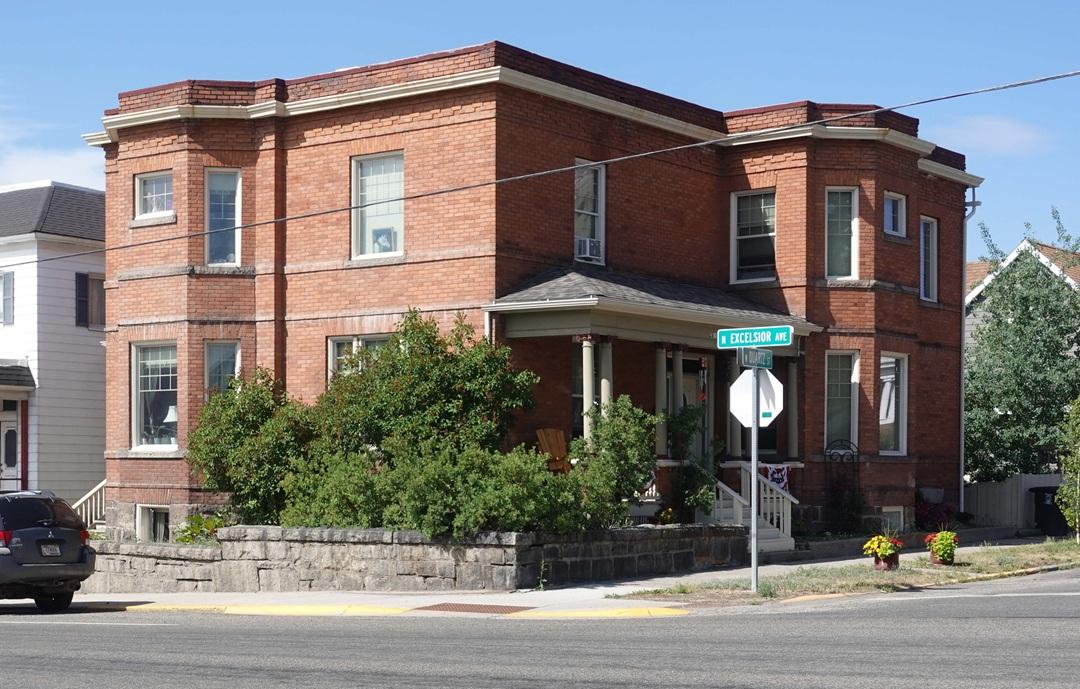
    <summary type="html"><![CDATA[<p><strong><em>A duplex at the southwest corner of Quartz and Excelsior, built in 1902 by Charles Huff, is an excellent example of a dwelling occupied but not owned by prominent ACM officials. </em></strong></p><img src="https://storyofbutte.org/files/fullsize/6529babe2148418438be92f850ceeaf6.jpg" alt="C.W. Goodale Residence, 900 W. Quartz" /><br/><p>Charles W. Goodale, who had a degree in mining and geology from the Massachusetts Institute of Technology, began his career in Butte in 1885 as agent and manager of the Gagnon mine, moving to mining manager of the Colorado Smelting & Mining Company when it acquired the Gagnon. He lived in the Kingsbury during those years. In 1898, he moved to Great Falls to work for the Boston & Montana Consolidated Copper & Silver Mining Company (B&M). When he returned to Butte in 1902 to manage the B&M’s operations, he moved into 900 W. Quartz, which is the more formal entrance to the duplex at Quartz and Excelsior. After the B&M was absorbed into ACM, Goodale was manager of the B&M Department of ACM. In 1916, he was made chairman of ACM’s Bureau of Safety. After more than twenty years living at 900 W. Quartz, he moved into rooms in the Silver Bow Club.</p><p>The address of the southern unit of the duplex is 223 N. Excelsior. Its first occupant, John D. Ryan, was even more prominent than Goodale. When he moved into the duplex in 1902, he was president of the Daly Bank & Trust Company. He lived there until 1906, when he acquired the Hodgens mansion at the northwest corner of Broadway and Excelsior. By that time, he was managing director of Amalgamated Copper and was soon to become Amalgamated president and then ACM president.</p><p><em><strong><a href="https://storyofbutte.org/items/show/3569">For more (including 3 images) view the original article</a></strong></em></p>]]></summary>
    <published>2025-11-17T18:08:01+00:00</published>
    <updated>2026-04-17T19:58:11+00:00</updated>
    <link rel="alternate" type="text/html" href="https://storyofbutte.org/items/show/3569"/>
    <id>https://storyofbutte.org/items/show/3569</id>
    <author>
      <name>Fred Quivik</name>
    </author>
  </entry>
  <entry>
    <title type="html"><![CDATA[James R. Hobbins Residence]]></title>
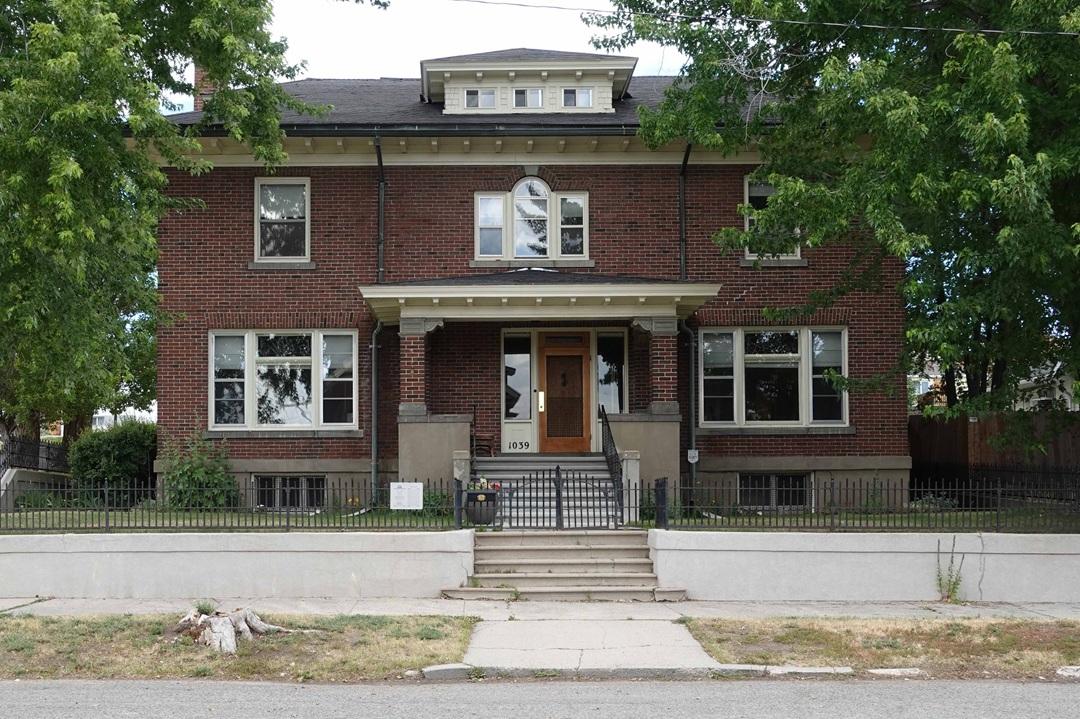
    <summary type="html"><![CDATA[<p><strong><em>James R. Hobbins is important in the history of the Anaconda Copper Mining Company for embodying the close relationship between that company and the Montana Power Company. </em></strong></p><img src="https://storyofbutte.org/files/fullsize/4d05c68bd18154f6929dbe67bddd6e50.jpg" alt="James R. Hobbins Residence, 1039 W. Broadway" /><br/><p>The link between the two companies was exhibited in 1922 when Hobbins, a senior official with Montana Power, was appointed assistant to ACM president and then, in 1923, named ACM vice president for ACM’s western operations. By then, ACM owned not only mines and smelters in the western U.S. but mining operations in Mexico and Chile, refineries in the Midwest and East, and copper and brass fabricating operations in New England.</p><p>J.R. Hobbins was born in 1883 in Madison, Wisconsin, where he attended the University of Wisconsin. After working for a fire-insurance company in Wisconsin for six years, he moved west in 1910, working as a surveyor for an electrical company in California and New Mexico and for a street railway company in Colorado before moving to Great Falls in 1912. He went to work for the Great Falls Power Company before it merged into the Montana Power Company later in 1912. His first job there was as foreman of a construction crew, and he was soon promoted to managing the extension of MPC’s power lines into northern Montana. In 1915, he moved to Butte to work in MPC’s headquarters in charge of the lands and right-of-way department. A year later, he returned to Great Falls after being promoted to position of MPC district manager for northern Montana. In 1922, when ACM appointed him to work as assistant to ACM president C.F. Kelley, Hobbins moved back to Butte, where his office was on the sixth floor of the Hennessy Building. A year later, ACM named him vice president and put him in charge of all ACM operations in Montana. When ACM named Hobbins executive vice president in 1936, he moved to New York City. When Kelley moved from the position of ACM president to chairman of ACM board of directors in 1940, Hobbins was named president of ACM. He served in that capacity until he died in 1949.</p><p>When Hobbins and his family moved to Butte in 1922, they first lived at 407 West Broadway, one of the Largey apartments. In 1925, they purchased the residence of William C. Orton, one of the Orton Brothers who owned a musical instrument store in Butte.</p><p><em><strong><a href="https://storyofbutte.org/items/show/3568">For more view the original article</a></strong></em></p>]]></summary>
    <published>2025-11-17T17:36:00+00:00</published>
    <updated>2026-04-17T19:58:11+00:00</updated>
    <link rel="alternate" type="text/html" href="https://storyofbutte.org/items/show/3568"/>
    <id>https://storyofbutte.org/items/show/3568</id>
    <author>
      <name>Fred Quivik</name>
    </author>
  </entry>
  <entry>
    <title type="html"><![CDATA[Reno Sales Residence]]></title>
    <summary type="html"><![CDATA[<p><strong><em>Reno Sales was a mining engineer who is widely credited with building ACM’s Geological Department into an organization of world renown for integrating the exploration, development, and operation of a large group of underground mines such as those found beneath the Butte hill. </em></strong></p><img src="https://storyofbutte.org/files/fullsize/abb07d9cc9ceb01431f6bdf063e3968b.jpg" alt="Reno Sales Residence, 954 Caledonia" /><br/><p>A native of Iowa, Sales had moved with his family to the Gallatin Valley as a boy. He graduated from Montana State College in Bozeman in 1898 with a degree in mining engineering. Two years later, he graduated from Columbia University’s School of mines with another degree in mining engineering. He immediately moved to Butte and took a job in the Boston & Montana’s engineering department. In 1901, the B&M was acquired by Amalgamated, and Sales accepted a position as assistant mining engineer in Amalgamated’s Geological Department. That organization had got its start in 1897 when Marcus Daly hired Canadian-born mining engineer David W. Brunton to work in ACM’s mines.</p><p>When Daly hired Brunton, ACM’s mines were growing in depth and production, and the complexity of ACM operation needed engineering expertise. The famous litigation over mining rights on the Butte hill was also getting underway. Brunton recognized that he needed the expertise of a trained geologist to help him to better organize the company’s mining operations and to defend the company’s mining rights in court. Brunton hired Horace V. Winchell who, like Brunton, had received his college education at the University of Michigan. Winchell was the person who organized ACM’s geological efforts into a Geological Department and, together with Brunton, innovated ACM’s system of mapping the underground. Meanwhile, about the time Sales joined, ACM’s Geological Department expanded to be Amalgamated’s Geological Department. Winchell and Sales played key roles in discovering Heinze’s violations of Amalgamated’s mining rights in Butte’s underground mine workings. When Winchell left Butte in 1906, shortly after Amalgamated’s conflicts with Heinze were resolved, Sales was appointed chief geologist at the Geological Department. And after all Amalgamated’s Butte operations were consolidated into ACM in 1910, Sales became chief geologist of ACM’s Geological Department. In 1914, all ACM’s mining engineering was placed under the direction of Sales’ Geological Department. He populated his staff mainly with mining engineers, reasoning that the basic training a mining engineer received in geology was sufficient, and the most important task of his department had was the efficient engineering of the underground workings. His department also trained young engineers in the “Anaconda System” in the Butte mines to prepare them for assignments at ACM’s other properties in the U.S. and elsewhere.</p><p>During Sales first decade in Butte, he lived in such rented accommodations as the Lenox on West Granite, the Beresford across Quartz from the old Quartz Street Fire Station (today’s Butte-Silver Bow Public Archives), and the Leonard on West Granite. He built his house at 954 Caledonia in 1910.</p><p><em><strong><a href="https://storyofbutte.org/items/show/3567">For more view the original article</a></strong></em></p>]]></summary>
    <published>2025-11-17T17:29:45+00:00</published>
    <updated>2026-04-17T19:58:11+00:00</updated>
    <link rel="alternate" type="text/html" href="https://storyofbutte.org/items/show/3567"/>
    <id>https://storyofbutte.org/items/show/3567</id>
    <author>
      <name>Fred Quivik</name>
    </author>
  </entry>
  <entry>
    <title type="html"><![CDATA[L.O. Evans Residence]]></title>
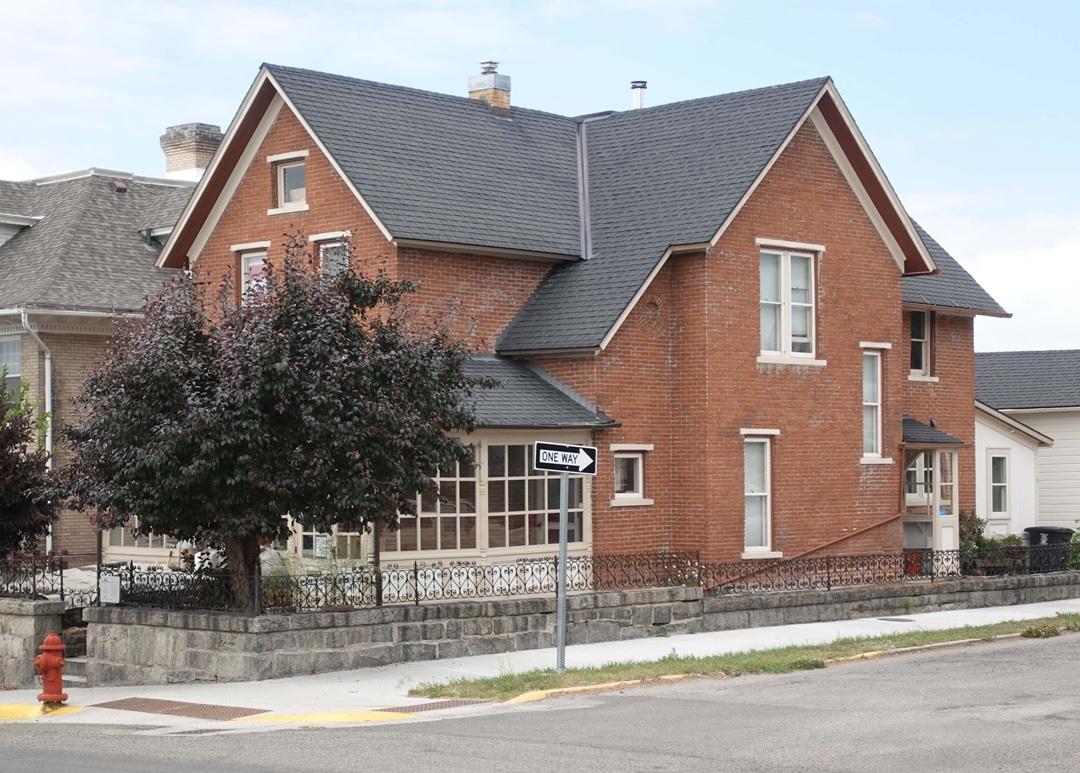
    <summary type="html"><![CDATA[<p><strong><em>L.O. Evans was a long-time attorney with ACM. He was born Lewis Orvis Evans in 1871 in Utica, New York. In 1883, he moved with his family to Helena, where he graduated from Helena High School in 1887. </em></strong></p><img src="https://storyofbutte.org/files/fullsize/2e82acebd35995ce5efb3a1544a80eea.jpg" alt="L.O. Evans Residence, 849 W. Galena" /><br/><p>In an era when many lawyers entered the profession by studying in a law office, he went to work in the Helena firm of Word and Smith. Evans was admitted to the practice of law in 1894. Prominent Butte attorney John F. Forbis had met Evans on visits to the Word and Smith firm, so he offered Evans a job. The two soon formed the firm Forbis and Evans in Butte, often representing mining companies, including the Butte & Boston and the Boston & Montana, in litigation over mining rights. When the Hennessy Building was built in 1899, Forbis and Evans moved their offices to the sixth floor and began representing Amalgamated subsidiaries. During the first decade of the twentieth century, Evans joined Con Kelley and other attorneys in representing the Amalgamated companies in the litigation against F. Augustus Heinze and in litigation against farmers who had filed complaints against the mining companies whose tailings and smelter smoke were damaging crops and soils in the Deer Lodge Valley. When all the Amalgamated companies’ operations were transferred to ACM in 1910, Evens joined ACM’s legal department. He was named chief counsel for ACM in 1914 and general counsel in 1920. He was still serving as ACM’s general counsel when he died in 1931.</p><p>W.A. O’Brien, architect of Kelley’s mansion on West Park, also designed Evans’ house at the northeast corner of Galena and Excelsior (849 W. Galena), built in 1906. Prior to building his own house, Evans rented living quarters elsewhere in Butte, including at the Lenox on West Granite, where a number of other ACM officials lived in the late nineteen and early twentieth centuries. In the four years before his house was completed, Evans lived in a small apartment at the southwest corner of Broadway and Alabama, which is across Broadway from the A.J. Campbell residence, another of W.A. O’Brien designs. A native of Massachusetts, O’Brien lived in Butte for 56 years before he died in June 1940. During that time, he designed many prominent residences and important buildings, and he served as the architect for the Butte School Board for 18 years.</p><p><em><strong><a href="https://storyofbutte.org/items/show/3566">For more (including 3 images) view the original article</a></strong></em></p>]]></summary>
    <published>2025-11-17T17:16:20+00:00</published>
    <updated>2026-04-17T19:58:11+00:00</updated>
    <link rel="alternate" type="text/html" href="https://storyofbutte.org/items/show/3566"/>
    <id>https://storyofbutte.org/items/show/3566</id>
    <author>
      <name>Fred Quivik</name>
    </author>
  </entry>
  <entry>
    <title type="html"><![CDATA[John Gillie Residence]]></title>
    <summary type="html"><![CDATA[<p><strong><em>John Gillie was a long-standing mining engineer for ACM. He was born in Ottawa, Ontario, Canada in 1858. After graduating with a degree in civil and mining engineering from St. Joseph College (now the University of Ottawa) in 1879, he headed to the western U.S., arriving in Butte in early 1880.</em></strong></p><img src="https://storyofbutte.org/files/fullsize/cd3226f7c95b2067a5167e2e15d27eb2.jpg" alt="John Gillie Residence, 27 N. Excelsior" /><br/><p> Butte was starting to boom as a copper-mining camp, but companies were more interested in hiring practical miners than college-educated engineers, so he continued west to Phillipsburg, a prosperous silver camp, and found work with the Hope Mining Company. While in Phillipsburg, he met one of the principals in the engineering firm Ringeling & Kellog, which had offices on the second floor of the Chambers Block in Butte. In 1884, after a year in Butte, he moved to the Coeur d’Alene mining district in Idaho, which was rapidly developing as a producer of silver and lead. Returning to Butte the following year, he joined with E.H. Wilson to form the engineering firm Wilson & Gillie, Civil & Mining Engineers, who served mining companies throughout Montana and in neighboring states. Gillie built his house at the southwest corner of Broadway and Excelsior (27 N. Excelsior) in about 1890. It was one of the first houses in Butte built west of Excelsior.</p><p>When the Wilson & Gillie partnership dissolved in 1899, Marcus Daly hired Gillie to work as an examining engineer to investigate mining properties elsewhere in the West. In 1900, he was appointed superintendent of the Boston & Montana Mining Company. The following year, after the Butte & Boston (B&B) and the Boston & Montana (B&M) companies were acquired by Amalgamated, the holding company appointed him superintendent of mines for all the Amalgamated companies, which included the B&B, B&M, Anaconda, Parrot, Colorado, and Washoe. Although each company still owned and operated its own mines, Gillie began the process of integrating mining operations on the Butte hill. Gillie’s office was on the sixth floor of the Hennessy Building, along with the offices of the other top Amalgamated officials. When Amalgamated dissolved in 1915, ACM named him general manager of mines, and appointed William B. Daly as superintendent of mines. Gillie retired as general manager in 1924, and Daly took his position. For a couple years thereafter, Gillie held the title consulting engineer for ACM before he retired completely. He died in 1941. The following year, his family donated a Charles M. Russell painting, “The Grey Wolf,” to the Montana School of Mines. Gillie had been on the commission appointed in 1896 to supervise design and construction of the first building at the School of Mines. Other members of the commission were F.E. Sargeant (secretary of ACM), C.W. Goodale (supt. of mines at the Colorado Smelting & Mining Company), W.W. Dixon (ACM attorney), and John H. Leyson.</p><p>John Gillie was said to have owned the first automobile in Butte. He and his wife drove it in Butte’s Fourth of July Parade in 1900.</p><p><em><strong><a href="https://storyofbutte.org/items/show/3565">For more view the original article</a></strong></em></p>]]></summary>
    <published>2025-11-17T17:09:06+00:00</published>
    <updated>2026-04-17T19:58:11+00:00</updated>
    <link rel="alternate" type="text/html" href="https://storyofbutte.org/items/show/3565"/>
    <id>https://storyofbutte.org/items/show/3565</id>
    <author>
      <name>Fred Quivik</name>
    </author>
  </entry>
  <entry>
    <title type="html"><![CDATA[Cornelius F. Kelley Mansion]]></title>
    <summary type="html"><![CDATA[<p><strong><em>Cornelius F. (Con) Kelley, along with John D. Ryan, was one of the two most prominent figures in ACM history after Marcus Daly. Con Kelley was born in 1875 in Nevada, where his father worked as a mill superintendent for George Hearst. </em></strong></p><img src="https://storyofbutte.org/files/fullsize/6022ebc01cad82134dbe076537a974c5.jpg" alt="Kelley Mansion, 829 W. Park" /><br/><p>The Kelley family moved to Butte in 1883, and Kelley’s father, who became a close associate of Marcus Daly, went to work as superintendent of the Bell mine. When Con Kelley graduated from Butte High School in 1892, Daly gave him a job as a surveyor in the mines. After two years, he left for college at the University of Michigan, returning to Butte each summer to work in ACM’s engineering department. After graduating with a law degree in 1898, Kelley opened a law practice in Butte, and the following year, he was appointed Chief Deputy County Attorney. Shortly after William Scallon became president of ACM, he hired Kelley to work in the company’s legal department. He became chief counsel in 1908 and was appointed ACM vice president in 1911. Kelley was instrumental in helping Ryan to consolidate the several major mining properties in Butte under the ownership and operation of ACM, and he played a similar role in helping ACM to acquire properties elsewhere in the U.S. and the Americas. He served as an officer of several of those subsidiaries. He became president of ACM when Ryan died in 1933 and chairman of ACM board of directors in 1940, at which time ACM vice president James R. Hobbins took over as president. Kelley chaired ACM board during the initiation of the Greater Butte Project, which resulted in the sinking of a new mineshaft. It was named the Kelley shaft. Con Kelley retired from ACM in 1955, when the company changed its name to The Anaconda Company. He died two years later.</p><p>When Kelley returned to Butte from law school, he lived with his family for a few years on North Main. After he joined the legal department of ACM, he lived in the Lenox on West Granite in 1903 and then for four years in one of the rowhouses on West Broadway built by the Largey estate. His rapid rise in ACM was demonstrated by the new mansion he built on West Park, immediately east of the D.J. Hennessy mansion at the corner of Park and Excelsior. Built in 1906, the house was designed by W.A. O’Brien. Like Ryan, Kelley moved to New York City after Amalgamated was dissolved, and ACM ran its global enterprise from New York.</p><p><em><strong><a href="https://storyofbutte.org/items/show/3564">For more (including 2 images) view the original article</a></strong></em></p>]]></summary>
    <published>2025-11-15T19:13:44+00:00</published>
    <updated>2026-04-17T19:58:11+00:00</updated>
    <link rel="alternate" type="text/html" href="https://storyofbutte.org/items/show/3564"/>
    <id>https://storyofbutte.org/items/show/3564</id>
    <author>
      <name>Fred Quivik</name>
    </author>
  </entry>
  <entry>
    <title type="html"><![CDATA[John D. Ryan Mansion]]></title>
    <summary type="html"><![CDATA[<p><strong><em>After Marcus Daly, ACM founder, John D. Ryan and Cornelius F. (Con) Kelley were the two most important figures in ACM history. Ryan was born in 1864 at Hancock, MI, in the heart of Michigan’s Copper Country, where his father worked in the mining industry.</em></strong></p><img src="https://storyofbutte.org/files/fullsize/9ff7ecb157c519ed62263cdd3414717f.jpg" alt="Ryan Mansion, 105 N. Excelsior" /><br/><p>After working as a clerk for his uncle’s general merchandise store for eight years, Ryan moved at age 25 to Denver, where he found work as a salesman for an oil company. His sales territory included Montana, and on a trip to Butte, he met Daly. In 1900, he moved to Butte and used his savings and an inheritance to purchase a share in Daly Bank & Trust. Ryan quickly impressed the Daly family, so when Daly died later in 1900, his estate named Ryan vice president and then president of the Daly Bank. Because Amalgamated ran its finances through the Daly Bank, Amalgamated president H.H. Rogers got to know Ryan and was impressed with him enough that he brought Ryan into the Anaconda and Amalgamated organizations. Ryan succeeded William Scallon as president of ACM, and he succeeded Rogers as president of Amalgamated in 1909. When Ryan became Amalgamated president, B.B. Thayer succeeded him as ACM president. And when Amalgamated was dissolved in 1915, and all its assets were transferred to ACM, Ryan returned to the presidency of ACM, and Thayer became vice president.</p><p>Meanwhile, soon after Ryan took charge of the Daly Bank, he started helping Daly’s widow to make investments on behalf of the Daly estate. Early investments began in 1903 when, using Daly money, he acquired the Boston and Great Falls Electric Light and Power Company, which owned a waterpower site at Black Eagle Falls in Great Falls, and the Great Falls Street Railway Company, which had gone into receivership the previous year. In the ensuing years, Ryan continued to acquire interests in hydroelectric properties in Montana, culminating with his formation of the Montana Power Company (MPC) in 1912. Several Montana electrical companies were merged into MPC, including Butte Electric and Power Company. Members of the initial MPC board of directors included Ryan, numerous financiers from New York City, and two of the men who had helped Ryan consolidate the Heinze properties into Amalgamated and ACM, W.D. Thornton and Thomas Cole. ACM and MPC continued to be closely affiliated corporations for several decades, as MPC supplied much-needed electricity to ACM’s expanding Montana operations.</p><p>After renting an apartment for five years, Ryan purchased the Hodgens residence at 105 N. Excelsior in 1906. Although Ryan moved his family to New York City shortly after the formation of MPC, he continued to use the house on Excelsior as his residence when he was in Butte.</p><p><em><strong><a href="https://storyofbutte.org/items/show/3563">For more (including 2 images) view the original article</a></strong></em></p>]]></summary>
    <published>2025-11-15T18:54:02+00:00</published>
    <updated>2026-04-17T19:58:11+00:00</updated>
    <link rel="alternate" type="text/html" href="https://storyofbutte.org/items/show/3563"/>
    <id>https://storyofbutte.org/items/show/3563</id>
    <author>
      <name>Fred Quivik</name>
    </author>
  </entry>
  <entry>
    <title type="html"><![CDATA[Thornton Building]]></title>
    <summary type="html"><![CDATA[<p><strong><em>William D. Thornton, a graduate of the Columbia University School of Mines in New York City, was a close associate of John D. Ryan. Thornton served as an officer of several of ACM’s subsidiaries, helped Amalgamated take control of F. Augustus Heinze’s copper properties in Butte, and helped Ryan form the Montana Power company. </em></strong></p><img src="https://storyofbutte.org/files/fullsize/81dfad020299b4a97d93ce0ffc3539e4.jpg" alt="Thornton Building" /><br/><p>Born in Deer Lodge in 1870, W.D. Thornton was the son of John C.C. Thornton, who had been a lawyer in Virginia before joining the Confederate Army when the Civil War began. After the war, Col. Thornton, as he was widely known, moved to Deer Lodge and practiced law. He moved to Butte in 1875 and began to invest in mines. He developed the Gagnon mine, just north of the Silver Bow County Courthouse, and it became one of the important early copper mines in Butte. When he sold the Gagnon to the Colorado Smelting & Mining Company, he became one of the company’s major stockholders. John Thornton died in 1887. In about 1890, his estate built a hotel on East Broadway. That building and other properties of the Thornton estate were managed by his widow and his son, William. In the late 1890s, the estate decided to build a much larger and grander building immediately to the east, at the northwest corner of Broadway and Wyoming. W.D. Thornton managed the development.</p><p>W.D. Thornton first entered ACM circles in 1906 when he helped Ryan and Ryan’s close associate, Thomas F. Cole, establish two new companies to acquire Heinze’s copper properties and operations in Butte: the Butte Coalition Mining Company, which would own Heinze’s companies; and the Red Metal Mining Company, which would be the new operating company owned by Butte Coalition. Thornton was vice president of Red Metal. Thornton next helped Amalgamated acquire the Greene Cananea Mining Company in Mexico. In 1908, Thornton, working on behalf of Amalgamated interests, signed a contract to build a new smelter at Tooele, Utah, to smelt ore for the Utah Consolidate Mining Company. This became the Utah smelter of the International Smelting & Refining Company. Ryan, on behalf of Amalgamated, acquired controlling interest in the Alice Gold & Silver Mining Company in 1910 and named Thornton to the board of directors. Ryan combined two copper-mining companies in Arizona in 1911 to form the Inspiration Consolidated Copper Company, and Thornton was made vice president. When Ryan incorporated the new Montana Power Company in 1912, Thornton was on the original board of directors. Later in the 1910s, Thornton moved New York City to work in ACM headquarters as a member of the board of directors. He died in 1953.</p><p>The Thornton Hotel was designed by architects White and Lignell of Butte and was intended to be one of the finest hotels in Butte. (Architect Anton Lignell, a Finnish immigrant, designed several other large Butte buildings, including the Hirbour Block at Broadway and Main, before he moved to Duluth, MN, and continued his architectural practice there.) In August 1899, shortly after excavation for the Thornton Hotel began, workers struck a rich vein of copper ore, briefly delaying construction. When the hotel opened for business in May 1901, one of its features was a bowling alley in the basement operated by I.A. Heilbronner. The Thornton closed as a hotel in 1932 and sat vacant for a few years. The State Liquor Control Board moved its East Broadway store across the street and into the Thornton Hotel in December 1936. ACM bought the Thornton Hotel in late 1945 and announced plans to remodel the building to serve as an employees club. The new club, featuring a refurbished bowling alley, game rooms, snack bar, ladies lounge, and a theater-ballroom suitable for large dinners, opened in March 1947. The building is currently owned by an individual who rents out office spaces.</p><p><em><strong><a href="https://storyofbutte.org/items/show/3562">For more (including 7 images) view the original article</a></strong></em></p>]]></summary>
    <published>2025-11-14T22:54:45+00:00</published>
    <updated>2026-04-17T19:58:11+00:00</updated>
    <link rel="alternate" type="text/html" href="https://storyofbutte.org/items/show/3562"/>
    <id>https://storyofbutte.org/items/show/3562</id>
    <author>
      <name>Fred Quivik</name>
    </author>
  </entry>
  <entry>
    <title type="html"><![CDATA[Hennessy Building]]></title>
    <summary type="html"><![CDATA[<p><strong><em>The Hennessy Building gets its name from Daniel J. Hennessy, a close associate of Marcus Daly.  Hennessy was born in New Brunswick, Canada, in 1854 and, while still a teenager, went to work in a local dry goods store. </em></strong></p><img src="https://storyofbutte.org/files/fullsize/5e210a237581a360fdc5236ad09d6903.jpg" alt="Hennessy Building" /><br/><p>He left New Brunswick in 1879 and started making his way west. When he arrived in Butte, he went to work for the Butte branch of E.L. Bonner and Company, the Missoula-based mercantile store. In the late 1880s, as the Clark-Daly feud got underway, Daly grew angry with the owners of the Bonner company, so he financed Hennessy to open the Hennessy Mercantile Company in 1886. That relationship continued when the company decided to build a new store at the southeast corner of Granite and Main in Uptown Butte. The building was owned by ACM and leased to Hennessy’s company for the new mercantile.</p><p>Excavation of the foundations began in September 1897, and construction was to continue that fall under the superintendence of Frank Jones, chief carpenter for the Anaconda company in Anaconda. The Anaconda firm of Smith and Black was the architect. Construction halted in November, however, for unknown reasons. Speculation included that the owners were still trying to buy the building to the south along Main Street, so the new building could be larger, and that the project was having trouble getting the order for structural steel filled in Chicago.</p><p>Hennessy announced in March 1898 that construction of the new building would resume, now under supervision of a new architect, Frederick Kees of Minneapolis. Kees had designed several prominent buildings in Minneapolis, including the City Hall and the Masonic Temple. The Gillette-Herzog Manufacturing Company, a steel fabricator that built bridges in Minnesota and across the northern tier of states, including Montana, would be the contractor. The firm also built steel headframes, including those at the Diamond, Steward, and High Ore mines. Steel for the structure of the Hennessy Building filled thirty railroad cars, which arrived from Minneapolis in April 1898. Erecting the steel led to a minor bit of labor unrest, when Gillette-Herzog brought union iron workers from the east to work on the project, and Butte unions objected. The issue was resolved when the contractor agreed to hire Butte men to work on the ground, and the local unions agreed to allow skilled iron workers from the east to work above the ground. Another labor issue arose in Fall 1898, when the Plasterers Union had a complaint against the contractor. The superintendent of construction for the Hennessy Building issued an ultimatum from ACM (not the Hennessy Mercantile Company) that the men return to work.</p><p>The Hennessey Mercantile Company opened its new store on November 21, 1898. A newspaper article in early December 1898 praised the new building’s architecture and lauded the colossal nature of the store itself, which occupied the basement and the first three floors. Regarding the upper three floors, the article merely stated that they would be rented for offices. Newspapers in subsequent years featured advertisements for doctors, dentists, lawyers, insurance agents, and other professionals who had offices in the Hennessy Building.</p><p>When Amalgamated Copper started consolidating Butte’s mining industry in 1899 by acquiring ACM and other mining companies, it also acquired a large interest in the Hennessy Mercantile Company. Nevertheless, little was written in newspapers about the corporate affiliations of occupants of the top floor of the Hennessy Building. Among those occupants were engineer John Gillie and attorney William Scallon (soon to be president of ACM), who moved his office from the Tuttle Block to the sixth floor of the Hennessy Building when it was completed. . When attorney A.J. Shores moved to Butte to work for ACM in 1900, he established his office on the top floor. In the early years of the twentieth century, as the feud between F. Augustus Heinze and Amalgamated entered full bloom, Heinze sympathizers often used having an office in the Hennessy Building as a tarnish against those charged with being affiliated with Amalgamated.</p><p>D.J. Hennessy purchased Amalgamated’s interest in his business in 1904 but Amalgamated continued to own the building. In 1906, Hennessy built (and owned) the Hennessy Annex immediately east of the Hennessy Building. It was designed by architect W.A. O’Brien. Hennessy also built his mansion at the corner of Park and Excelsior in 1906. He died in January 1908. The Hennessy store continued to be a commercial fixture in Uptown Butte into the 1980s. When ARCO closed mining operations in Butte in 1982, Montana Power occupied the building. </p><p><em><strong><a href="https://storyofbutte.org/items/show/3561">For more (including 6 images) view the original article</a></strong></em></p>]]></summary>
    <published>2025-11-14T22:31:08+00:00</published>
    <updated>2026-04-17T19:58:11+00:00</updated>
    <link rel="alternate" type="text/html" href="https://storyofbutte.org/items/show/3561"/>
    <id>https://storyofbutte.org/items/show/3561</id>
    <author>
      <name>Fred Quivik</name>
    </author>
  </entry>
  <entry>
    <title type="html"><![CDATA[Tuttle Block]]></title>
    <summary type="html"><![CDATA[<p><strong><em>Shelley Tuttle was born in Michigan in 1852 and arrived in Butte in 1877. He   worked for the Alice Mining Company for two years. Tuttle then started working as a contractor, building the concentrator at the Montana smelter (original name of the Boston & Montana’s upper works) in Meaderville and the hoisting works of at the Moulton mine in Walkerville. </em></strong></p><img src="https://storyofbutte.org/files/fullsize/1234f2a0eb4fc17ae2c78bb7e147ea2c.jpg" alt="Tuttle Block, 300-304 N. Main" /><br/><p>He and a partner purchased the Lexington Foundry in Butte in 1882. It was located on East Park, just east of Arizona Street. At some point along the way, Tuttle and Marcus Daly became close associates, perhaps through their shared passion for racehorses. In September 1889, crews began excavating foundations at the southeast corner of the Anaconda townsite for a new foundry complex, built by Tuttle with backing from Daly. In early 1890, as portions of the foundry were completed and as a machine shop and boiler works were being added, Tuttle and Daly, along with Dennis F. Hallahan, incorporated with Tuttle Manufacturing and Supply Company. The new company purchased the Anaconda Commercial Company and made plans to open a branch store in Missoula. It also bought the Butte Trading Company, which had been incorporated in 1888 by Daly, Haggin, and other central figures in the Anaconda enterprise to sell mining supplies.</p><p>Tuttle built the Tuttle Block, on the northeast corner of Quartz and Main, in 1892. The two-story brick building housed a storefront for the Tuttle Manufacturing and Supply Company on the first floor and offices to rent on the second floor. The store sold a wide range of supplies for mining, from hoisting engines and wire rope to batteries and lubricating oils. It was also an agent for other companies that made such equipment as rock drills and pumps. One of the early renters of an office on the second floor was Dr. J.A. Tremblay. In 1893, the Anaconda Mining Company, which had been holding stockholders’ meetings across the street in the Chambers Block, began holding those meetings on the second floor of the Tuttle Block. The company reorganized to form a new corporation, the Anaconda Copper Mining Company, in 1895. The principals of the Anaconda Mining Company began laying the groundwork for that transaction during meetings in the Tuttle Block in 1894, and they met there in 1895 when they agreed to transfer all of Anaconda Mining’s property to the new Anaconda Copper Mining Company.</p><p>In 1896, Tuttle sold his share of the Tuttle Manufacturing and Supply Company, and two new Daly associates joined the board of trustees. The trustees then agreed to sell the company to the Anaconda Copper Mining Company. ACM then changed the name of its stores in Butte, Anaconda, and Missoula to the Hardware Department of ACM, and its foundry and manufacturing plant in Anaconda became the Foundry Department of ACM.</p><p>ACM acquired the Tuttle Block in 1911, shortly after ownership and operations of all the Amalgamated subsidiaries were consolidated into the hands of ACM. ACM intended to add a third floor and to use the two upper floors as the general offices of the company, functions that had been housed in Anaconda. By 1911, Silver Bow County had been renting a large room on the second floor to use as a courtroom and some of smaller rooms as a jury room and sleeping rooms for jurors. Because of ACM’s plans, the county court had to move. The Anaconda Company continued to use the Tuttle Block as its general office until ARCO ceased mining in Butte.</p><p><em><strong><a href="https://storyofbutte.org/items/show/3560">For more (including 3 images) view the original article</a></strong></em></p>]]></summary>
    <published>2025-11-14T22:20:28+00:00</published>
    <updated>2026-04-17T19:58:11+00:00</updated>
    <link rel="alternate" type="text/html" href="https://storyofbutte.org/items/show/3560"/>
    <id>https://storyofbutte.org/items/show/3560</id>
    <author>
      <name>Fred Quivik</name>
    </author>
  </entry>
  <entry>
    <title type="html"><![CDATA[Chambers Block]]></title>
    <summary type="html"><![CDATA[<p><strong><em>The Chambers Block was built in 1881-1882 to house Hoge, Brownlee & Company, a bank owned by Marcus Daly and his associates. One of them was Robert C. Chambers, a close associate of George Hearst and best known as the superintendent of the Ontario mine in Park City, Utah. </em></strong></p><img src="https://storyofbutte.org/files/fullsize/3e63445f543d90ee8bfe902fe39600d8.jpg" alt="Chambers Block, 220-224 N. Main" /><br/><p>One of the most profitable bonanza silver mines in the American west, it was owned by the Ontario Silver Mining Company, of which George Hearst, James B. Haggin, and Lloyd Tevis were the principal owners. Born in Ohio in 1832, Chambers joined the California Gold Rush, arriving at Sacramento in 1850. He worked in California’s gold fields as a placer miner and in the mercantile business. In 1869, he sold his business and returned to mining, first in Nevada and then Utah, where he met George Hearst. Chambers traveled to Montana in 1871 to scout mining properties for Hearst. He returned to Utah, where Marcus Daly had recommended that Hearst acquire the Ontario mine. Chambers purchased the mine for Hearst in 1872, and Hearst made him superintendent. After Daly moved to Butte to develop the Alice mine on behalf of the Walker Brothers, he secretly wrote to Chambers, recommending that Hearst take an interest. That all came to pass in 1881, when Daly bought the Anaconda mine and enlisted Hearst, Haggin, and Tevis to invest in its development.</p><p>Chambers and Hearst travelled to Butte in July 1881 to help Daly start sinking the shaft of the Anaconda mine. Later that year, Chambers contracted with James Renshaw to build a two-story brick building at the southeast corner of Quartz and Main to house the bank, Hoge, Brownlee & Company. Daly, Hoge, Brownlee, Chambers, and F.E. Seargent were principles in the bank. Construction of the building began in late 1881 and was completed in early spring 1882. Counters and other bank fixtures arrived from San Francisco in March. Other renters in the Chambers Block in 1882 included surveyors Barker and Harper; F.R. McConnell, general western agent for the Union Pacific Railway, which had just inaugurated rail service to Butte; and Marcus Daly.</p><p>Although Chambers’ main job remained managing operations at the Ontario mine in Park City, he and his building in Butte continued to play roles in the development of the Anaconda mining enterprise. While Daly and his investors had bought and were developing the Anaconda and adjoining St. Lawrence mines, Chambers became nominal head of a group of investors, called the Chambers Syndicate, who started buying other mining claims higher on the Butte hill, including the Mountain Consolidated, Modoc, Green Mountain, and High Ore. Development of those properties, called the Syndicate group of mines, was managed by the Anaconda company, and by the late 1880s, the Syndicate mines were also sending ore to the Anaconda smelters.</p><p>When the Anaconda Mining Company incorporated in 1891 under the laws of Montana, it held its annual stockholders’ meetings in the Chambers Block in what was called the office of the company (rooms 1 and 3). Beginning in 1893, the Anaconda Mining Company held its stockholders’ meetings in the Tuttle Block, which had been built across Quartz Street in 1892. When the company reorganized as the Anaconda Copper Mining Company in 1895, it continued to use the Tuttle Block for meetings.</p><p>Meanwhile, the bank of Hoge, Brownlee & Company continued to occupy the corner storefront of the Chambers Block until it changed its name in early 1899 to Marcus Daly and Company. Owners of the bank were now Daly, J.B. Haggin, and Michael Donahoe, who was vice president and general manager of the Butte, Anaconda & Pacific Railway. After the bank hired William L. Moyer from Chicago in July 1899 to manage the business, the bank again changed its name to Daly, Donahoe and Moyer. Daly died in 1900, and early in 1901, a new company, Daly Bank and Trust incorporated, with W.W. Dixon (long-time attorney for Marcus Daly and the Anaconda enterprise) as president and John D. Ryan as vice president. Ryan became president of the bank in 1902, beginning his rise in the Anaconda world. The Daly Bank moved into the former State Savings Bank Building on the southwest corner of Park and Main in 1916 and changed its name to the Metals Bank and Trust Company in 1920. Since then, it has been known as the Metals Bank Building. After the Daly Bank moved, ACM acquired the Chambers Block and remodeled the first and second floors in 1917 to serve as ACM paymaster’s office.</p><p><em><strong><a href="https://storyofbutte.org/items/show/3559">For more (including 6 images) view the original article</a></strong></em></p>]]></summary>
    <published>2025-11-12T21:30:50+00:00</published>
    <updated>2026-04-17T19:58:11+00:00</updated>
    <link rel="alternate" type="text/html" href="https://storyofbutte.org/items/show/3559"/>
    <id>https://storyofbutte.org/items/show/3559</id>
    <author>
      <name>Fred Quivik</name>
    </author>
  </entry>
  <entry>
    <title type="html"><![CDATA[Holy Cross Cemetery]]></title>
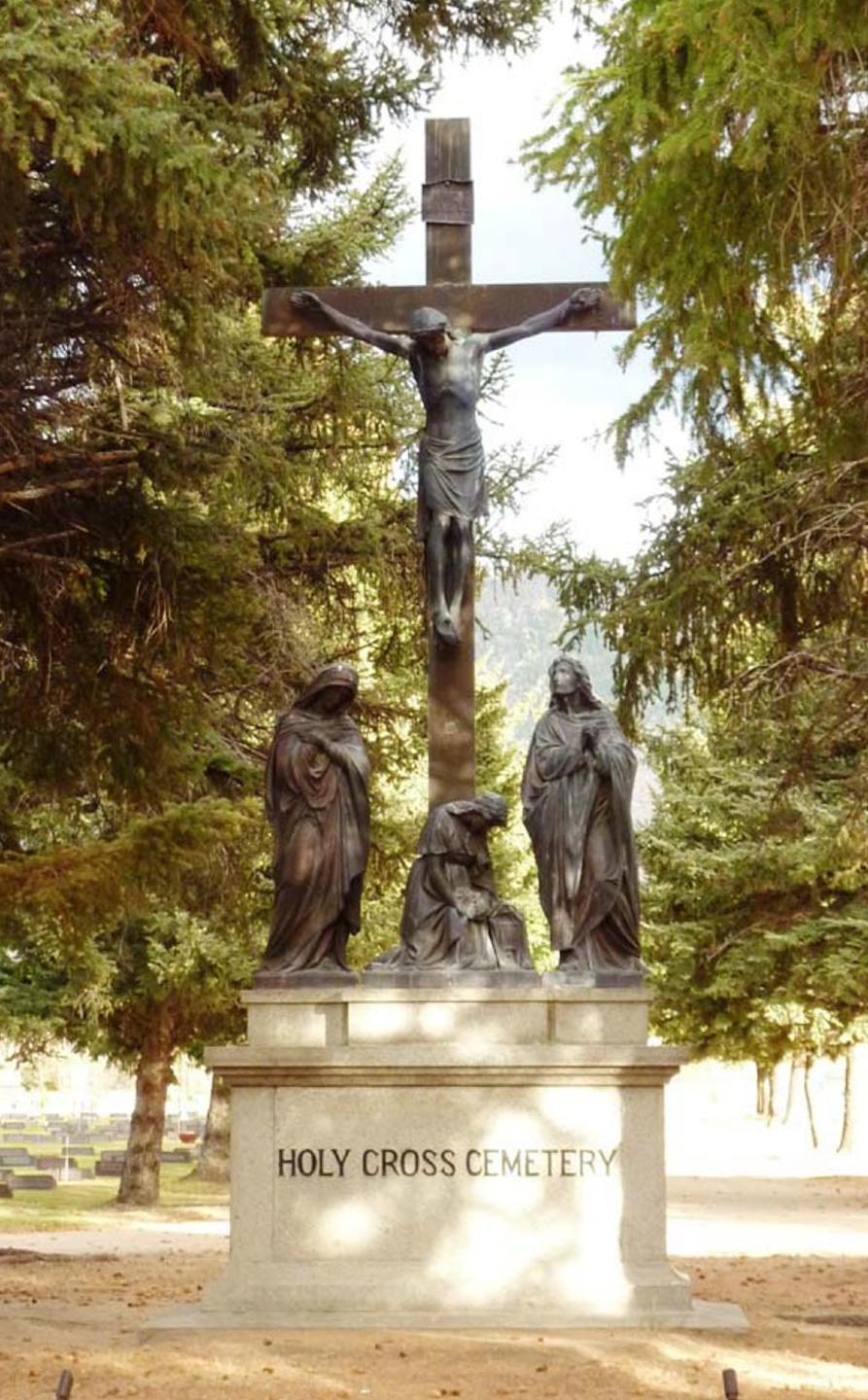
    <summary type="html"><![CDATA[<p><strong><em>Established in 1912, Holy Cross Cemetery was created after St. Patrick’s Cemetery sold its last burial lots. A 59-acre site was purchased along what is now Harrison Avenue, near the Four and Five Mile Houses.</em></strong></p><img src="https://storyofbutte.org/files/fullsize/1ddfd0176054524506c01f0b341db821.jpg" alt="Pictured is the Orobronze crucifix sculpture designed Daprato Statuary Company in Chicago. It was installed in 1918. " /><br/><p>In 1982, an expansion of Butte’s airport runway required the relocation of 300 graves from the cemetery’s Pauper’s section. A group of young men from Butte undertook the careful task of moving and reburying the remains.</p><p>Today, Holy Cross continues to serve as a burial site for Catholics unable to afford burial elsewhere, while Mount Moriah serves as the resting place for non-Catholics.</p><p><em><strong><a href="https://storyofbutte.org/items/show/3558">For more view the original article</a></strong></em></p>]]></summary>
    <published>2025-05-07T18:22:16+00:00</published>
    <updated>2026-04-17T19:58:11+00:00</updated>
    <link rel="alternate" type="text/html" href="https://storyofbutte.org/items/show/3558"/>
    <id>https://storyofbutte.org/items/show/3558</id>
    <author>
      <name>Story of Butte</name>
    </author>
  </entry>
  <entry>
    <title type="html"><![CDATA[Mountain View Cemetery]]></title>
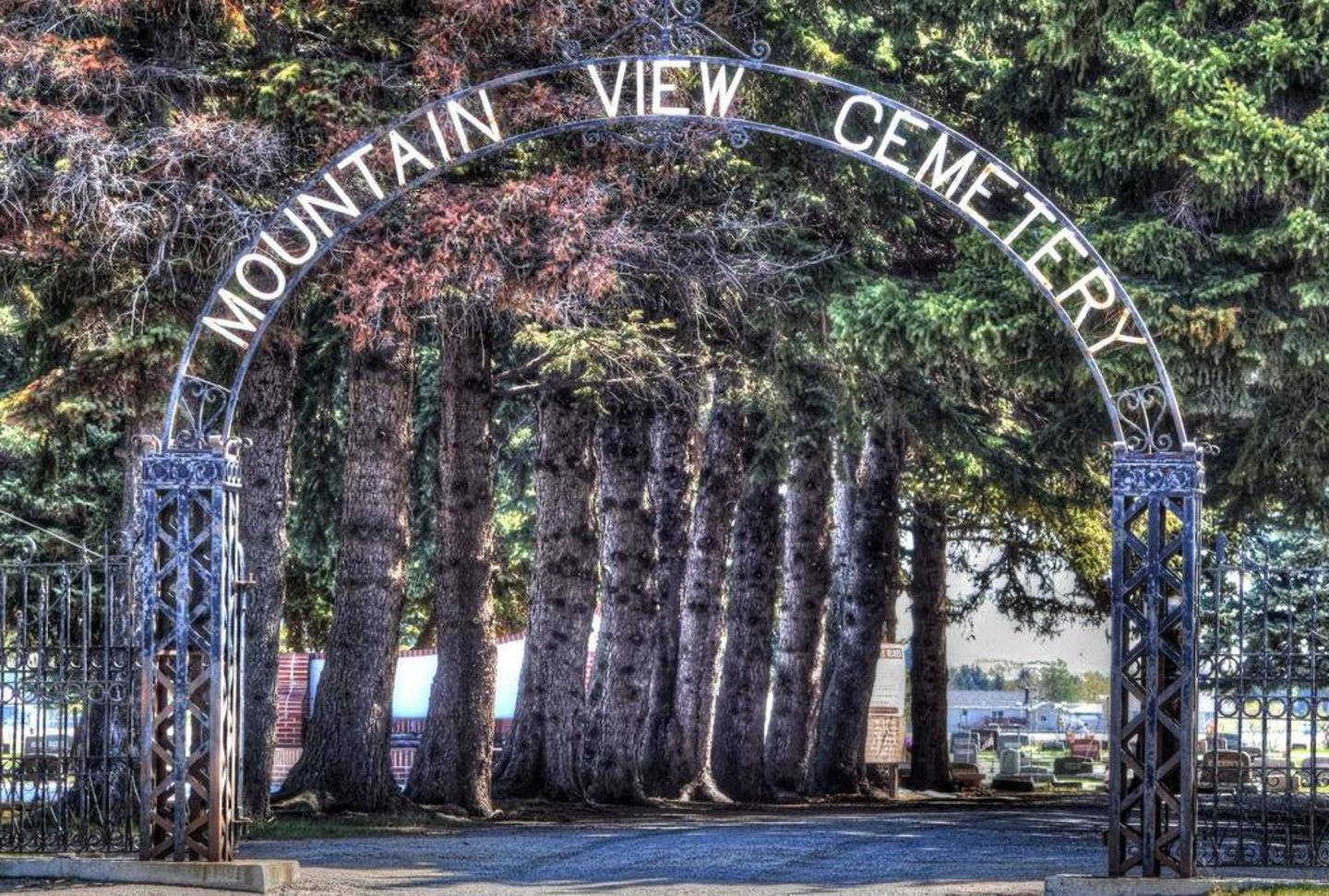
    <summary type="html"><![CDATA[<p><strong><em>Founded in 1910 by Joseph Richards, Samuel White, and William Bailey, Mountain View Cemetery was Butte’s first privately owned cemetery. Joseph Richards, a former Mount Moriah board member, caused a stir when he resigned in 1906 to establish this new venture. The cemetery’s iron fencing was sourced from Detroit, and the first recorded burial was George Luwe in June 1910.</em></strong></p><img src="https://storyofbutte.org/files/fullsize/389c75fc674f3d2defeb5bb1a7782d7c.jpg" alt="Pictured is the entrance to Mountain View Cemetery. " /><br/><p>Near the entrance is the Fabian’s Rest grave, marking the final resting place of Joseph Fabian and Mary Fabian, who owned and managed the cemetery. Fabian, a versatile worker—chef, smelter employee, and watchman for Basin Creek Reservoir—was also a Silver Bow County commissioner. During his term, he championed infrastructure projects like the Butte-Anaconda Highway and Roosevelt Drive.</p><p>Fabian joined Mountain View’s board around 1918 and became president in 1922 after outpacing Thomas Tomich in a board shares dispute. Fabian and his family moved into the cemetery’s superintendent house, solidifying their role in its operations. After Fabian’s death in 1938, his son Carroll acquired full control, making Mountain View a family-owned cemetery—a tradition that continues today.</p><p><em><strong><a href="https://storyofbutte.org/items/show/3557">For more view the original article</a></strong></em></p>]]></summary>
    <published>2025-05-07T18:20:34+00:00</published>
    <updated>2026-04-17T19:58:11+00:00</updated>
    <link rel="alternate" type="text/html" href="https://storyofbutte.org/items/show/3557"/>
    <id>https://storyofbutte.org/items/show/3557</id>
    <author>
      <name>Story of Butte</name>
    </author>
  </entry>
  <entry>
    <title type="html"><![CDATA[St. Patrick&#039;s Cemetery: Butte&#039;s first Catholic Cemetery]]></title>
    <summary type="html"><![CDATA[<p><strong><em>Established in the 1880s as Butte’s Catholic cemetery, St. Patrick’s grew in an organized yet complex layout, making it one of the city’s more challenging cemeteries to navigate.</em></strong></p><img src="https://storyofbutte.org/files/fullsize/cba92a5e13ffdbbda6b97e4686695c55.jpg" alt="St. Patrick&#039;s Cemetery featuring the Hennessy Mausoleum." /><br/><p>Upon entering, visitors are greeted by a large angel statue marking the grave of John O’Farrell, nephew of Marcus Daly, and nearby is the Hennessy mausoleum, the resting place of businessman D.J. Hennessy. The cemetery also features plots for priests and nuns, the Ancient Order of Hibernians, and the Robert Emmett Literary Association.</p><p>By 1912, all burial plots in St. Patrick’s had been sold, leading to the establishment of a second Catholic cemetery, Holy Cross. Today, the cemetery faces significant challenges, but efforts by the local Ancient Order of Hibernians have been instrumental in restoration, including paving roadways, improving irrigation, and repairing headstones.</p><p><em><strong><a href="https://storyofbutte.org/items/show/3556">For more view the original article</a></strong></em></p>]]></summary>
    <published>2025-05-07T18:16:53+00:00</published>
    <updated>2026-04-17T19:58:11+00:00</updated>
    <link rel="alternate" type="text/html" href="https://storyofbutte.org/items/show/3556"/>
    <id>https://storyofbutte.org/items/show/3556</id>
    <author>
      <name>Story of Butte</name>
    </author>
  </entry>
  <entry>
    <title type="html"><![CDATA[B&#039;Nai Israel Cemetery]]></title>
    <summary type="html"><![CDATA[<p><strong><em>Established in 1877 by Butte Lodge No. 3 of the Hebrew Benevolent Association, B’nai Israel Cemetery reflects the legacy of Butte’s early Jewish community. Founding members included prominent figures such as Henry Jacobs, Butte’s first mayor, and merchant David Cohen.</em></strong></p><img src="https://storyofbutte.org/files/fullsize/186bced6d3fbaeee059176419c5cd5f3.jpg" alt="Entrance to B&#039;Nai Israel Cemtery." /><br/><p>In 1905, the cemetery was entrusted to B’nai Israel, Montana’s longest continuously operating synagogue, built in 1903. Today, it is managed by Mount Moriah Cemetery, and the fence once separating the two cemeteries has been removed. Although no longer used, the original arched entrance still stands.</p><p>In 1906, the cemetery faced a threat when prospector Herman Mueller sought to mine the grounds. The Hebrew Benevolent Association successfully obtained a court order from Judge Bourquin, preventing mining activities and protecting both B’nai Israel and Mount Moriah cemeteries.</p><p><em><strong><a href="https://storyofbutte.org/items/show/3555">For more view the original article</a></strong></em></p>]]></summary>
    <published>2025-05-07T18:04:11+00:00</published>
    <updated>2026-04-17T19:58:11+00:00</updated>
    <link rel="alternate" type="text/html" href="https://storyofbutte.org/items/show/3555"/>
    <id>https://storyofbutte.org/items/show/3555</id>
    <author>
      <name>Story of Butte</name>
    </author>
  </entry>
  <entry>
    <title type="html"><![CDATA[Sherman School (Sherman Community Center)]]></title>
    <summary type="html"><![CDATA[<img src="https://storyofbutte.org/files/fullsize/0163b386984ce37ff8157d13f091cfd4.jpg" alt="Sherman School, 1902" /><br/><p>The Sherman school, now privately owned, hosts tumbling, wrestling, and other sports. It is one of the oldest schools in the county and is still in its original form. When many of Butte-Silver-Bow’s older schools burned because of faulty wiring, an unattended boiler, got buried by dirt, or earthquake damage rendered them unsafe, this school remains in its original state. </p><p>The Sherman was built in Walkerville in 1902 to replace a burned one room schoolhouse originally known as the East Walkerville School. The name was changed to the Sherman by order of the Board of Education in 1896.</p><p>In later years, Daly Street became the school boundary line—those north of Daly attended Sherman and those who lived south of it attended Blaine. The Blaine school closed in 1963, with those students moving to the Sherman school. Even with the closure of the Blaine declining student population led to the school’s closure in 1978. </p><p><em><strong><a href="https://storyofbutte.org/items/show/3554">For more (including 2 images) view the original article</a></strong></em></p>]]></summary>
    <published>2025-04-23T19:12:43+00:00</published>
    <updated>2026-04-17T19:58:11+00:00</updated>
    <link rel="alternate" type="text/html" href="https://storyofbutte.org/items/show/3554"/>
    <id>https://storyofbutte.org/items/show/3554</id>
    <author>
      <name>Story of Butte</name>
    </author>
  </entry>
  <entry>
    <title type="html"><![CDATA[Monroe Grade School (Butte Head Start)]]></title>
    <summary type="html"><![CDATA[<img src="https://storyofbutte.org/files/fullsize/6521f1ebe2416af76064b169ca344ce7.jpg" alt="Monroe School, 1890-1902" /><br/><p>The Butte Head Start Program, a federal program for preschool children from low-income families, is in the former Monroe School. The first building, originally called the South Butte School, was a three-story brick building on 1st Street dating to 1890. The name changed to the Monroe in 1896 and the building was enlarged in 1902. The Monroe School was rebuilt in 1958 at 1000 South Arizona Street and it closed in 1978. </p><p><em><strong><a href="https://storyofbutte.org/items/show/3553">For more (including 3 images) view the original article</a></strong></em></p>]]></summary>
    <published>2025-04-23T18:45:00+00:00</published>
    <updated>2026-04-17T19:58:11+00:00</updated>
    <link rel="alternate" type="text/html" href="https://storyofbutte.org/items/show/3553"/>
    <id>https://storyofbutte.org/items/show/3553</id>
    <author>
      <name>Story of Butte</name>
    </author>
  </entry>
  <entry>
    <title type="html"><![CDATA[McKinley School (Park Street Baptist Church)]]></title>
    <summary type="html"><![CDATA[<img src="https://storyofbutte.org/files/fullsize/8b6f3be2d752853b90340f44c00996ba.jpg" alt="McKinley School, 1903-1919" /><br/><p>The Park Street Baptist Church is housed in the building that was originally the McKinley School, which closed in 1985. The first McKinley School was built in 1903 and destroyed by fire in 1919. Unlike most other schools destroyed or affected by fire, the McKinley was not immediately replaced due to lack of funds. For the next several years students were transferred to other schools in the area including Lincoln, Washington, and Garfield. Younger students were sent to area churches which offered rooms. </p><p>In 1926, the original stone foundation and first floor walls, which remained standing after the fire, were used to rebuild the structure, reopening for the 1928-1929 school year.</p><p>In 1969, when the Catholic elementary schools closed, many of the students affected by the closure went to McKinley and Lincoln schools and McKinley was considered one of the larger schools in the district. However, over the next 20 years the school’s population declined due to the opening of the junior high schools (East Junior High in 1957, and West Junior High in 1969), leading to its eventual closure.</p><p><em><strong><a href="https://storyofbutte.org/items/show/3552">For more (including 2 images) view the original article</a></strong></em></p>]]></summary>
    <published>2025-04-23T18:36:33+00:00</published>
    <updated>2026-04-17T19:58:11+00:00</updated>
    <link rel="alternate" type="text/html" href="https://storyofbutte.org/items/show/3552"/>
    <id>https://storyofbutte.org/items/show/3552</id>
    <author>
      <name>Story of Butte</name>
    </author>
  </entry>
</feed>